Quick Answer:
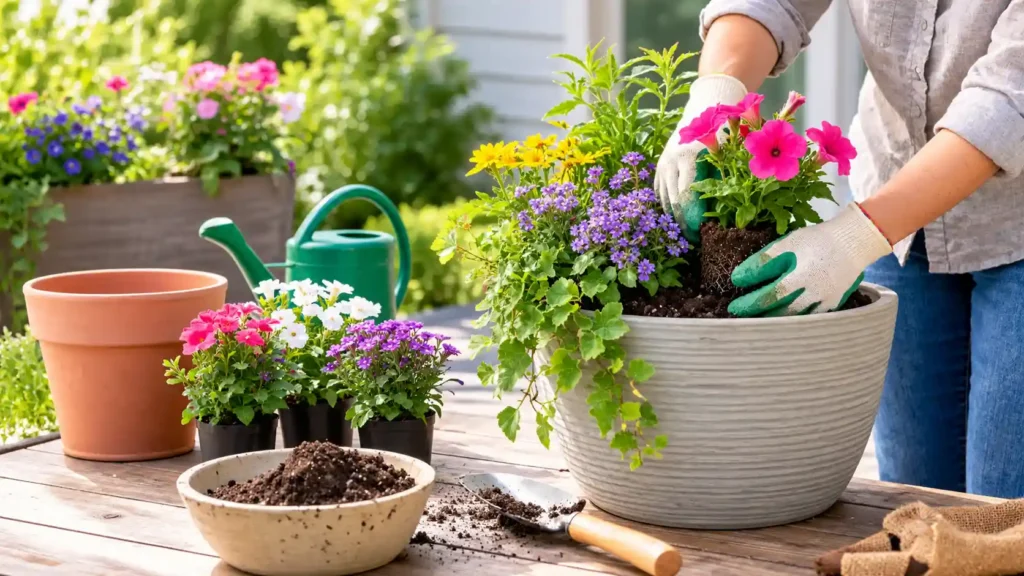
If you are new to container gardening, start with four decisions: choose a suitable pot, select flowers for your growing conditions, use an appropriate potting mix, and plan where the container will go.
You will typically need:
- A pot or planter with adequate drainage
- Suitable potting mix or compost
- Flowers suited to the available sunlight
- A small trowel and watering can
- Fertilizer if required by the plants
- Optional mulch
The basic process is:
Choose the pot → select the flowers → prepare the container → arrange the plants → plant them → water and maintain them.
The most important beginner principle is not to choose flowers first and try to make them work afterward. Start with the conditions of your location, then choose plants and a container that suit those conditions.
Step 1: Choose the Right Pot for Your Flowers
Start With Drainage
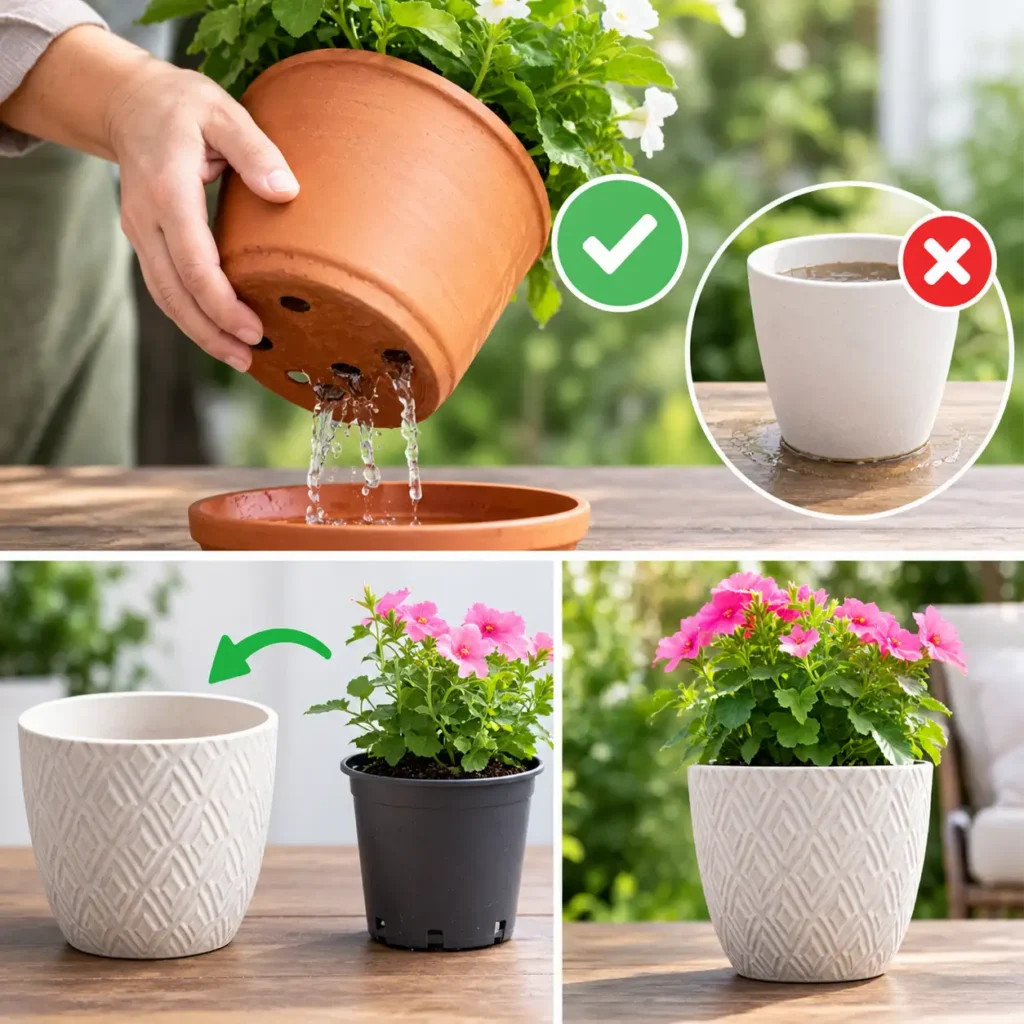
Before choosing a planter based on its appearance, check how excess water will leave the container.
For most flowering plants, adequate drainage is important because excess water can leave the growing medium saturated and create poor conditions for roots. The University of Minnesota Extension recommends containers with drainage holes and notes that containers without adequate drainage can cause problems for plants. [1]
If you want to use a decorative pot without drainage, consider using it as an outer container while keeping the plant in a separate inner pot with drainage.
Choose a Suitable Size
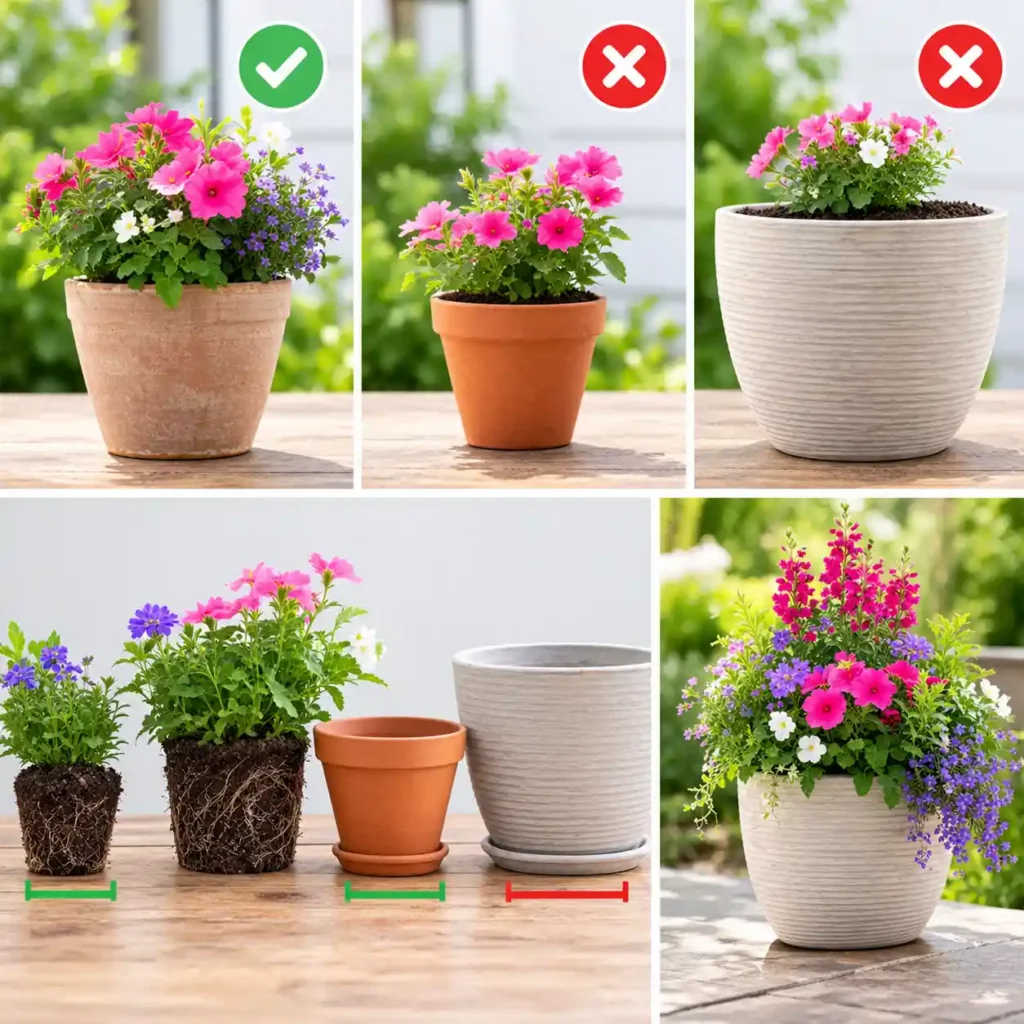
The container should provide enough room for the plant’s roots while remaining practical for the plant and location.
Do not automatically choose the largest pot available. A much larger container can hold a large amount of growing medium that stays wet around a relatively small root system.
If you are planting several flowers together, also consider their expected mature size rather than judging the required space only from how large the plants look when you buy them.
Consider Weight and Mobility
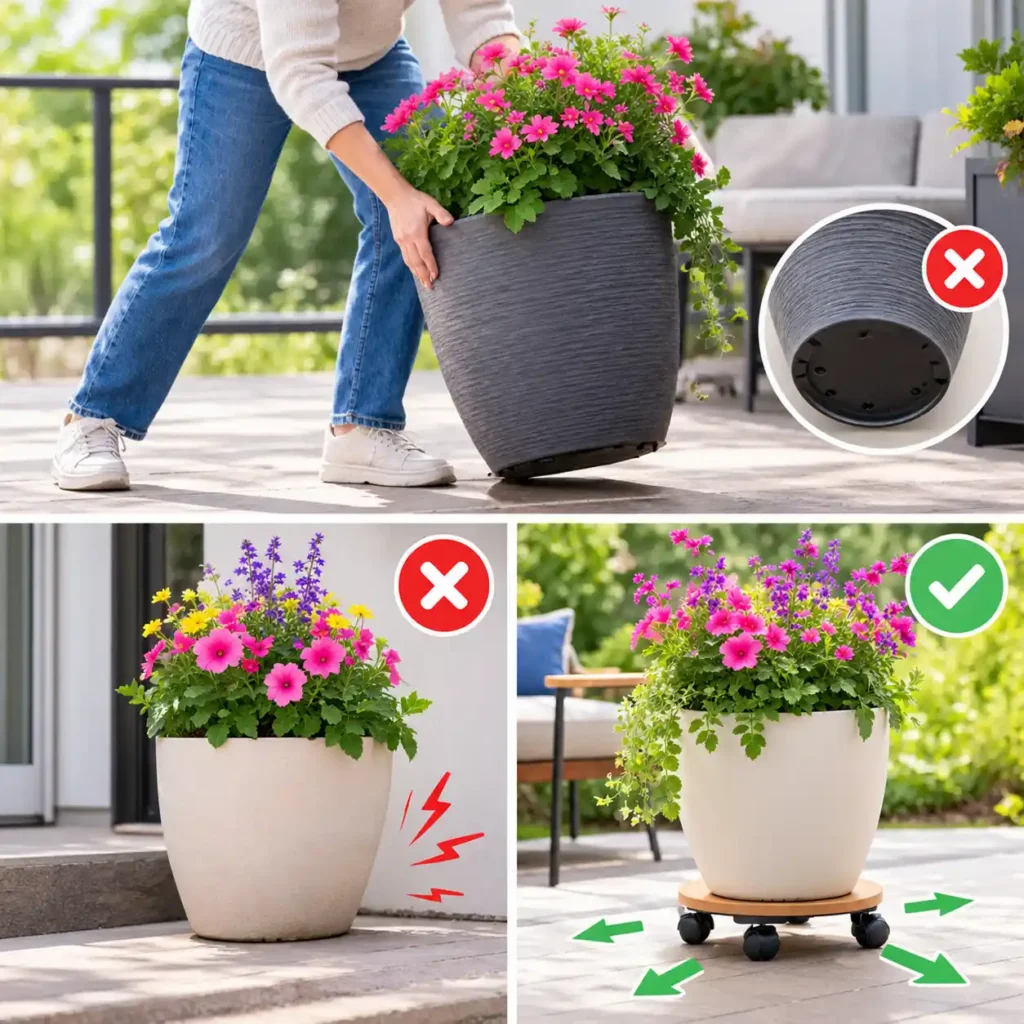
Think about where the finished planter will sit before filling it.
A large container can become difficult to move after it is filled with growing medium and plants. This matters particularly on balconies, patios, steps and other areas where you may need to reposition the planter.
If mobility matters, a lighter planter or a suitable plant caddy can make maintenance easier.
Step 2: Choose Flowers Based on Your Growing Conditions
Choosing flowers based only on appearance is one of the most common ways beginners end up with a difficult container garden.
Check How Much Sun the Location Gets
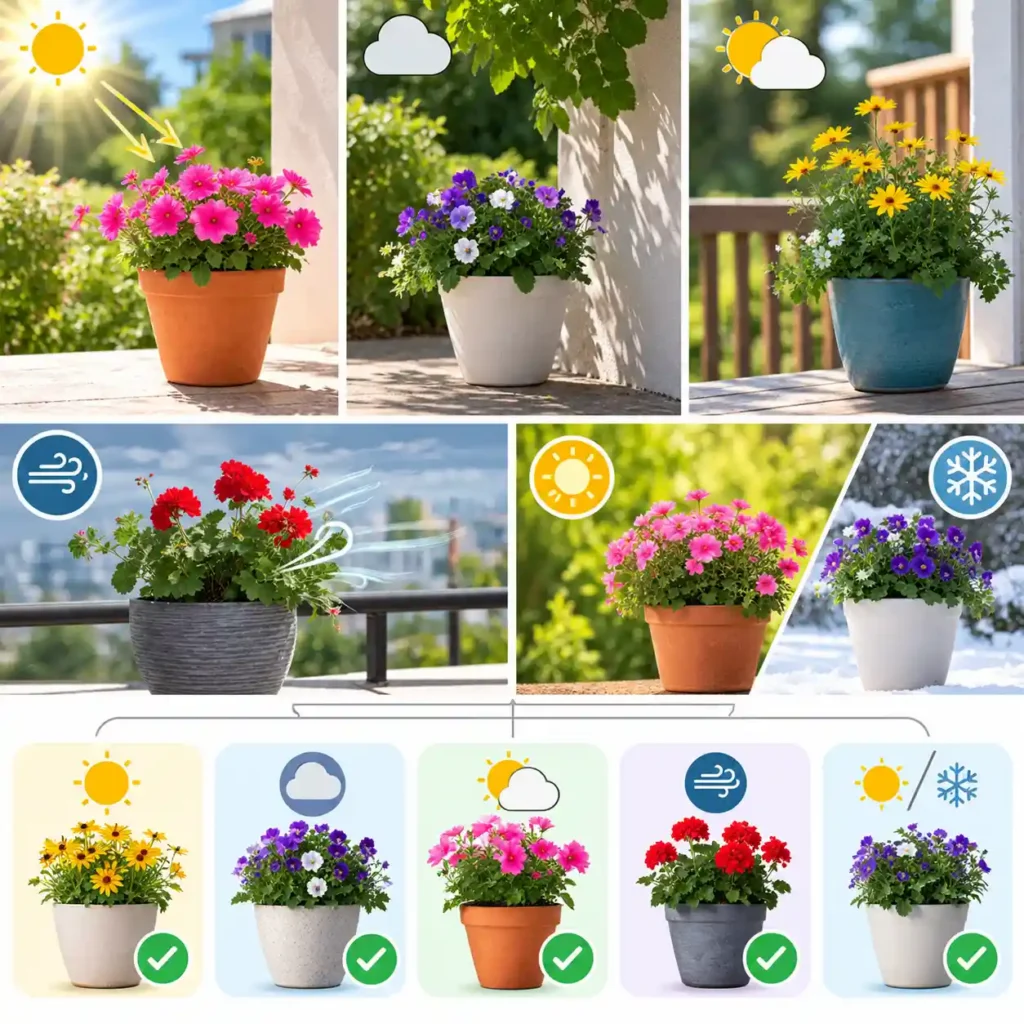
Look at the location where the pot will actually stay.
Consider:
- How many hours of direct sunlight it receives
- Whether nearby buildings or trees create shade
- Whether the location gets morning or afternoon sun
- Whether the area is exposed to strong wind
- Whether the conditions change during the season
Then choose flowers whose light requirements match the location.
Do not describe a flower simply as “easy to grow” without considering its growing conditions. A plant that is easy to grow in the right location can struggle if it receives substantially more or less light than it requires.
Choose Beginner-Friendly Flowers
There is no single flower that is best for every beginner because suitability depends on the growing environment.
Common container flowers include:
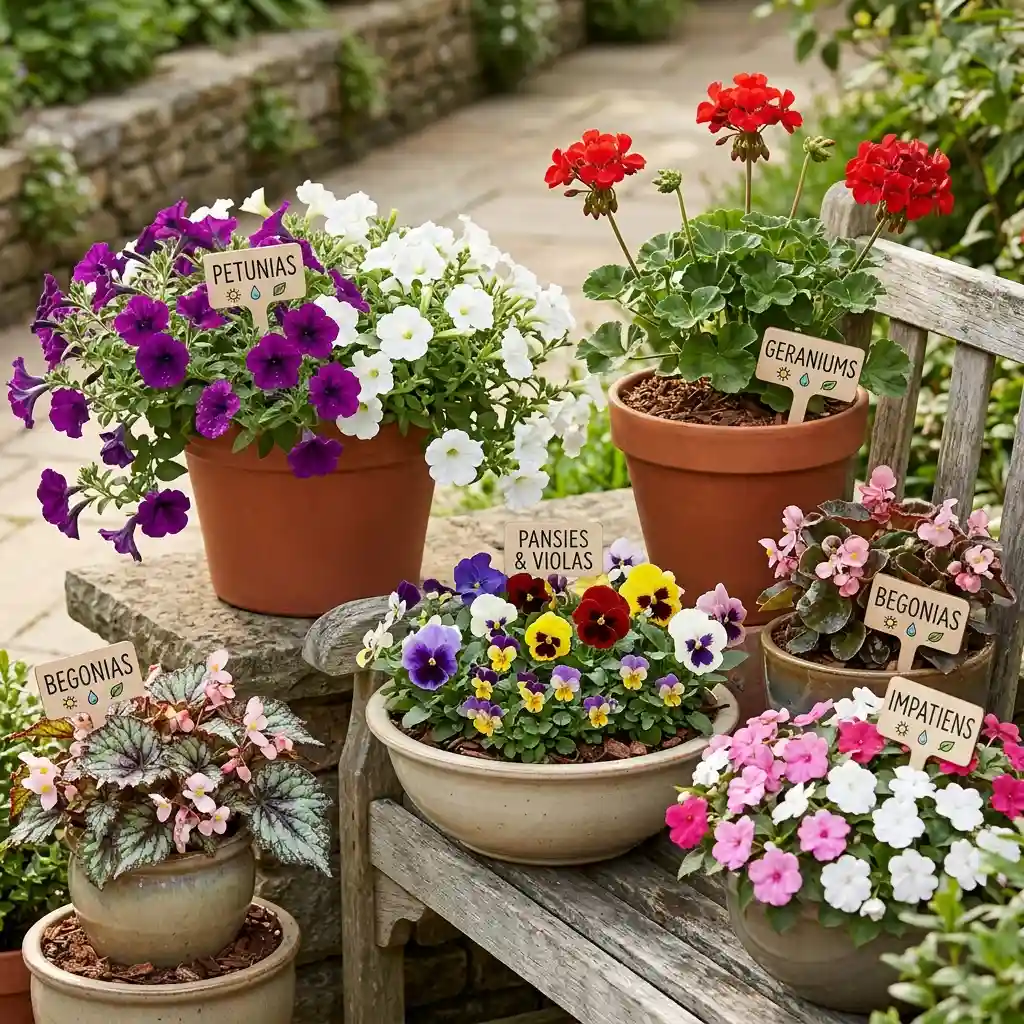
- Petunias
- Geraniums
- Pansies and violas
- Begonias
- Impatiens
Instead of choosing several varieties simply because they look attractive together, check their requirements for sunlight, watering and mature size.
Can You Mix Different Flowers in One Pot?
Yes, but choose plants with reasonably compatible requirements.
The simplest combination is one where the flowers need similar amounts of:
- Sunlight
- Water
- Growing space
- General growing conditions
This makes the container easier to maintain than combining plants with completely different needs.
Step 3: Plan the Arrangement Before Planting
Once you have selected your flowers, arrange them before taking them out of their nursery pots.
This lets you adjust the spacing and appearance without repeatedly disturbing the roots.
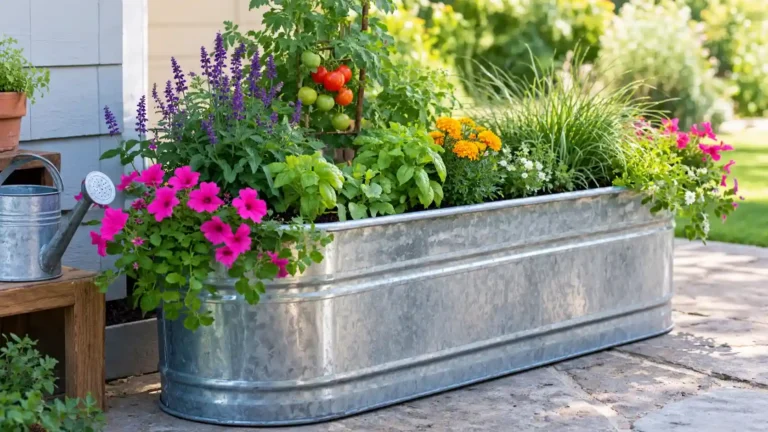
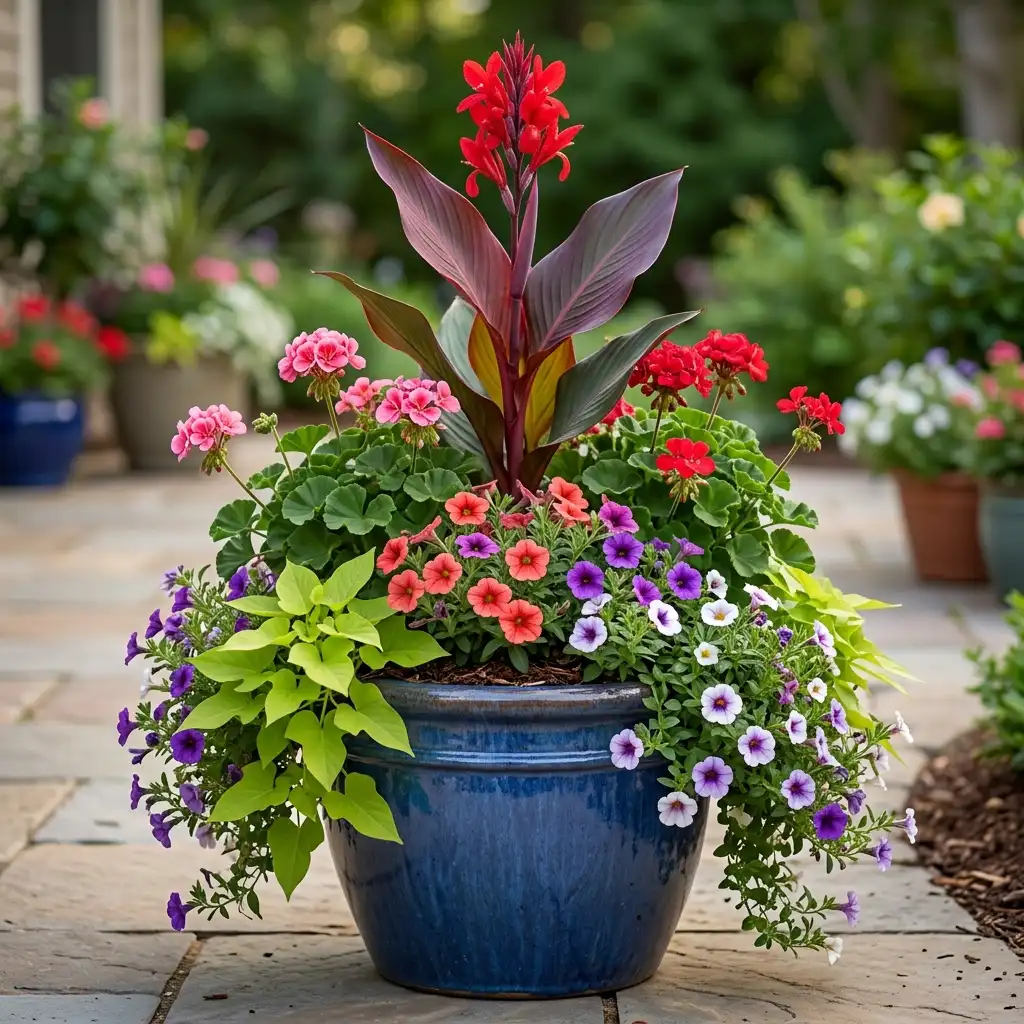
Try the Thriller, Filler and Spiller Approach
A simple container-design method is to combine different growth habits:
- Thriller: a taller or more prominent plant that creates a focal point
- Filler: fuller plants that occupy the middle area
- Spiller: trailing plants that grow over the edge
You do not have to use all three.
For example, a single flowering plant in an attractive container can work perfectly well. The principle is simply to create differences in height, shape and direction of growth rather than placing several plants at exactly the same level.
Consider the Viewing Direction
Think about how the container will be viewed.
For a planter positioned against a wall or fence, taller plants can generally be placed toward the back.
For a freestanding container viewed from several directions, consider how the arrangement looks from the front, sides and back.
This is particularly useful when creating a mixed container because the arrangement can look balanced from one direction but crowded from another.
Step 4: Prepare the Pot and Growing Medium
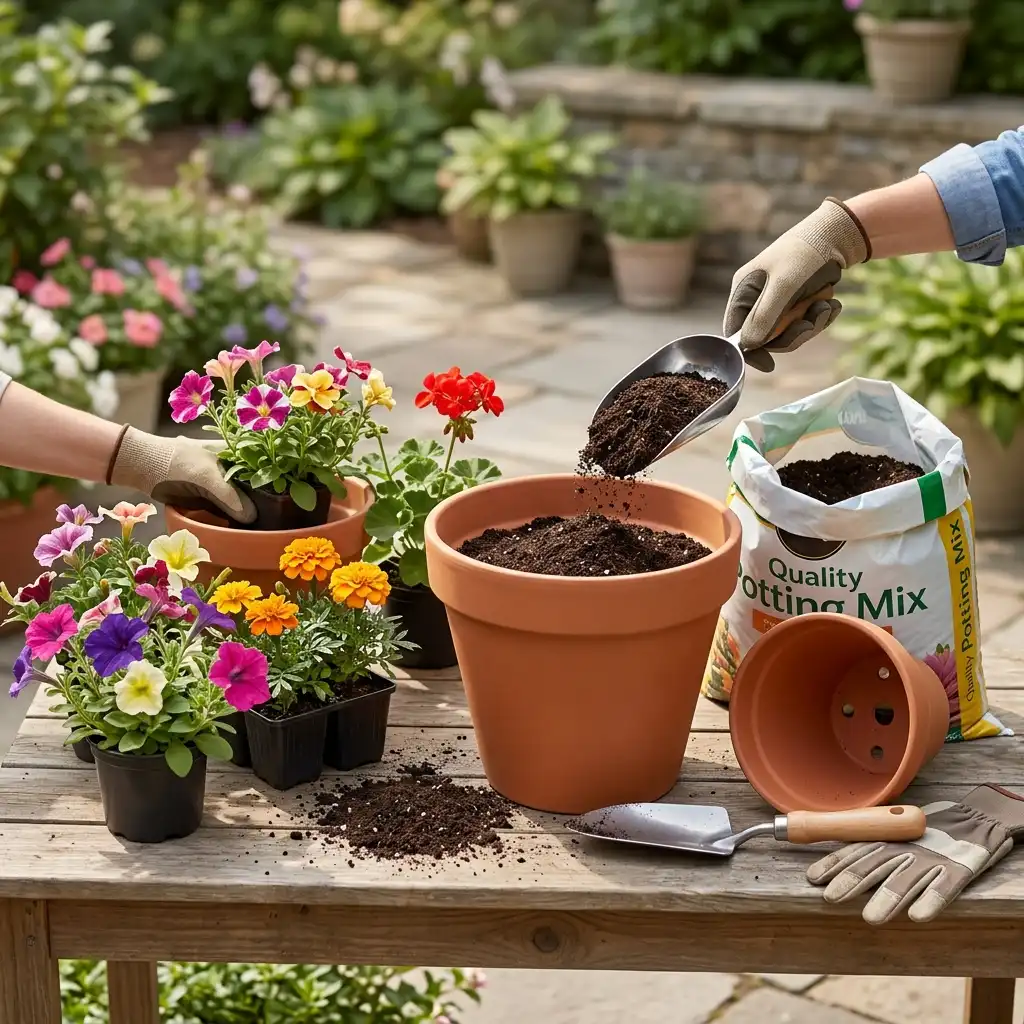
Use a Suitable Potting Mix
Avoid treating ordinary garden soil as the default growing medium for container flowers.
Containers have limited root space and different drainage conditions from plants growing directly in the ground. A suitable container-growing medium is designed to provide an appropriate balance of moisture, drainage and air around the roots.
The University of Minnesota Extension recommends using a quality commercial potting mix for containers rather than ordinary garden soil, which can become compacted and drain poorly in a container. [2]
Prepare the Container
Before planting:
- Check that drainage holes are open.
- Add the appropriate potting mix.
- Leave enough space near the top for watering.
- Arrange the plants before making the final planting holes.
Step 5: Plant the Flowers
Once the pot and plants are ready, follow these steps.
1. Arrange the Plants First
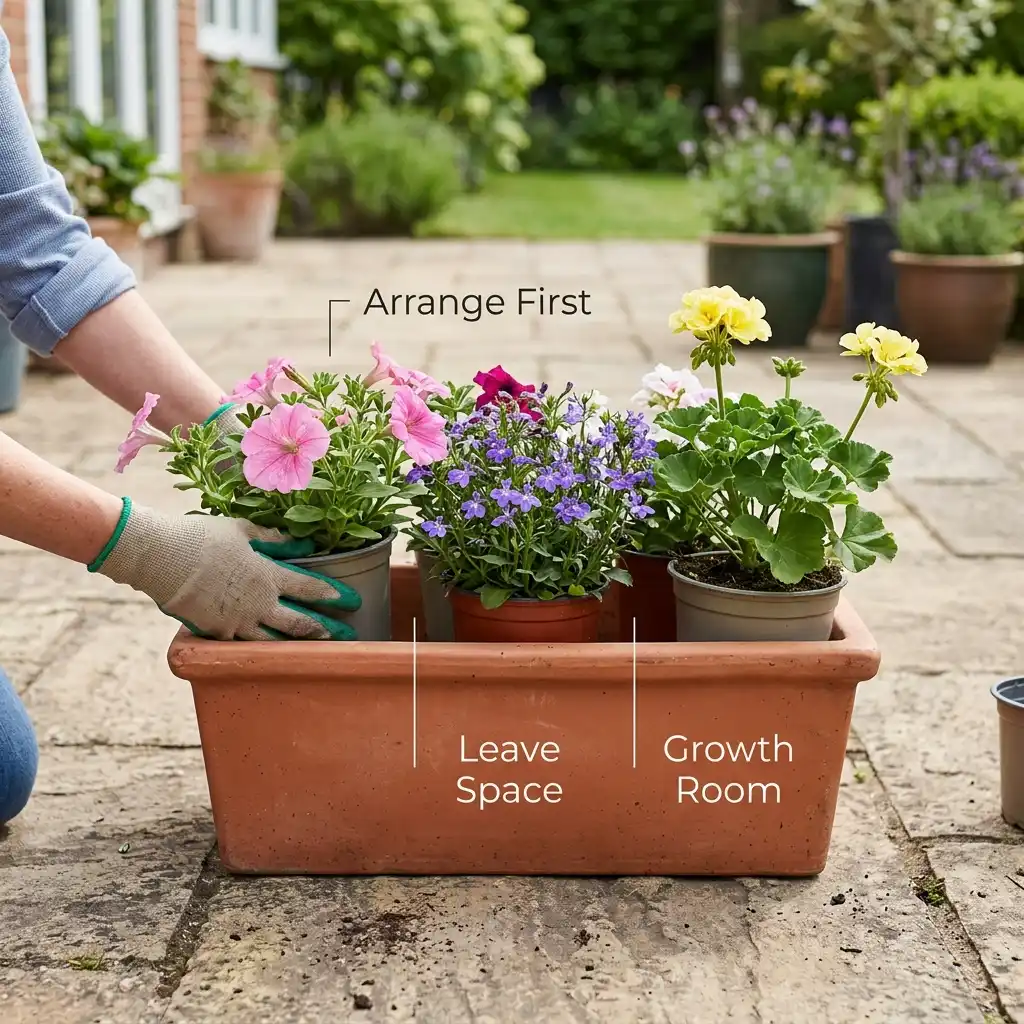
Place the plants in their nursery pots inside the container and check the overall arrangement.
Make sure the plants have enough space for their expected growth rather than packing them tightly together for an immediately full appearance.
2. Remove the Plants Carefully
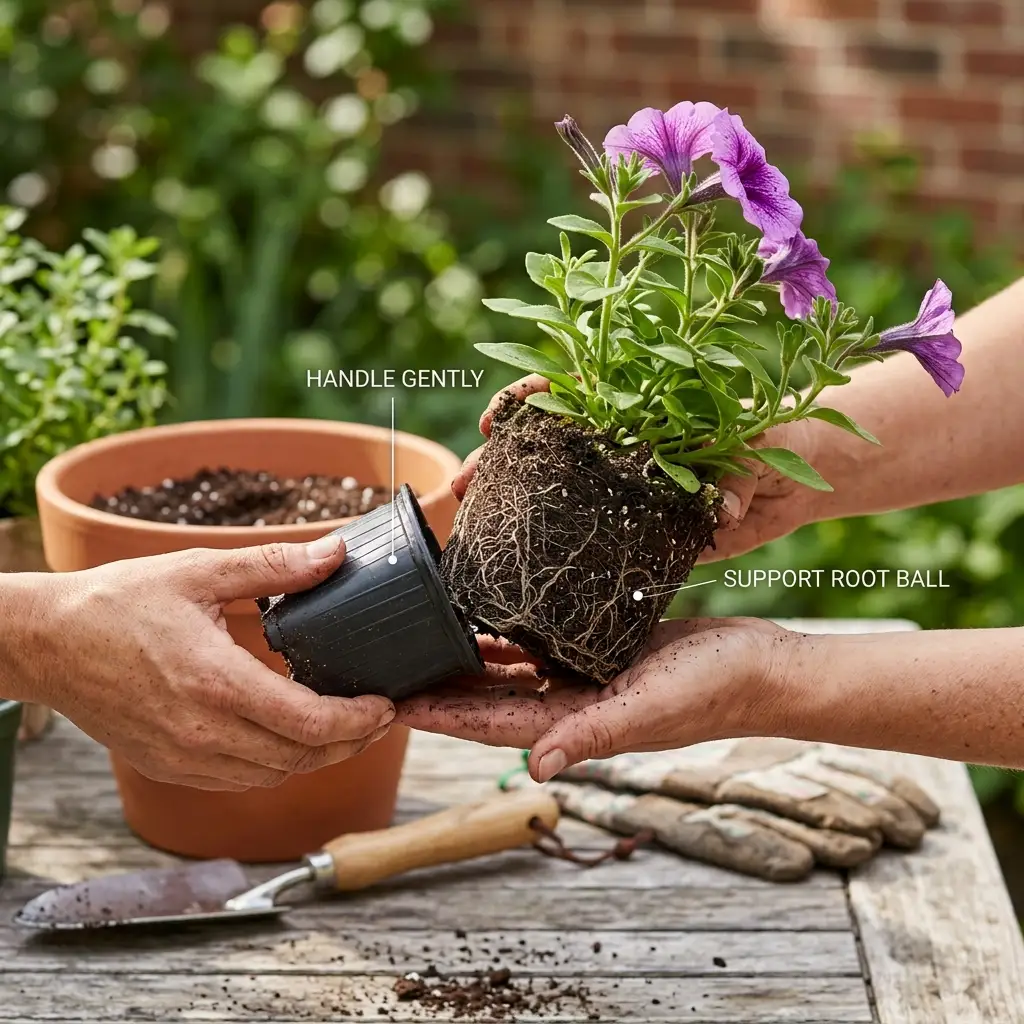
Take each plant out of its nursery container carefully.
Handle the root ball rather than pulling the plant aggressively by its stem.
3. Check the Roots
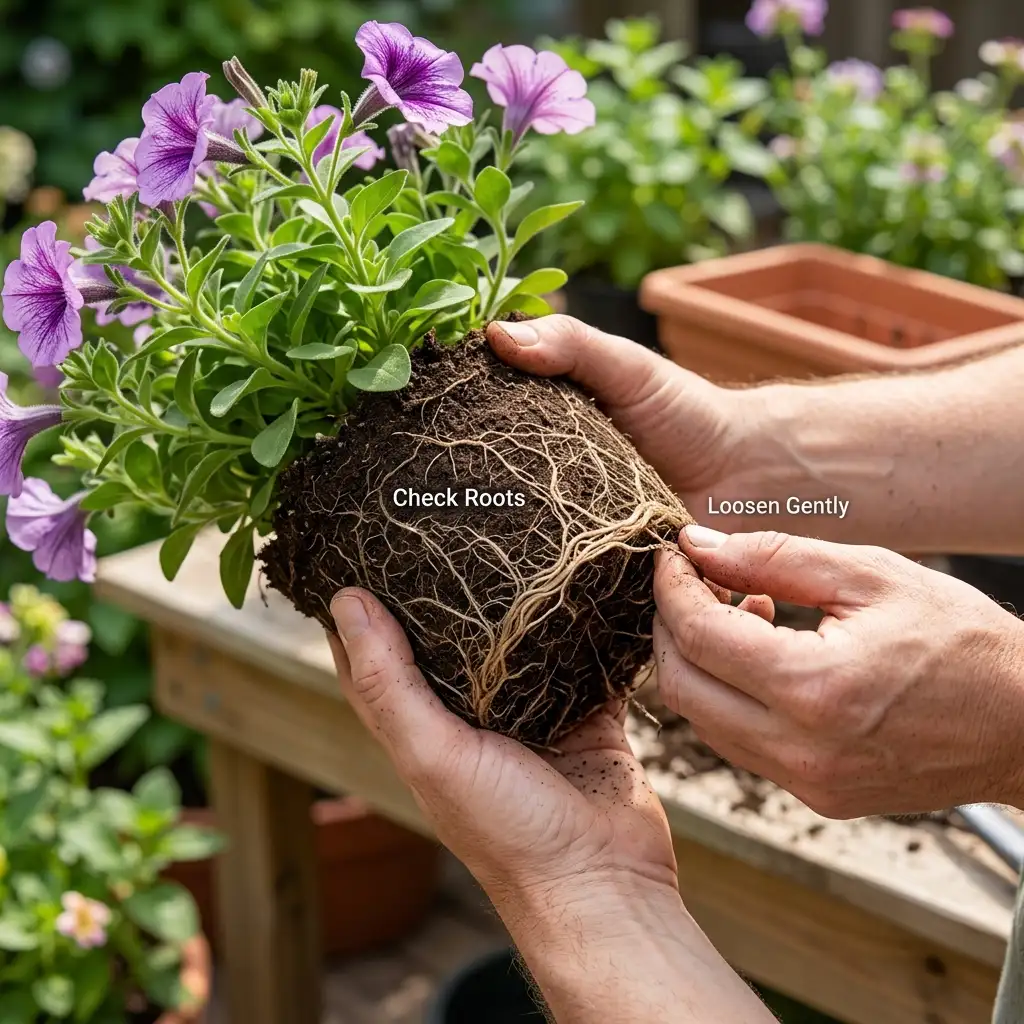
If the roots are tightly circling the outside of the root ball, gently loosen them before planting.
Do not aggressively break apart a healthy root system. The aim is simply to help severely root-bound plants establish in their new growing medium.
4. Position the Plants
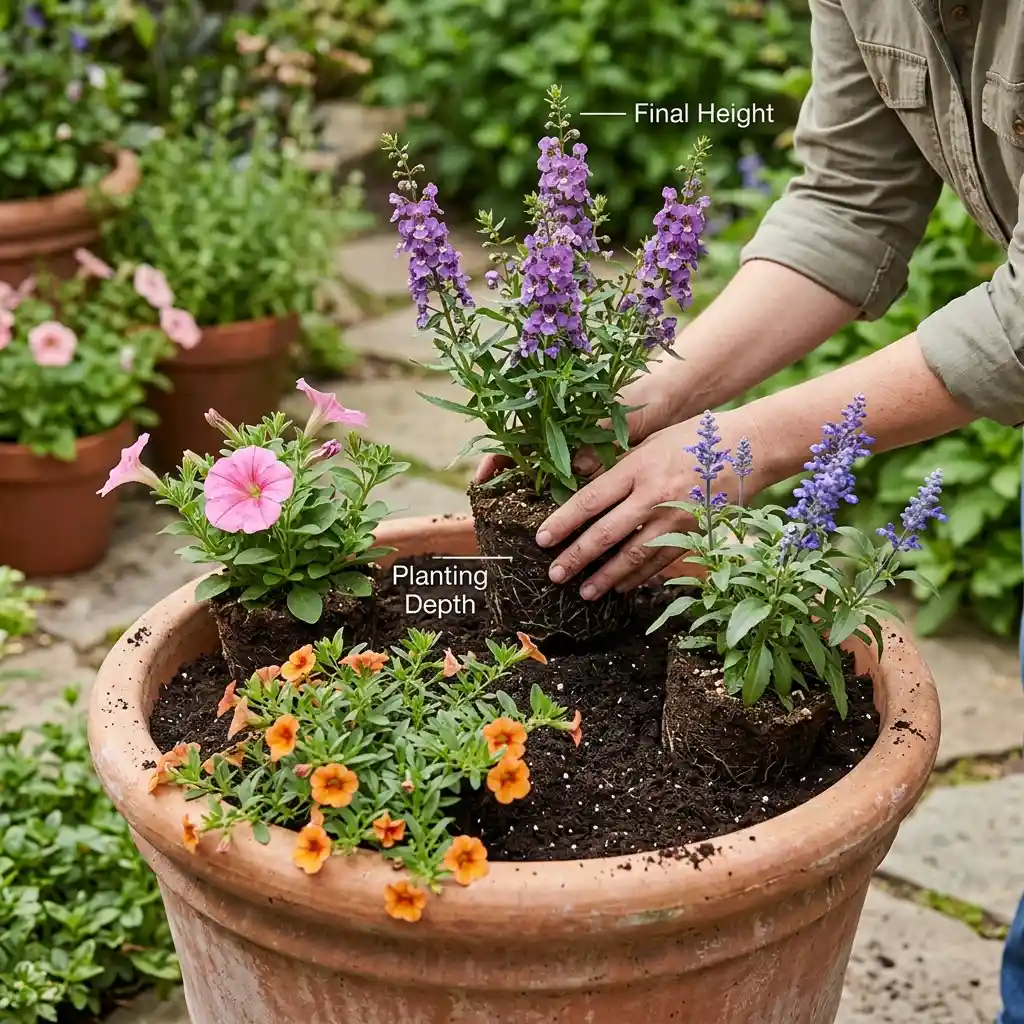
Place each plant at an appropriate depth in the container.
Keep the final arrangement in mind while positioning the plants, including the height of the finished display.
5. Fill Around the Root Balls
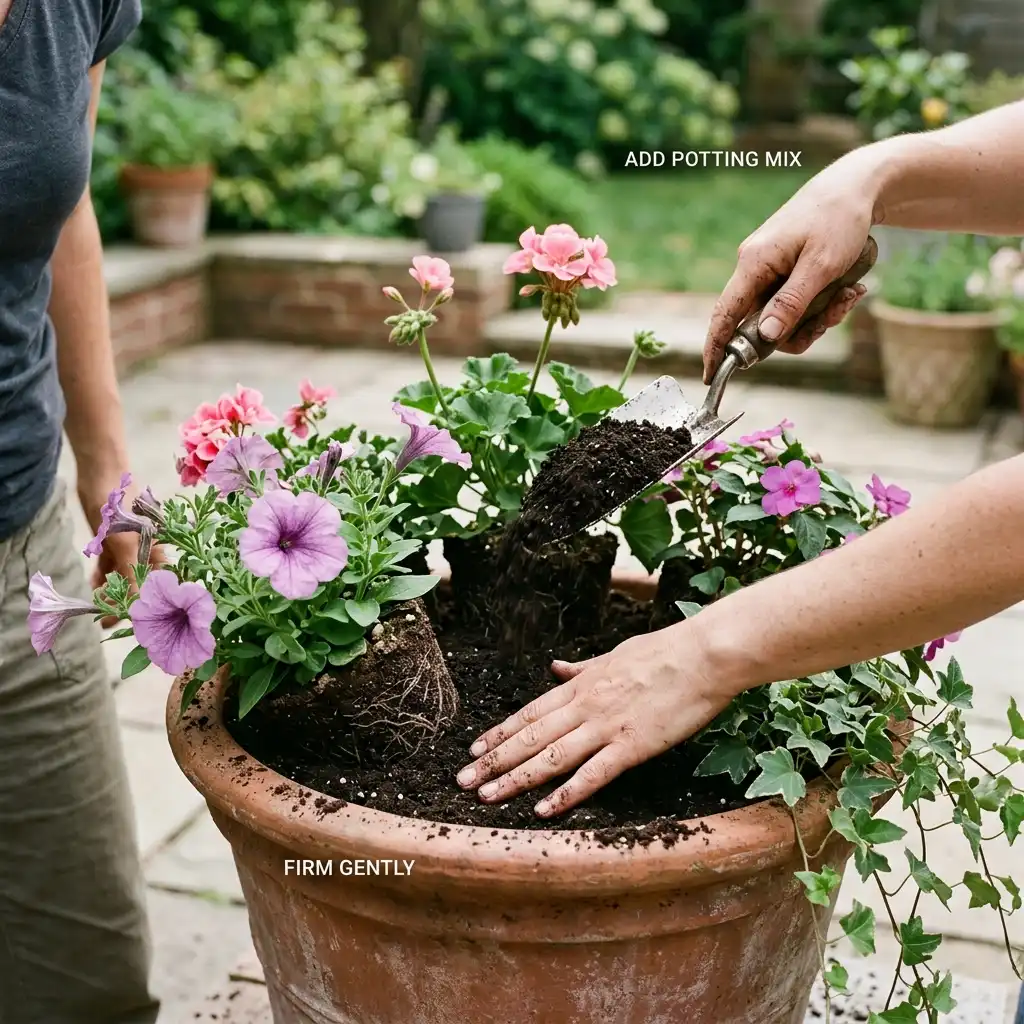
Add potting mix around each plant until the roots are supported.
Firm the growing medium gently so the plants remain stable, but avoid heavily compacting it.
6. Water Thoroughly
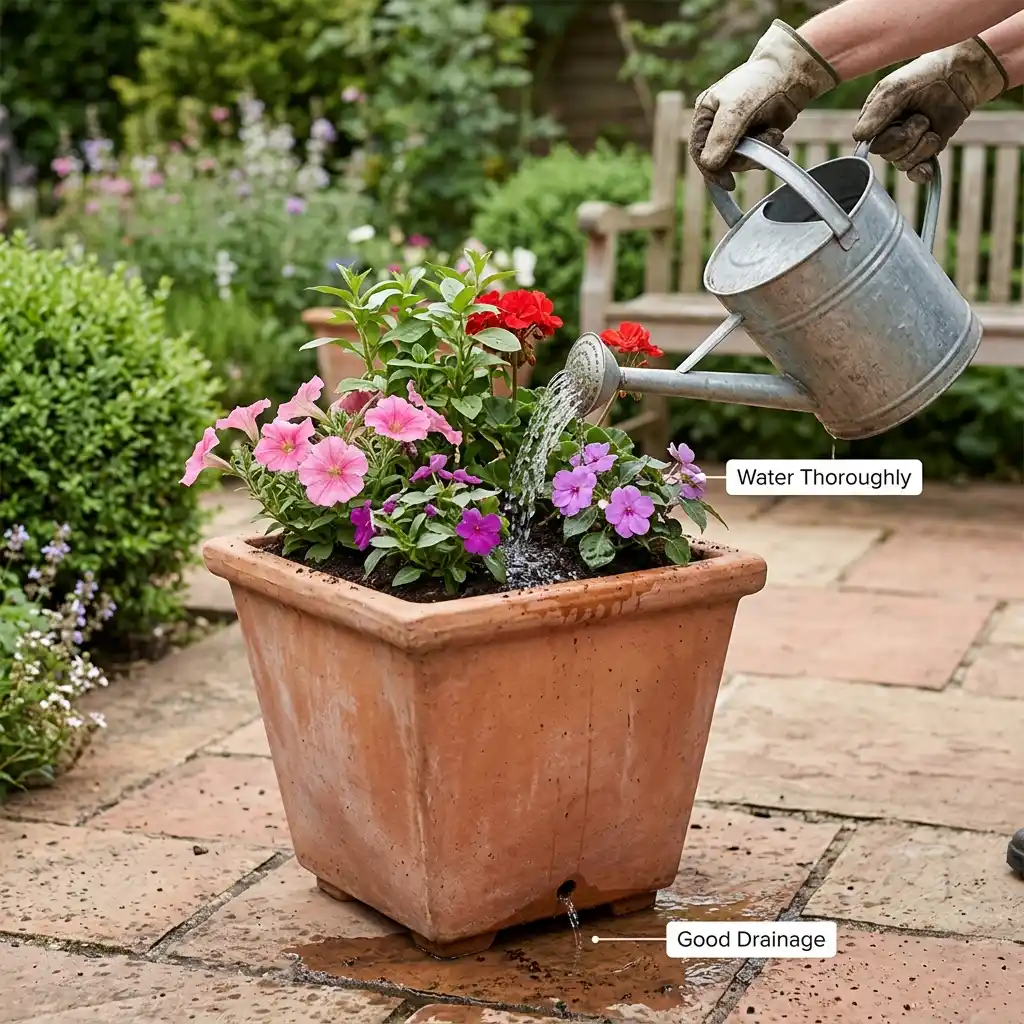
Water after planting so the growing medium is evenly moistened.
Check that excess water can drain from the container rather than allowing the pot to remain saturated.
7. Add Mulch if Appropriate
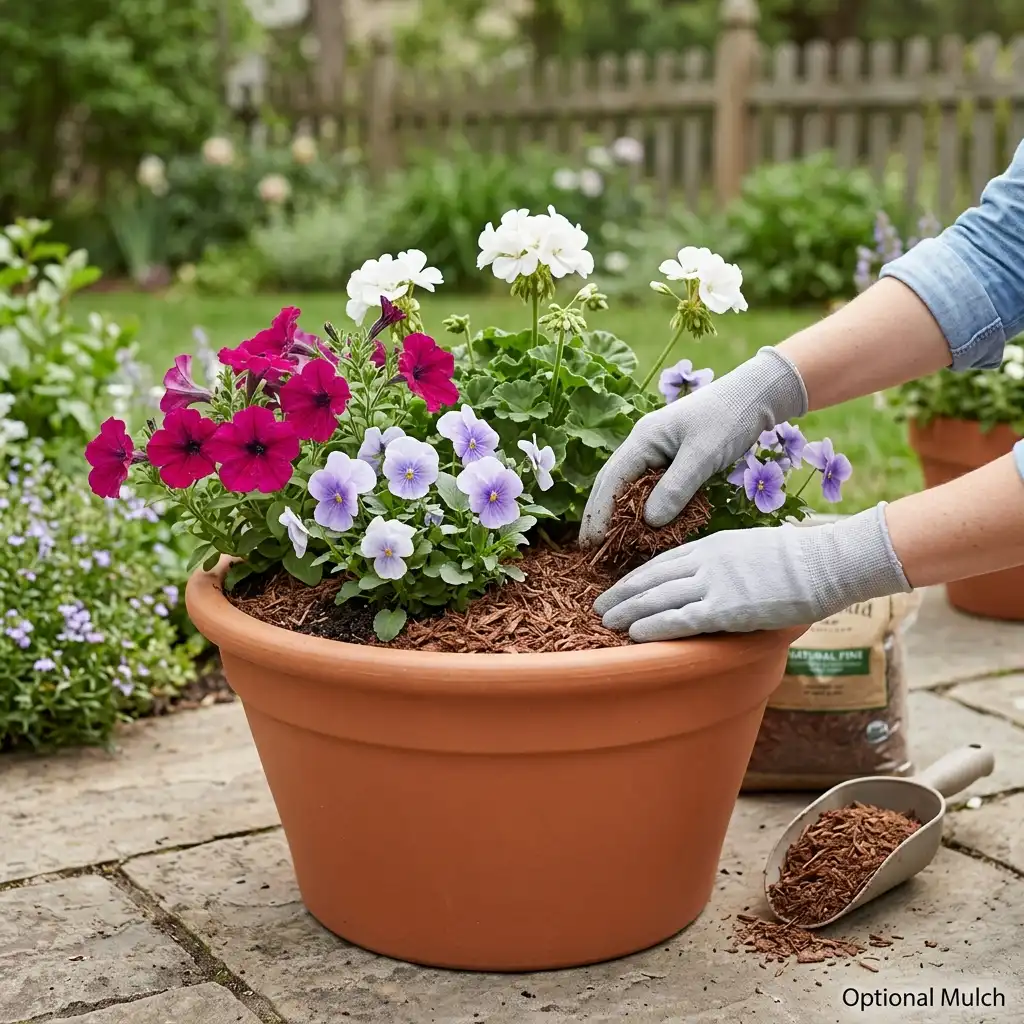
A suitable layer of mulch can be used as an optional finishing step.
It can help reduce moisture loss and improve the appearance of the container, but it is not essential for every flower or planting situation.
Step 6: Place and Care for Your Potted Flowers
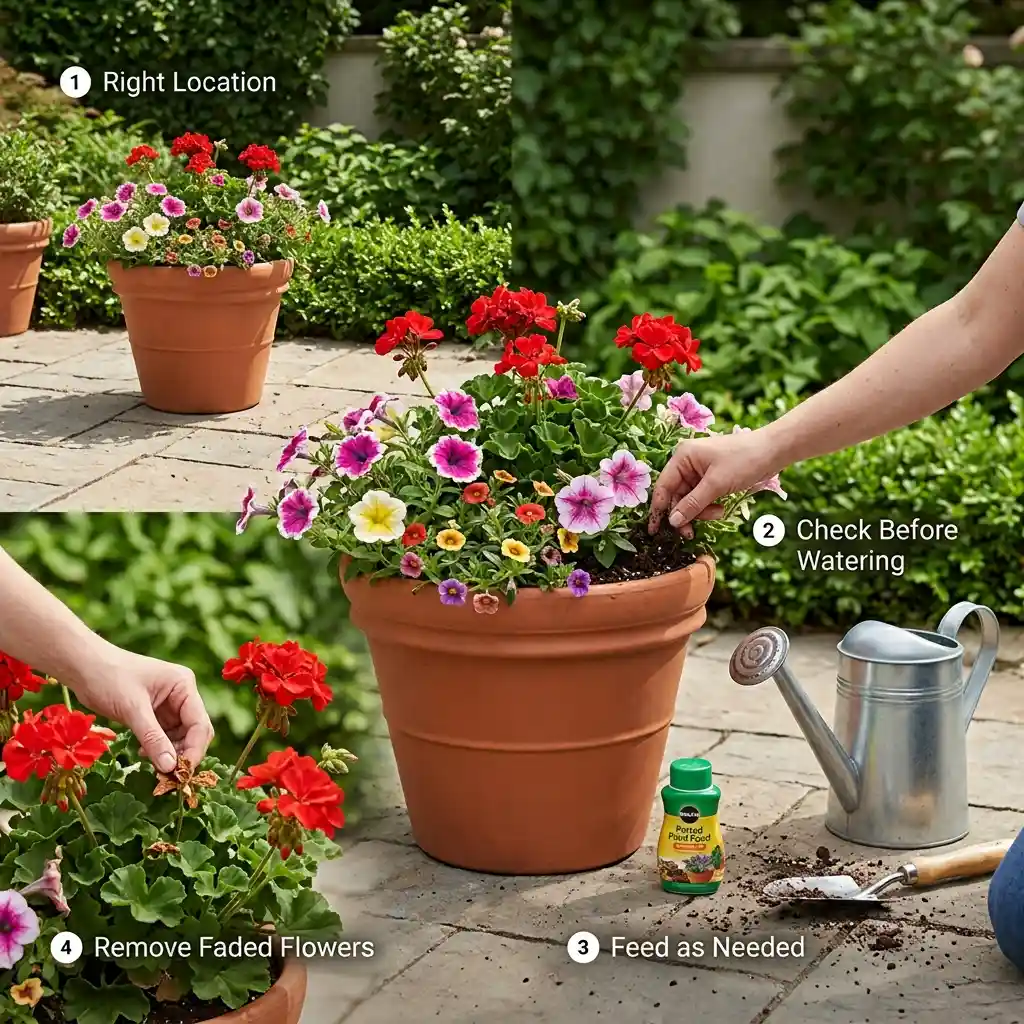
Put the Container in the Right Location
Move the planter to its final position based on the flowers’ light requirements.
Also consider:
- Wind exposure
- Access to water
- Drainage
- Ease of maintenance
- Whether the planter could become difficult to move
A location that looks attractive but is difficult to water or receives unsuitable light will make the plants harder to maintain.
Water Based on the Conditions
Avoid following a universal rule such as “water every day.”
Instead, check the growing medium and consider the conditions around the plant.
Containers can dry out faster than plants growing in the ground, particularly during hot, sunny or windy weather. The U.S. Department of Agriculture also advises gardeners to pay attention to changing weather conditions when managing water use in gardens and landscapes. [3]
A practical beginner approach is to check before watering rather than watering automatically according to the calendar.
When watering is needed, water thoroughly enough to moisten the growing medium and allow excess water to drain away.
Feed When Necessary
Container plants have a limited amount of growing medium from which to obtain nutrients.
Whether additional fertilizer is required depends on the plants, growing medium and product used. Follow the instructions provided with the fertilizer rather than applying the same feeding schedule to every flower.
Remove Faded Flowers
For flowers that benefit from deadheading, removing spent blooms can help keep the container looking tidy and may encourage continued flowering.
However, not every plant should be treated in exactly the same way, so check the requirements of the flowers you have selected.
Common Beginner Mistakes to Avoid
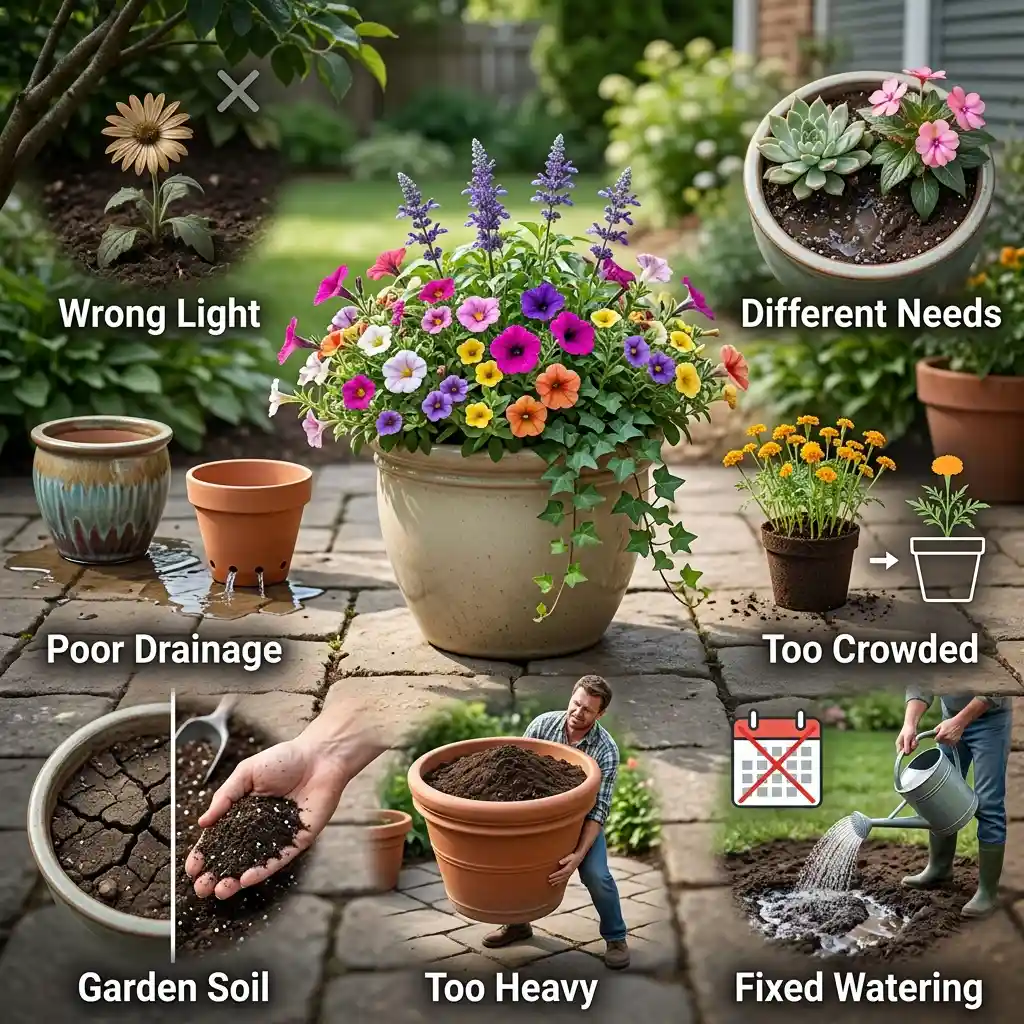
Choosing Flowers Before Checking the Location
The flower looks good, so you buy it. Then you discover the pot receives too much shade or too much direct sun.
Better approach: check the location first and choose plants accordingly.
Using a Container Without Adequate Drainage
A decorative planter is not automatically a suitable growing container.
Better approach: check for drainage holes or use a suitable inner pot.
Using Ordinary Garden Soil
Garden soil can become compacted and drain poorly in containers.
Better approach: use a suitable container-growing medium. [2]
Watering on a Fixed Schedule
Watering every day regardless of weather and soil moisture can be just as problematic as forgetting to water.
Better approach: check the growing medium and consider current conditions.
Overcrowding the Pot
A container that looks perfectly full on planting day can become crowded as the plants grow.
Better approach: consider mature plant size before deciding how many plants to use.
Mixing Plants With Different Requirements
A thirsty flower and a drought-tolerant plant may look good together initially but require very different watering routines.
Better approach: group plants with similar growing requirements.
Filling a Large Planter Before Deciding Where It Will Go
Once filled, a large planter can be surprisingly heavy.
Better approach: decide on the location first and consider whether the container needs to be moved later.
Seasonal Considerations for Container Flowers
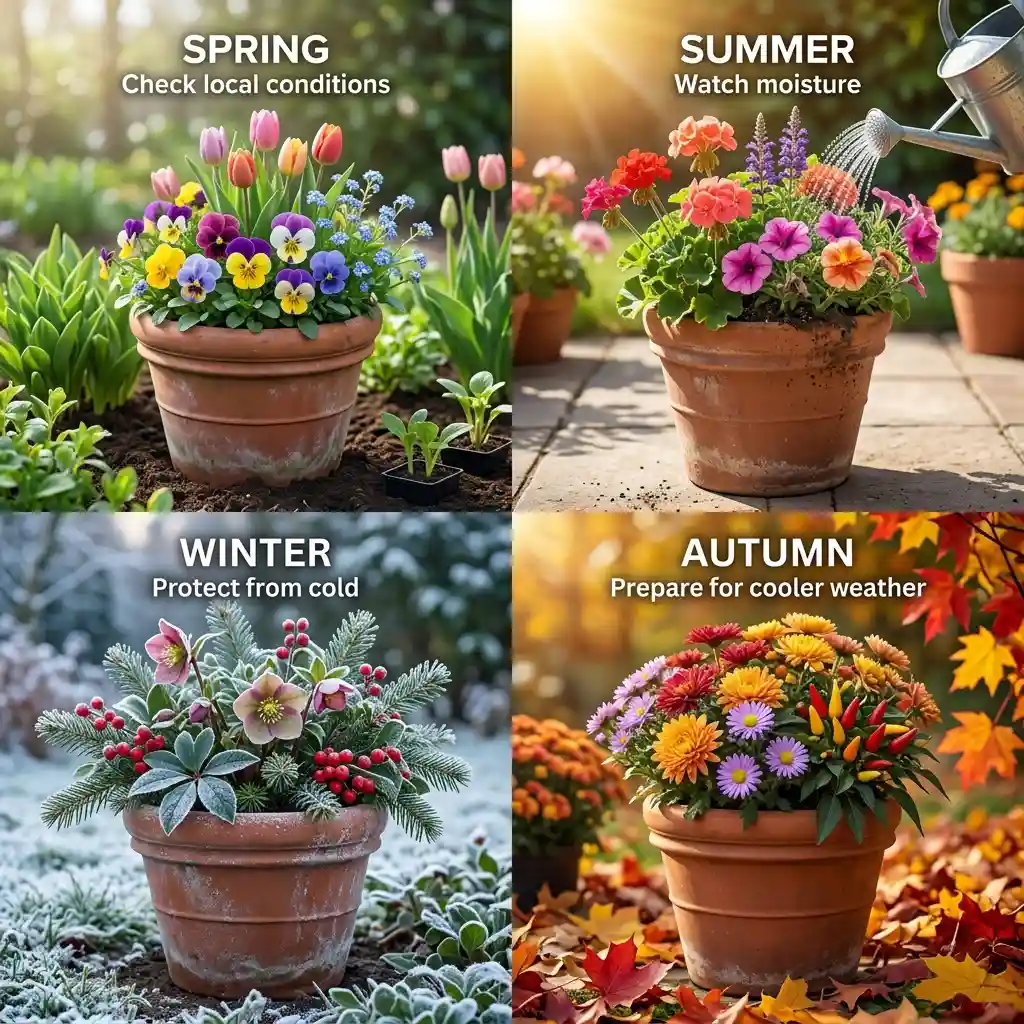
The best flowers and planting times depend on your location and local climate, so avoid treating one universal planting calendar as suitable for every garden.
Spring
Spring is a common time to create new seasonal container displays, but check local temperatures and the requirements of the plants before planting.
Summer
Pay particular attention to moisture during hot or dry periods because containers can dry out quickly.
Wind and direct sunlight can also increase moisture loss.
Autumn and Winter
Consider whether the flowers and container are suitable for the local winter conditions.
Plants growing in containers have less insulation around their roots than plants growing directly in the ground, so cold and prolonged wet conditions can be important considerations.
Final Takeaway
Planting flowers in pots for beginners does not need to be complicated.
Start with the location, choose flowers that suit its growing conditions, select a container with appropriate drainage, and use a suitable potting mix. Then plan the arrangement, plant carefully and adjust watering and feeding according to the actual needs of the plants.
The basic process is:
Choose → Prepare → Arrange → Plant → Water → Maintain.
Once you understand these steps, you can apply the same approach to different flowers, containers and outdoor spaces.
FAQs
1. What are the easiest flowers to grow in pots for beginners?
There is no single best flower for every beginner. Petunias, geraniums, pansies, violas, begonias and impatiens are common container choices, but suitability depends on sunlight, watering requirements and local growing conditions.
2. Can you plant different flowers together in the same pot?
Yes. Choose flowers with similar requirements for sunlight, watering and growing conditions. This makes the container easier to maintain than combining plants with substantially different needs.
3. How often should you water flowers in pots?
There is no universal watering schedule. Check the growing medium and consider temperature, rainfall, wind, sunlight and the requirements of the plants. Containers can dry out more quickly than plants growing in the ground.
4. Do flower pots need drainage holes?
For most container-grown flowers, adequate drainage is important. Drainage holes allow excess water to escape and help prevent waterlogged growing conditions. If you prefer a decorative container without drainage, use a suitable inner pot instead.
References
[1] University of Minnesota Extension — Growing plants in containers
[2] University of Minnesota Extension — Container gardening
[3] U.S. Department of Agriculture — Watering and water conservation guidance

Outdoor ideas, buying guidance, and category inspiration for shoppers comparing official Outsunny products on Aosom.