Quick Answer:
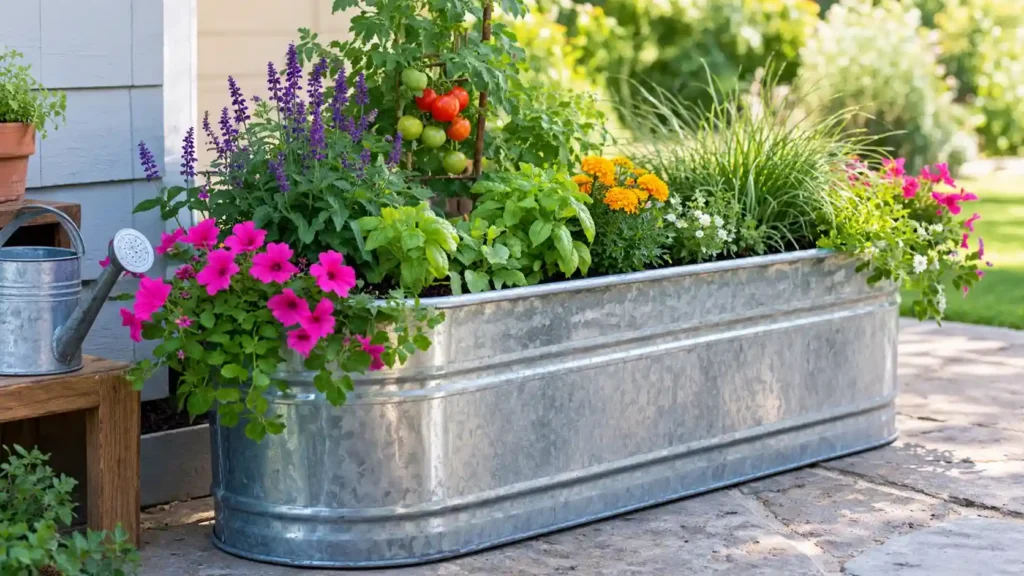
Yes, a water trough can be used as a planter. Trough planters and galvanized water troughs can provide a large growing area and a raised planting height, making them useful for vegetables, herbs, and flowers. However, they also require regular watering and can require a large amount of growing medium once filled. [1]
The basic conversion is simple: choose a suitable location, make sure excess water can drain, use an appropriate growing medium, and select plants that fit the available space and growing conditions.
Why Use a Water Trough as a Planter?
A water trough is useful when you want a defined growing area without building a traditional raised bed.
Its main practical advantage is the combination of root space and accessibility. A sufficiently large trough can accommodate multiple plants while raising the growing area above ground level, which can reduce the amount of stooping and bending required during planting and maintenance. [1]
The trade-off is that a larger trough requires more growing medium and becomes much heavier after filling. For that reason, decide where the trough will stay before adding the growing medium.
For more garden planting options, see the Outsunny Garden Planters collection.
What to Check Before Using a Water Trough
Before converting the trough, check three things:
- Size: Make sure it provides enough root space for the plants you want to grow.
- Location: Choose the final position before filling because a large filled trough can be difficult to move.
- Drainage: Confirm that excess water has a way to leave the container.
If the trough has sharp edges, damaged areas, or fittings that could interfere with planting, address those issues before filling it.
How to Turn a Water Trough into a Planter
1. Choose the Right Location
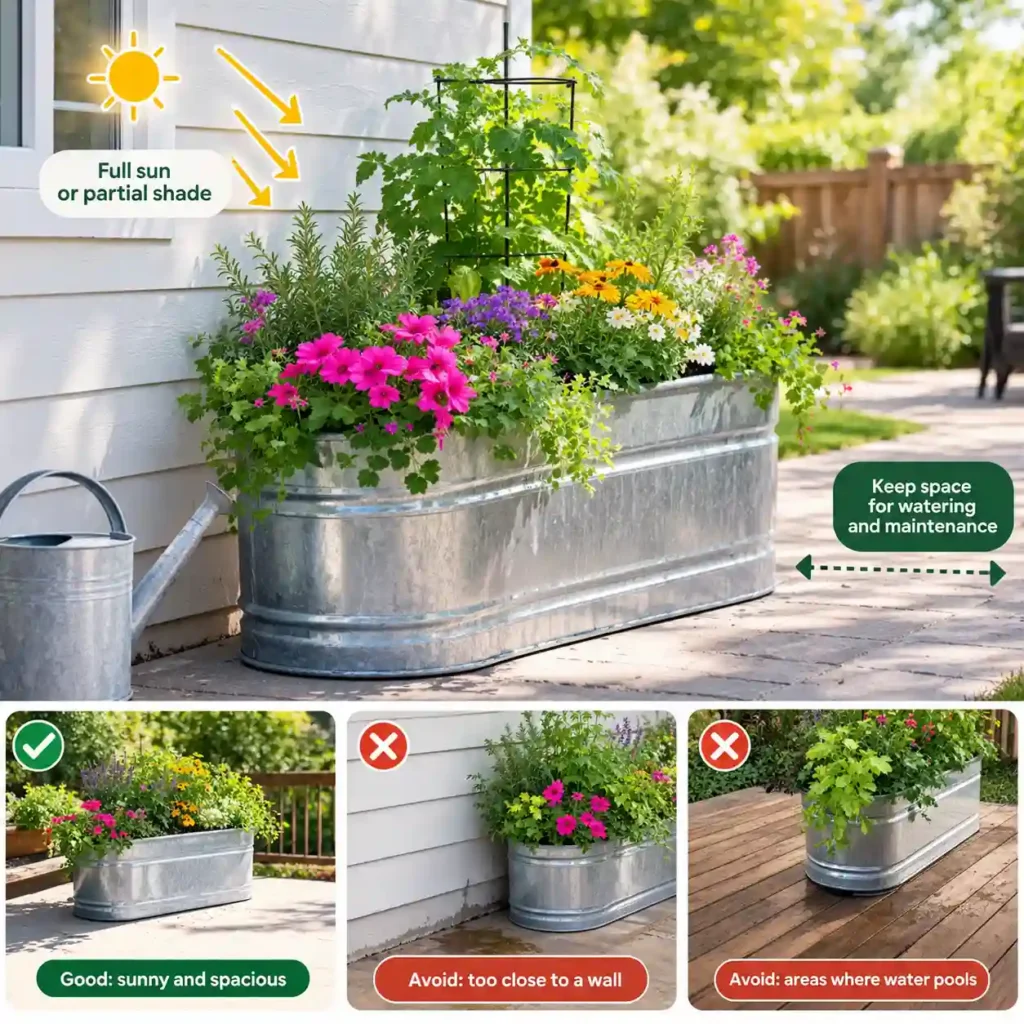
Think about the plants first, then choose the location.
Most vegetables need substantial sunlight, while some herbs and other plants tolerate less. The location should also provide convenient access for watering and enough space around the trough for planting and maintenance.
Pay attention to where drainage water will go. A trough placed directly against a wall, on decking, or beside another surface should not discharge water somewhere that could cause staining, pooling, or damage.
2. Add Adequate Drainage
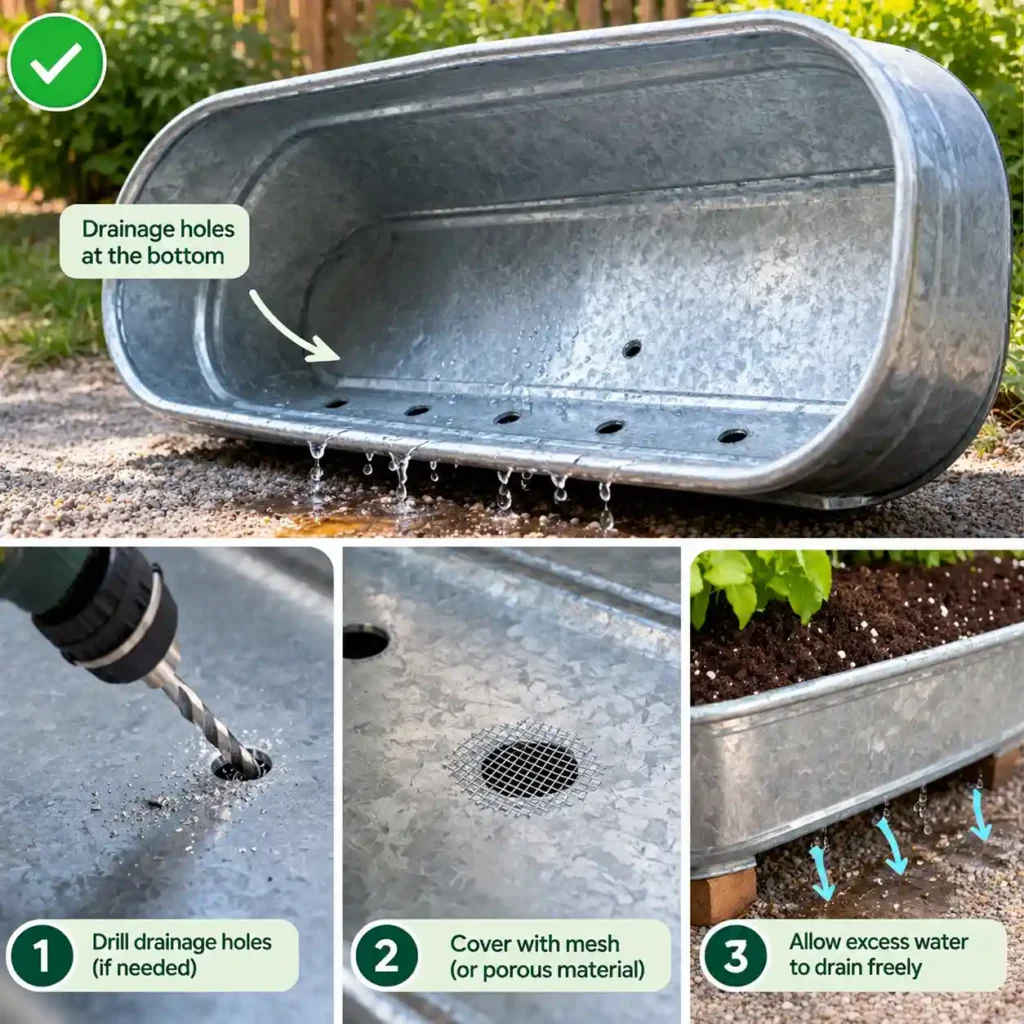
A water trough is designed to hold water, so drainage is one of the first things to address when converting it into a planter.
If the trough does not already have suitable drainage openings, add them near the bottom. The goal is to allow excess water to leave while retaining the growing medium.
For large drainage openings, cover them with a porous material such as mesh so the growing medium does not escape while water can still pass through. [2]
3. Do Not Add Gravel Just for Drainage
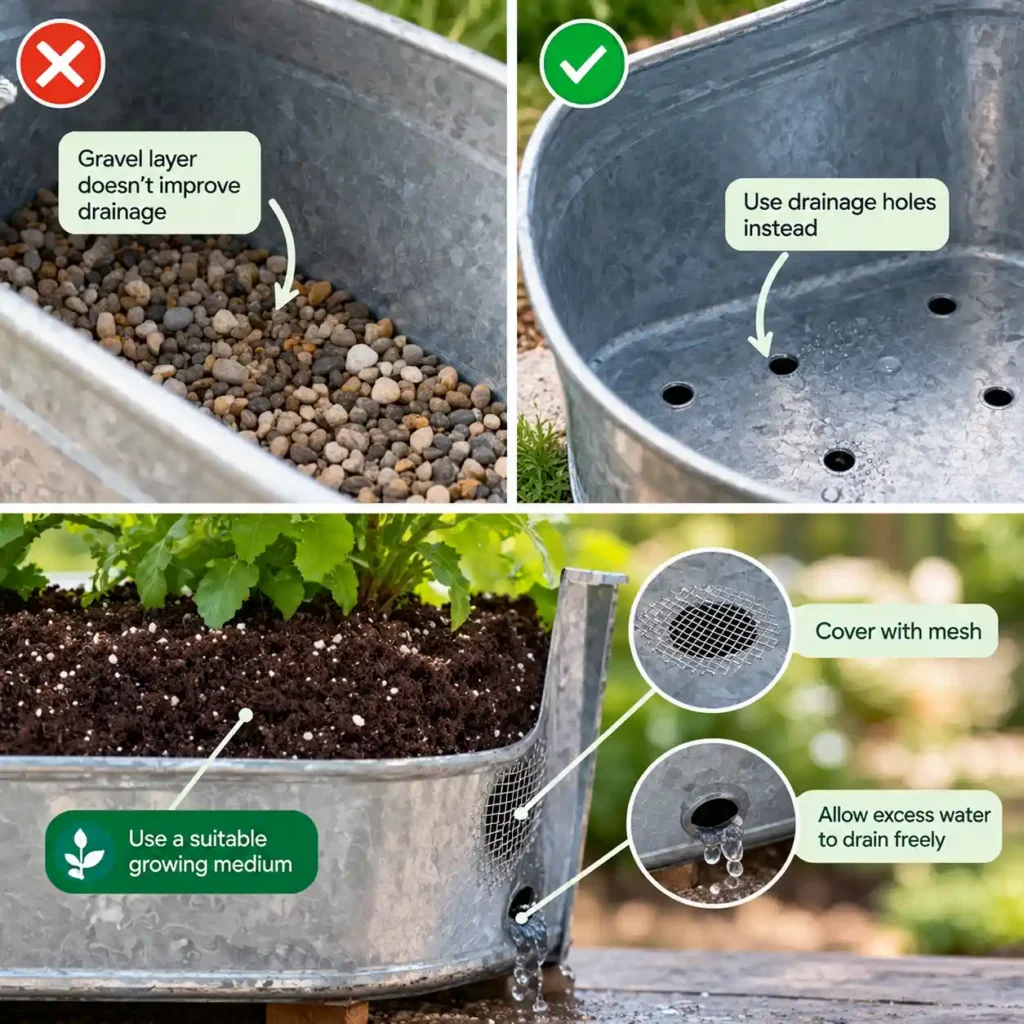
You do not need to fill the bottom of the trough with gravel, rocks, or broken pots to improve drainage.
This is a common container-gardening recommendation, but University of Maryland Extension explains that these materials do not improve drainage and can actually create conditions that keep water higher in the container. [2]
If you want better drainage, focus on effective drainage openings and an appropriate growing medium, rather than adding a separate gravel layer.
4. Use the Right Growing Medium
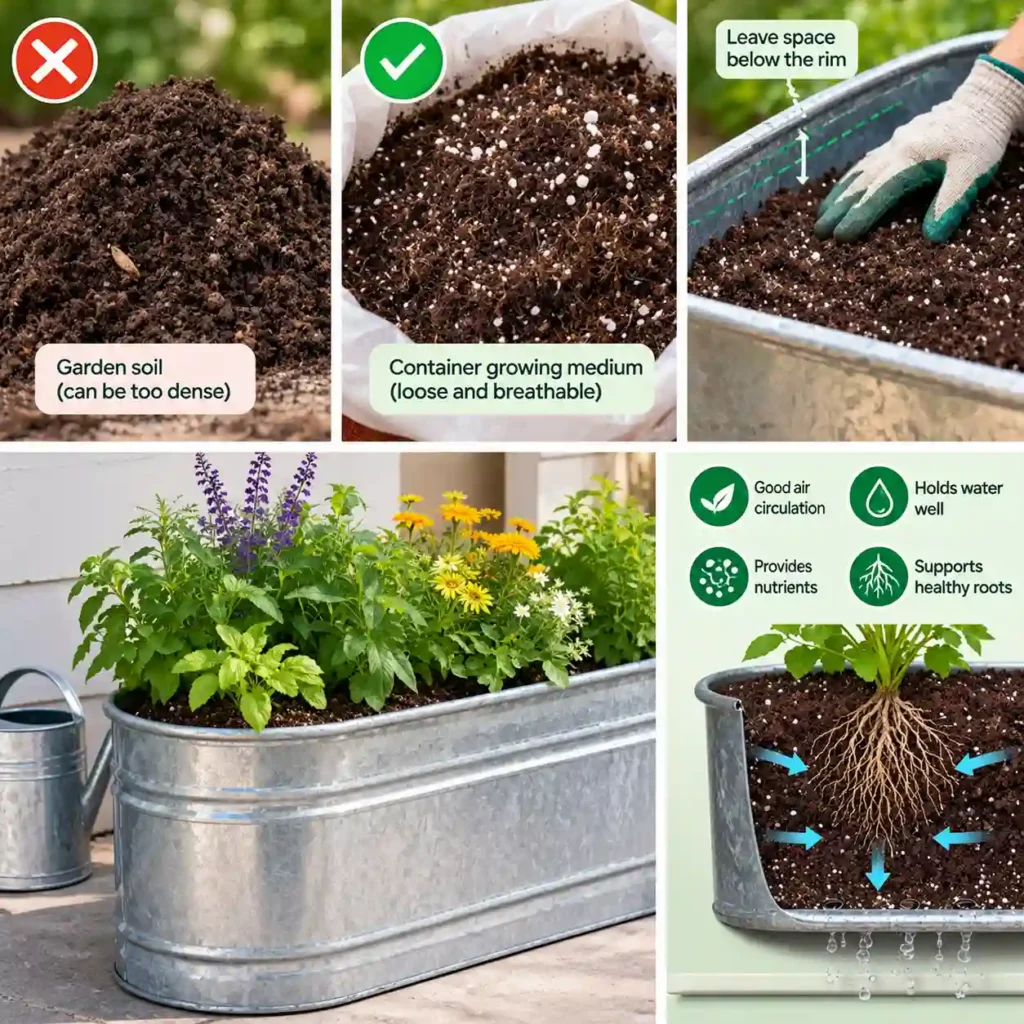
Once drainage is ready, fill the trough with a growing medium suitable for container gardening.
This matters more in a large planter than it might seem. Container roots have access to a limited volume of growing medium, so the medium needs to provide air, water, nutrients, and physical support. UMD Extension notes that ordinary garden soil can be too dense for containers because it restricts air and water movement around roots. [3]
Do not compact the growing medium tightly as you fill the trough. Leave some space below the rim so water can be applied without immediately washing the medium over the edge.
5. Choose Plants That Fit the Trough
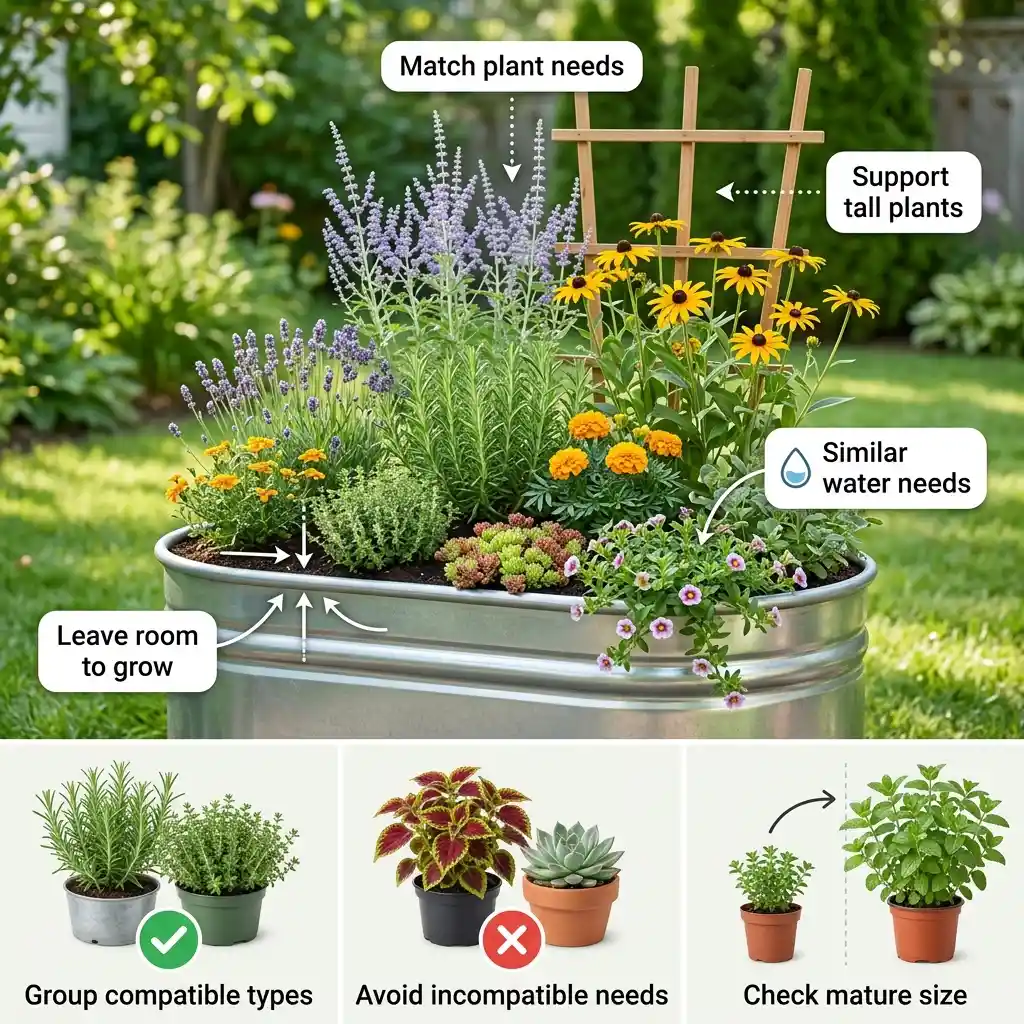
Choose plants according to the trough’s available root space, sunlight, and moisture conditions.
If you are combining several plants in one trough, group plants with similar watering requirements. Otherwise, a watering routine that suits one plant may leave another too wet or too dry.
Also consider mature plant size rather than only the size of young plants. Leave enough room for roots and above-ground growth, and provide support for plants that climb or become tall.
Watering and Maintaining a Trough Planter
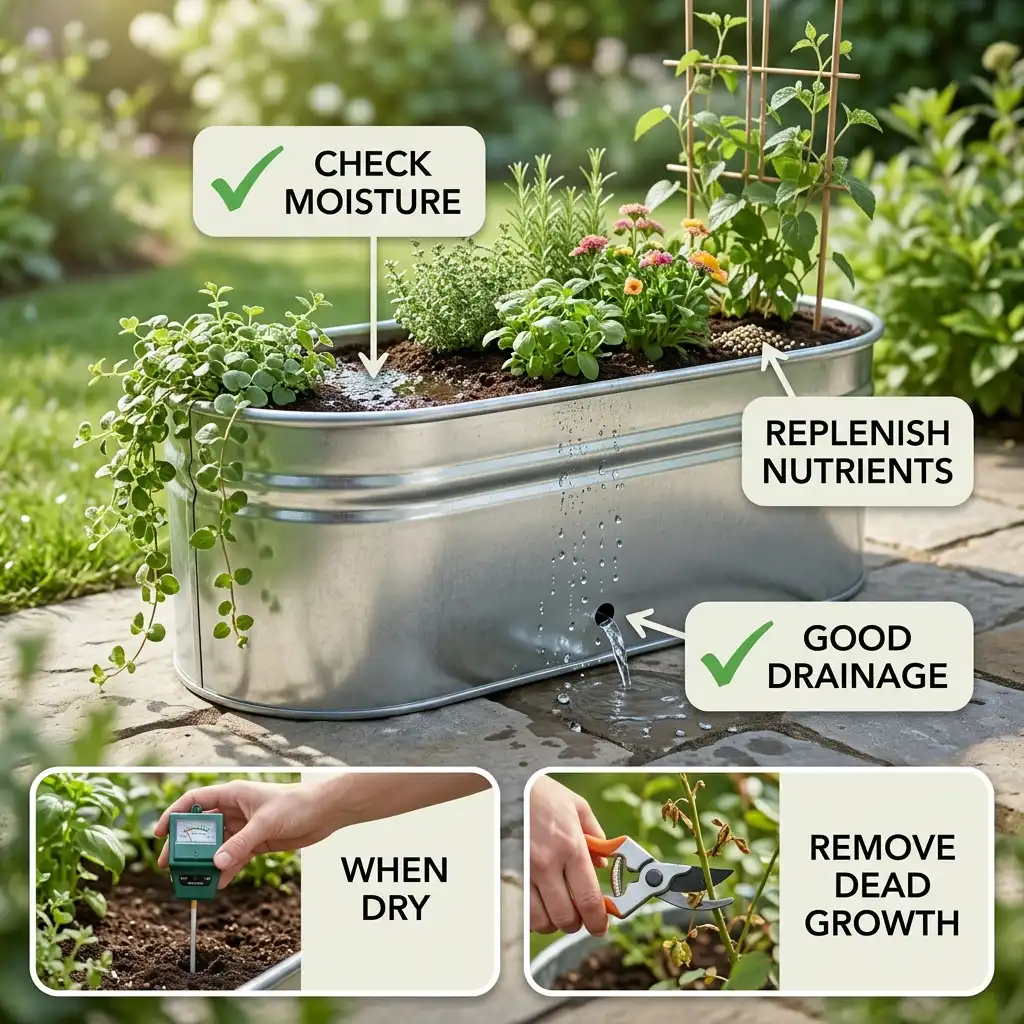
Once planted, maintenance is mainly about checking moisture and keeping the growing environment suitable.
Do not rely on a fixed watering schedule. Check the growing medium and water when it needs moisture. Weather, sunlight, plant size, and the amount of growing medium can all change how quickly a trough dries out.
When watering, wet the growing medium thoroughly rather than giving the plants frequent, shallow amounts of water. Excess water should be able to leave through the drainage openings.
If water remains in the trough for long periods, check the drainage openings rather than simply reducing watering. Poor drainage and excessive watering can create root problems.
As plants grow, remove dead growth, provide support where necessary, and replenish nutrients according to the requirements of the plants and the fertilizer being used.
Final Takeaway
Using a water trough as a planter is a straightforward way to create a raised growing space, but the conversion works best when you solve the practical issues before planting.
Choose the final location first, make sure the trough can drain properly, skip unnecessary gravel layers, and use a suitable container growing medium. Then select plants according to the available space, light, and moisture conditions.
The result can be a practical growing area for vegetables, herbs, or flowers without the need to build a conventional raised garden bed.
FAQs
1. Can you use a water trough as a planter?
Yes. Water troughs can be converted into raised planters and can provide substantial growing space for vegetables, herbs, and flowers. [1]
2. Does a water trough need drainage holes?
Yes, unless it already has another effective drainage system. Excess water needs a way to leave the growing medium.
3. Should you put gravel in the bottom of a water trough planter?
No. Gravel and rocks are not necessary for improving drainage and can reduce usable growing space. Focus on effective drainage openings instead. [2]
4. Can you use regular garden soil in a water trough planter?
It is better to use a growing medium designed for containers. Ordinary garden soil can be too dense for container growing and may restrict air and water movement around roots. [3]
5. What can you grow in a water trough?
You can grow vegetables, herbs, flowers, and other plants that are suitable for container growing. Choose plants according to the trough’s size, sunlight, and moisture conditions.
References
[1] Oklahoma State University Extension, Cow Creek Place
[2] University of Maryland Extension, Growing Vegetables in Containers and Salad Tables
[3] University of Maryland Extension, Growing Media (Potting Soil) for Containers

Outdoor ideas, buying guidance, and category inspiration for shoppers comparing official Outsunny products on Aosom.