Quick answer:
The best shade solutions for windy areas rely on structural stability, high-tension anchoring, and aerodynamic design. For open spaces, breathable HDPE shade sails and adjustable louvered pergolas offer the highest wind resistance by allowing air to pass through rather than catching it. For covered patios, track-guided drop screens lock fabric securely in place, while flexible-rib vented umbrellas provide adaptable shade that bends without breaking. Success in high-wind zones always comes down to choosing permeable fabrics over solid waterproof materials and ensuring heavy-duty, tensioned anchoring.
Why Standard Shade Solutions Fail in High Wind
Standard backyard shade is built for calm, sunny days, not coastal gusts, rooftop drafts, or open-plain winds. When standard products meet high winds, three critical failures typically occur:
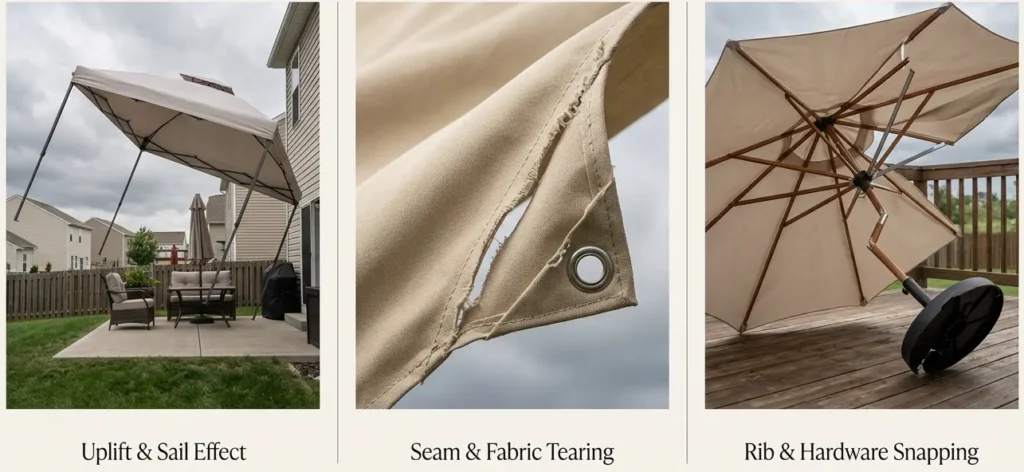
- The Uplift and Sail Effect: Solid, non-breathable fabrics (like standard polyester or vinyl) catch the wind like a kite. This creates extreme upward and outward leverage, pulling forcefully on mounting points and threatening to lift the entire structure off the ground.
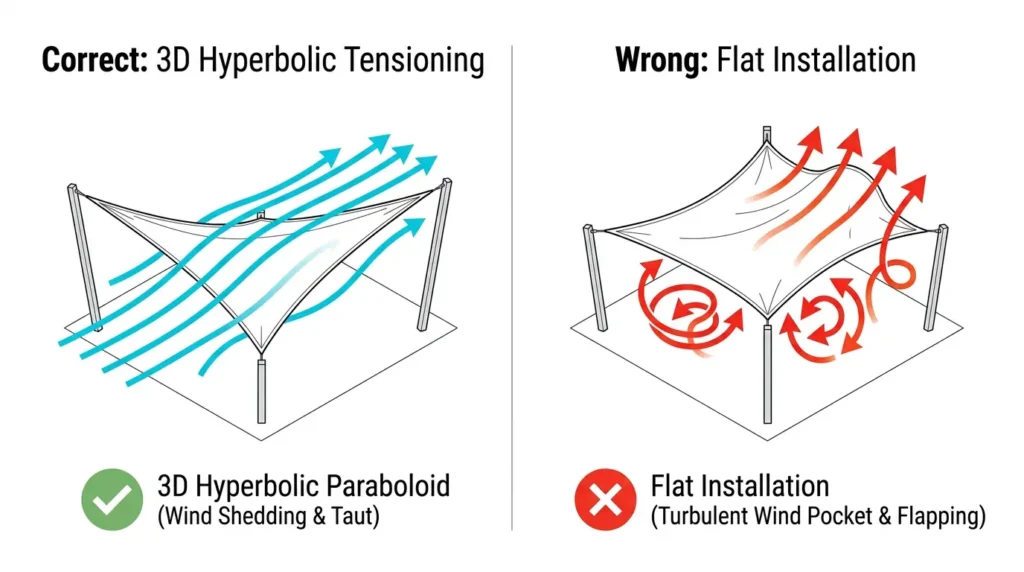
- Flapping and Material Fatigue: When fabric is hung loosely, wind causes violent whipping and flapping. This constant, aggressive friction wears down the seams, stretches the fabric permanently out of shape, and ultimately leads to tearing at the corners.[3]
- Hardware Failure: Rigid aluminum or wooden umbrella ribs, unanchored plastic bases, and lightweight canopy brackets are not engineered to flex. Under sudden, unpredictable gusts, these static components simply snap or tip, creating significant property and safety hazards.[2]
Real-World Wind Speed Reference:
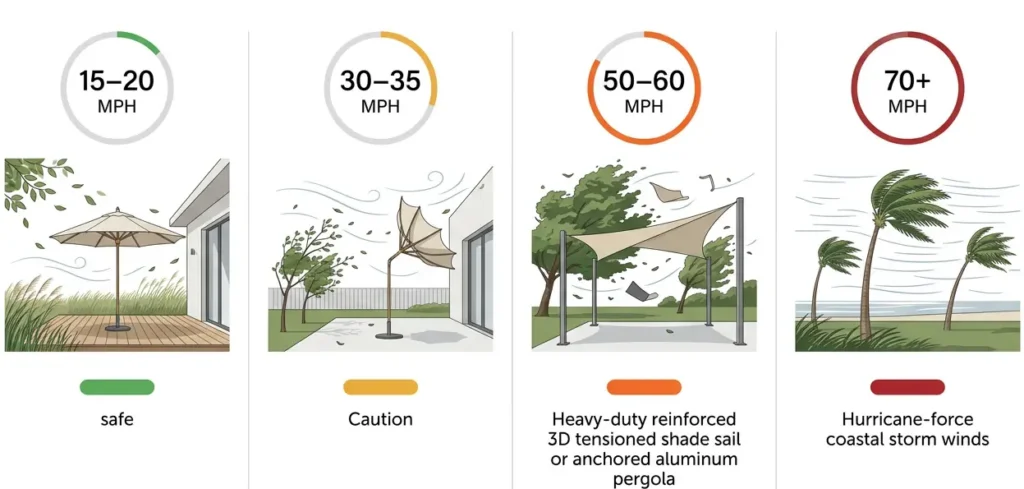
- 15–20 MPH: Light breeze — leaves rustle and small branches move (safe for standard shade).
- 30–35 MPH: Moderate gale — feels like sticking your hand out the window of a car traveling at 35 mph (standard umbrellas flip inside out).
- 50–60 MPH: Severe gale — strong storm forces that make walking difficult (only high-tension mesh or reinforced structures survive).
- 70+ MPH: Hurricane force — equivalent to the draft of a high-speed train passing by.
Top 4 Wind-Resistant Outdoor Shade Solutions
If you live in a wind-prone environment, your shading solution must be engineered specifically for airflow and structural resilience. Here are the top four reliable options.
1. High-Tension Breathable Shade Sails (HDPE Mesh)
- How It Works: Made from High-Density Polyethylene (HDPE), the permeable micro-mesh fabric allows wind to flow continuously through the material, significantly reducing wind drag and structural lift.
- Key Feature: To survive high winds, a shade sail must be tensioned into a 3D hyperbolic shape (e.g., two high diagonal corners and two low diagonal corners). This twisting geometry prevents the center from sagging and distributes wind stress evenly across all structural anchors, stopping the fatal “flapping” effect.[3]
- Best For: Open patios, coastal yards, and large outdoor dining spaces.
- Fabric Weight: 280–320 GSM (Commercial-Grade High-Density Mesh).
- Wind Rating: Rated up to 50–60 MPH when properly tensioned and anchored.
Fabric Thickness Check (GSM): 280–320 GSM fabric feels like heavy-duty canvas workwear or thick denim—resistant to stretching and tearing under heavy load.
2. Adjustable Louvered Aluminum Pergolas
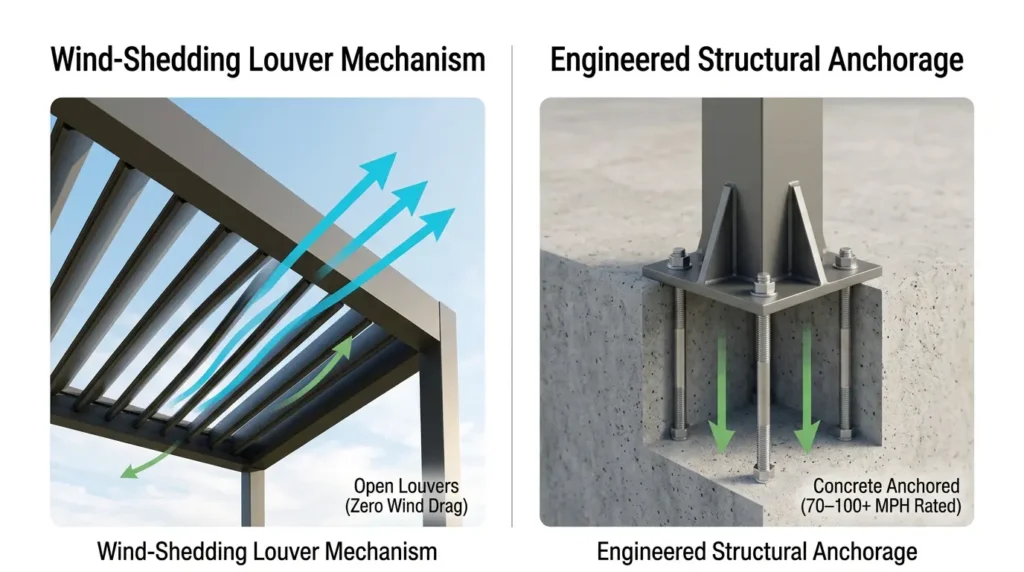
- How It Works: These permanent structures feature rigid aluminum framing with motorized or manual louvers forming the roof. During a windstorm, you simply rotate the louvers open, allowing the wind to pass directly through the roof without creating any upward drag.
- Key Feature: Unmatched structural stability. Because they are bolted into concrete footings or heavy structural deck framing, they can withstand severe weather that would destroy fabric-based solutions.
- Best For: Permanent outdoor living rooms and high-wind rooftop environments.
- Wind Rating: Tested to withstand winds up to 70–100+ MPH (with louvers open).
3. Track-Guided Exterior Drop Screens (Zip Systems)
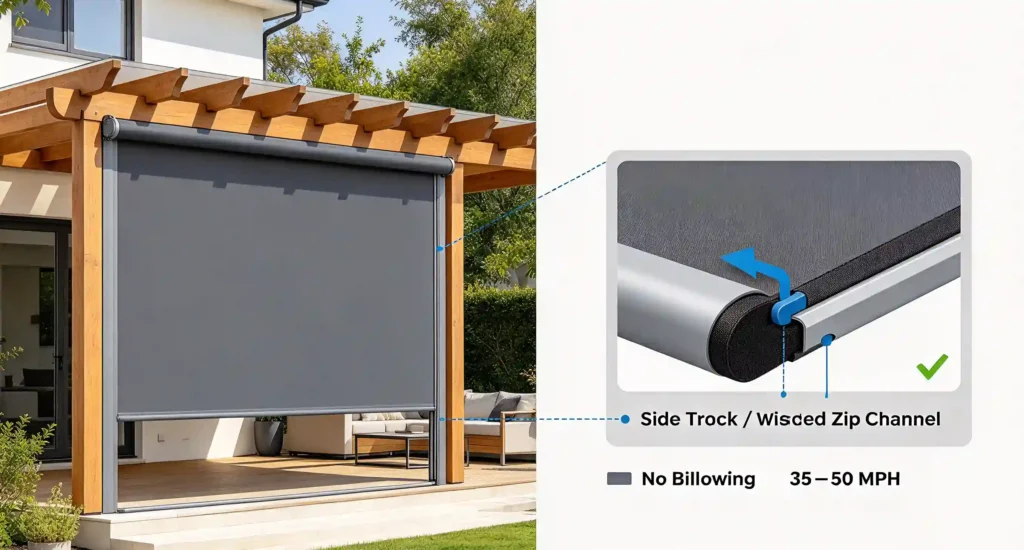
- How It Works: Unlike standard roller shades that hang loosely at the bottom, track-guided screens feature vertical fabric edges that are physically locked into side tracks or welded zip channels.
- Key Feature: This design prevents the fabric from blowing inward, billowing out, or escaping the frame, providing reliable shade, privacy, and windbreak simultaneously.
- Best For: Covered porches, apartment balconies, and enclosing existing wood or aluminum pergola structures.
- Wind Rating: Tested up to Class 3 to Class 6 wind resistance standards (approx. 35–50 MPH).[1]
4. Heavy-Duty Wind-Vented Umbrellas with Flexible Ribs
- How It Works: Engineered for dynamic weather, these umbrellas feature a dual-canopy design (a vent at the top) that releases trapped air pressure from underneath. Furthermore, they utilize flexible fiberglass ribs that bend under stress rather than snapping like traditional aluminum or wood ribs.
- Key Feature: Must be paired with exceptionally heavy-duty weighted bases or bolt-down surface mounts to prevent the entire unit from tipping over.[2]
- Best For: Flexible table shade, poolside seating, and areas where permanent structures cannot be built.
- Base Requirement: Minimum 100–150 lbs weighted base (or direct surface-bolt mounting).
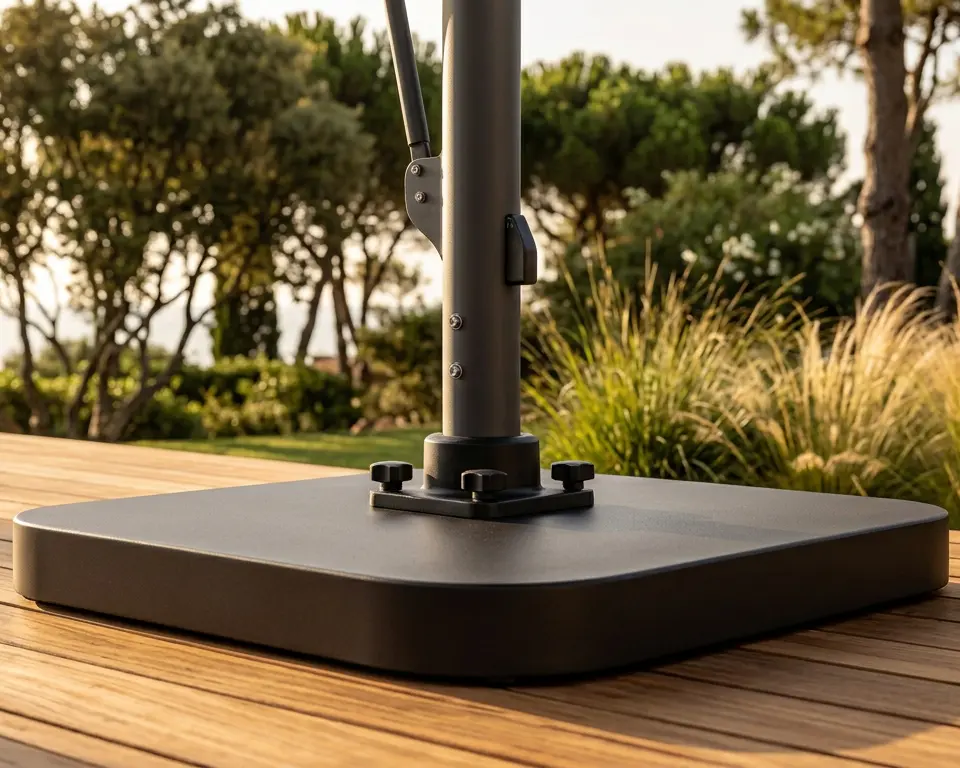
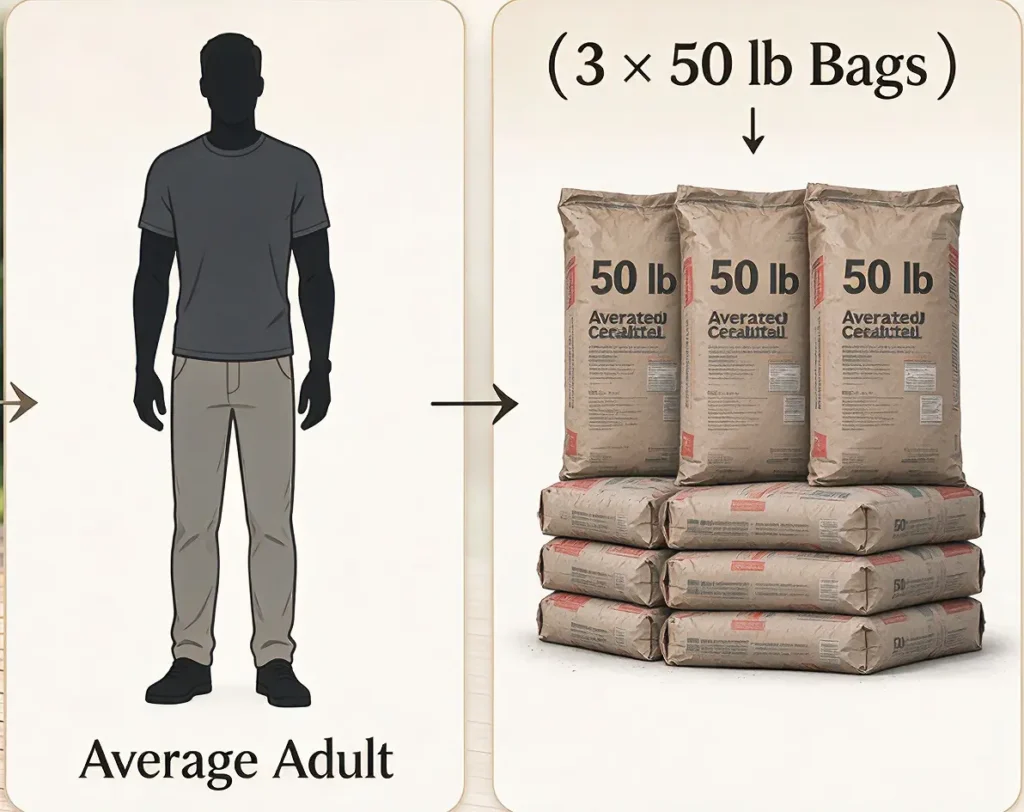
Base Weight Visualizer: A 100–150 lbs base is roughly equivalent to the weight of an average adult or three 50-lb bags of quick-set concrete.
3 Essential Engineering Factors for Wind-Ready Shade
Choosing the right product is only half the battle. Understanding the engineering behind wind resistance ensures your investment lasts for years.
Permeable (Breathable) vs. Waterproof Fabric
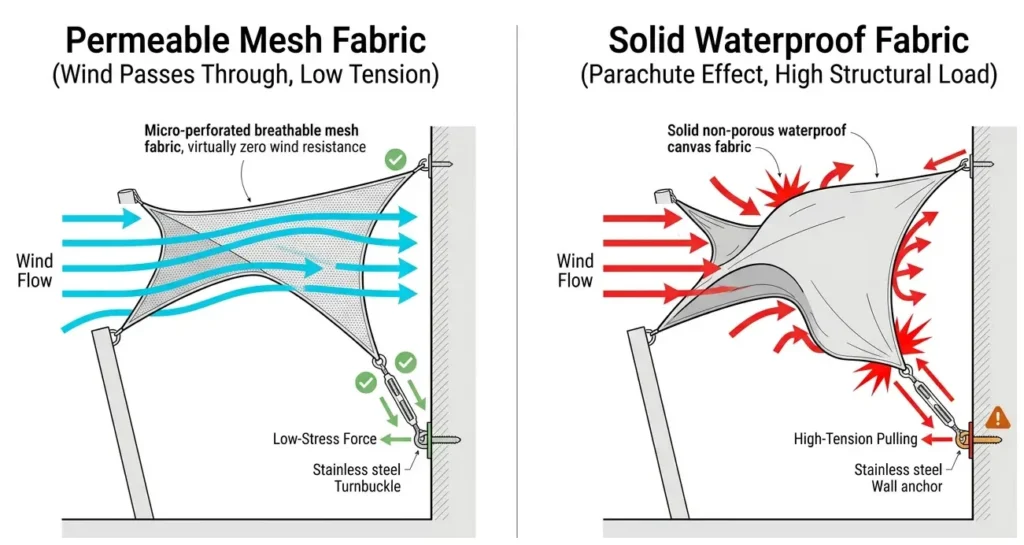
A common mistake is buying waterproof shade solutions for windy areas. Waterproof fabrics are solid; they block rain, but they also block wind. This turns your shade into a parachute. Permeable fabrics (like HDPE Meshnet) allow air to filter through, dramatically reducing the pounds-per-square-inch of pressure on your posts and walls. While they let a fine mist through during heavy rain, they dry rapidly, resist mold, and still deliver exceptional sun protection.
- UV Protection: Blocks up to 95%–98% of harmful UV radiation.
- Tensile Strength: High breaking force resistance under horizontal tension.[3]
Precision Tensioning & Structural Anchoring
In the world of outdoor shade, tension is everything. A loosely installed shade sail will destroy itself in a matter of weeks. High-tension installations transfer the wind’s kinetic energy away from the fabric and into the mounting points. This requires marine-grade stainless steel hardware—such as turnbuckles, D-rings, and heavy-duty wire rope—anchored securely into solid wood studs, masonry, or dedicated steel posts embedded in concrete.[2]
Smart Controls & Auto-Retraction Sensors
For motorized retractable awnings or screens, human error is the biggest liability. Smart systems equipped with anemometers (wind sensors) actively monitor local wind speeds. If a sudden gust exceeds the safe operational threshold, the sensor automatically retracts the motorized awning or screen before structural damage occurs.[1]
What to Avoid in High-Wind Locations
To protect your property, strictly avoid these products in areas prone to strong gusts:
- Standard Non-Vented Market Umbrellas: Without a top vent to release pressure and flexible ribs to absorb shock, these carry a high risk of snapping or lifting out of their bases, becoming dangerous airborne hazards.[2]
- Lightweight Pop-Up Canopies & Gazebos: These temporary structures lack the heavy anchoring and frame strength required to withstand gusts over 15–20 mph. The thin aluminum legs easily bend, and the solid canopy roofs catch the wind.
- Unanchored Drapes & Free-Hanging Curtains: While visually romantic, loose outdoor curtains will flap violently in the wind, entangling furniture, knocking over drinks, and eventually tearing off their mounting grommets.
Seasonal Care & Inspection Checklist
Even the toughest wind-rated shade requires basic maintenance to ensure long-term structural integrity.
- Pre-Storm Protocol: Always establish a habit for severe weather. Open the louvers on your pergola, crank down and tie off your umbrellas, or retract motorized screens when local weather alerts warn of severe gales.
- Hardware Check: Twice a year (typically spring and fall), inspect all turnbuckles, mounting bolts, and side tracks. Wind vibrations can slowly loosen hardware over time. Re-tension shade sails if the fabric has relaxed.[2]
- Off-Season Storage: In regions that experience heavy winter snow loads or seasonal hurricanes, remove fabric shade sails and store umbrella canopies indoors to prevent unnecessary wear.
Final Takeaway
You do not have to sacrifice comfort or aesthetics just because you live in a windy area. By prioritizing breathable fabrics, investing in heavy-duty anchoring, and maintaining proper material tension, you can create a safe, shaded outdoor retreat. Whether you choose the architectural permanence of a louvered pergola, the sleek modern look of a track-guided screen, or the sweeping 3D curves of an HDPE shade sail, matching the product’s wind rating to your local climate is the key to lasting outdoor comfort.
FAQs
1. What is the safest shade solution for extremely strong winds (50+ mph)?
For sustained high winds, permanent architectural solutions are safest. Adjustable louvered aluminum pergolas (bolted to concrete) or commercial-grade track-guided exterior drop screens offer the highest resilience, as they are structurally integrated into the home or ground.[1][2]
2. Why is a breathable shade sail better in windy areas than a waterproof one?
Waterproof sails act like boat sails, catching the wind and placing massive stress on your walls and posts. Breathable (permeable) mesh fabrics allow the wind to pass through the material, which significantly reduces drag, prevents the sail from stretching, and minimizes the risk of hardware snapping.[3]
3. How heavy should an outdoor umbrella base be for a windy deck?
In windy areas, standard 40 lb bases are insufficient. You should use a base weighing an absolute minimum of 100 to 150 lbs, depending on the umbrella’s diameter. For maximum safety, bolting a heavy-duty surface mount directly into your deck joists or concrete patio is highly recommended.[2]
4. Can I leave my shade sail up during a severe storm or hurricane?
No. While high-quality shade sails are rated for strong breezes and moderate gusts, they are not designed to withstand hurricane-force winds or extreme severe weather events. You should untension and take down the fabric before the storm hits to protect both the sail and your mounting posts.
5. How do automated wind sensors work on motorized shade systems?
Anemometers (wind sensors) are small devices mounted near your retractable shade or awning. They continuously measure wind speed. You can set a specific threshold (e.g., 25 mph); if the wind exceeds this speed, the sensor sends an immediate signal to the motor, automatically retracting the shade to safety without any manual input required.
References

Outdoor ideas, buying guidance, and category inspiration for shoppers comparing official Outsunny products on Aosom.