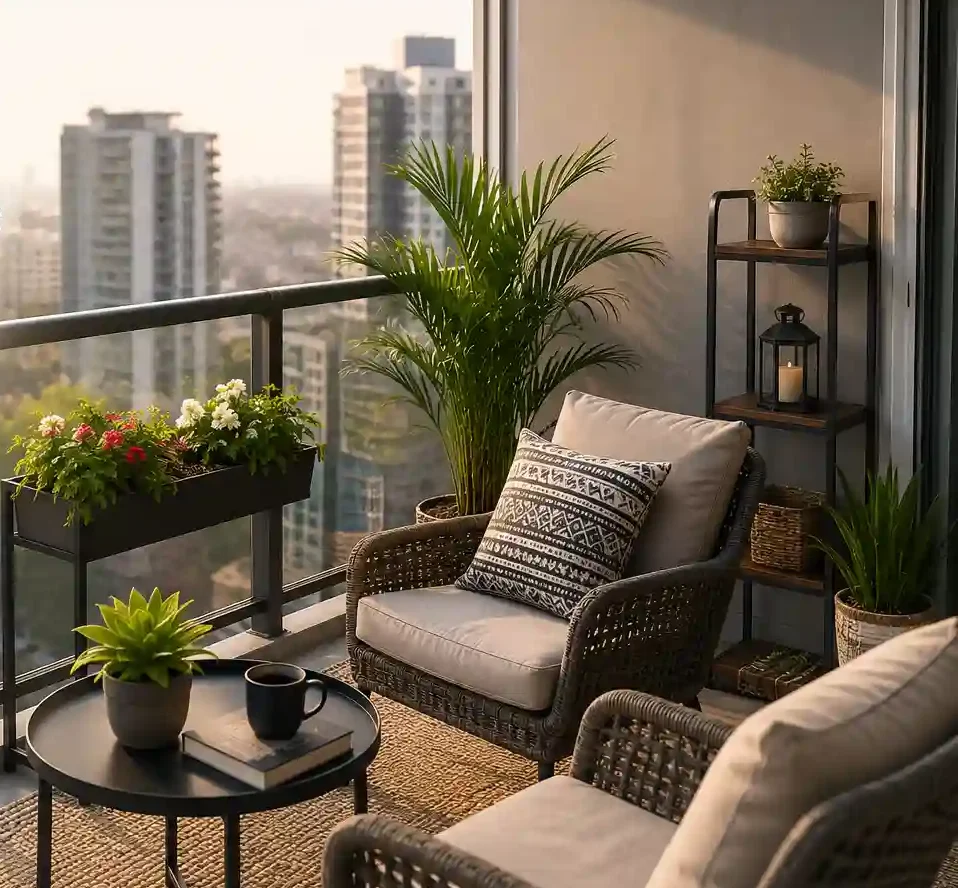
An apartment balcony can become a comfortable outdoor retreat, but choosing furniture for it requires a little more thought than simply picking pieces that look good.
Balconies are often exposed to sun, rain, wind, and changing temperatures. You may also need to consider building rules, weight restrictions, limited access, and the amount of maintenance you are willing to handle. A chair that works perfectly in a sheltered garden may not be the best choice for an exposed high-rise balcony.
This apartment balcony furniture guide explains what to consider before buying, from balcony conditions and intended use to comfort, materials, privacy, weather protection, and maintenance. The goal is to help you choose furniture that works for the balcony you actually have—not just the one you imagine.
Assess Your Balcony Conditions Before Choosing Furniture
Before comparing furniture styles or materials, look at the environment where the furniture will be placed. Two balconies with similar dimensions can have very different furniture requirements depending on their exposure.
1. Consider Sun Exposure
A balcony that receives direct sunlight for several hours a day can be demanding on outdoor furniture.
Repeated UV exposure can contribute to:
- Fading fabrics and finishes
- Hot seating surfaces
- Faster deterioration of some materials
If your balcony gets strong afternoon sun, consider furniture designed for outdoor use and look for fabrics and finishes with appropriate UV resistance.
A covered balcony may provide more protection, but it is still important to check how much direct sunlight reaches the furniture throughout the day.
2. Think About Wind
Wind is one of the most important factors for apartment balconies, particularly on higher floors.
Lightweight furniture is convenient because it can be moved easily, but very lightweight pieces may be more vulnerable to strong gusts. Larger or heavier furniture can provide greater stability, although you should always follow your building’s requirements regarding balcony loads and furniture placement.
Before buying, consider whether your balcony is:
- Fully exposed
- Partially enclosed
- Sheltered by surrounding buildings
- Frequently affected by strong winds
Avoid assuming that a piece of furniture is safe simply because it is marketed for outdoor use. Severe weather may require furniture, cushions, umbrellas, and other loose items to be moved or secured.
3. Consider Rain and Humidity
If your balcony is exposed to frequent rain, choose materials and finishes designed for outdoor conditions.
Also think about what happens after rainfall. Cushions that remain damp for long periods may become difficult to maintain, while furniture placed where water collects may require more frequent cleaning.
4. Check Apartment and Building Rules
Apartment residents may have additional restrictions that homeowners with private patios do not.
Before purchasing, check whether your building, landlord, HOA, or property manager has rules concerning:
- Balcony furniture
- Weight limits
- Outdoor storage
- Umbrellas or shade structures
- Privacy screens
- Railing-mounted accessories
- Items that extend beyond the balcony
These checks can prevent an attractive furniture setup from becoming a practical or safety problem.
Choose Furniture Based on How You Will Use the Balcony
Rather than starting with the question, “What furniture fits?”, start with:
What do I actually want to do on my balcony?
Your answer should determine the type and amount of furniture you buy.
1. For Morning Coffee
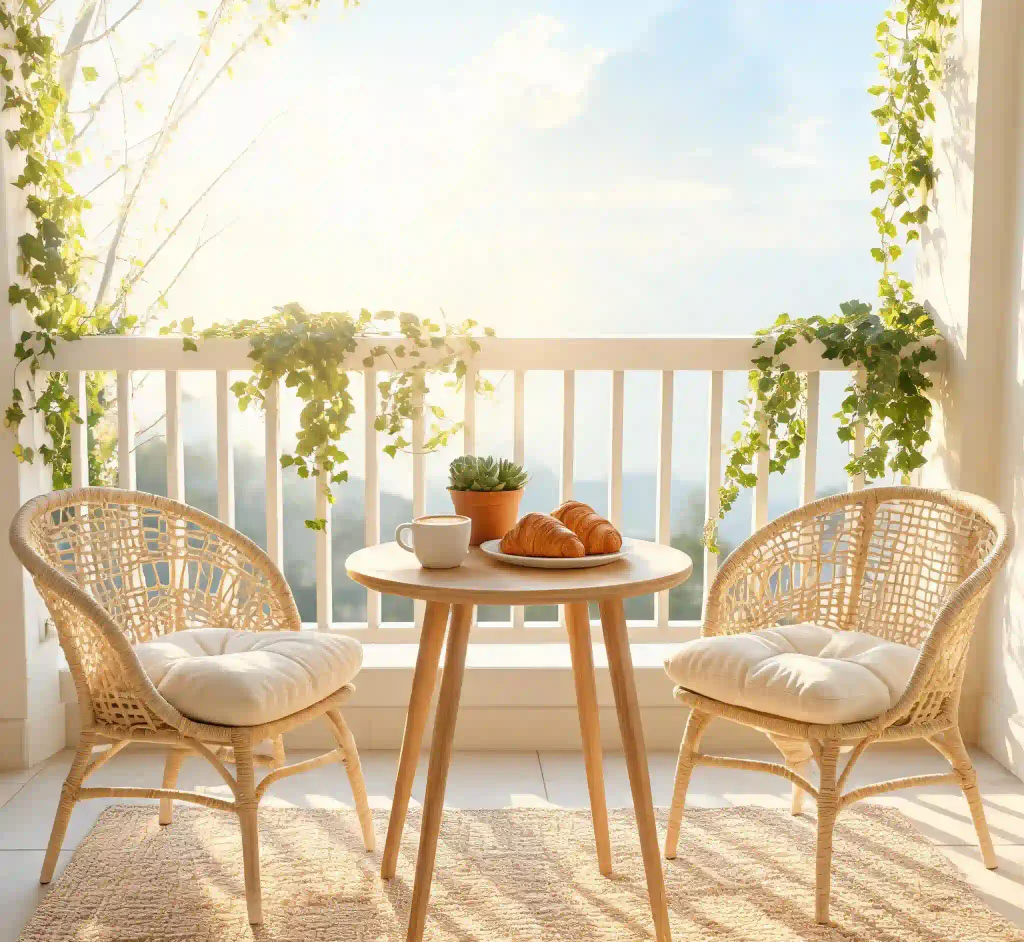
If your main goal is enjoying coffee or a quick breakfast outdoors, you may only need:
- Two comfortable chairs
- A compact table
- Enough surface space for drinks or a small meal
A compact bistro-style arrangement can provide a useful dining area without requiring a large furniture set.
2. For Outdoor Dining
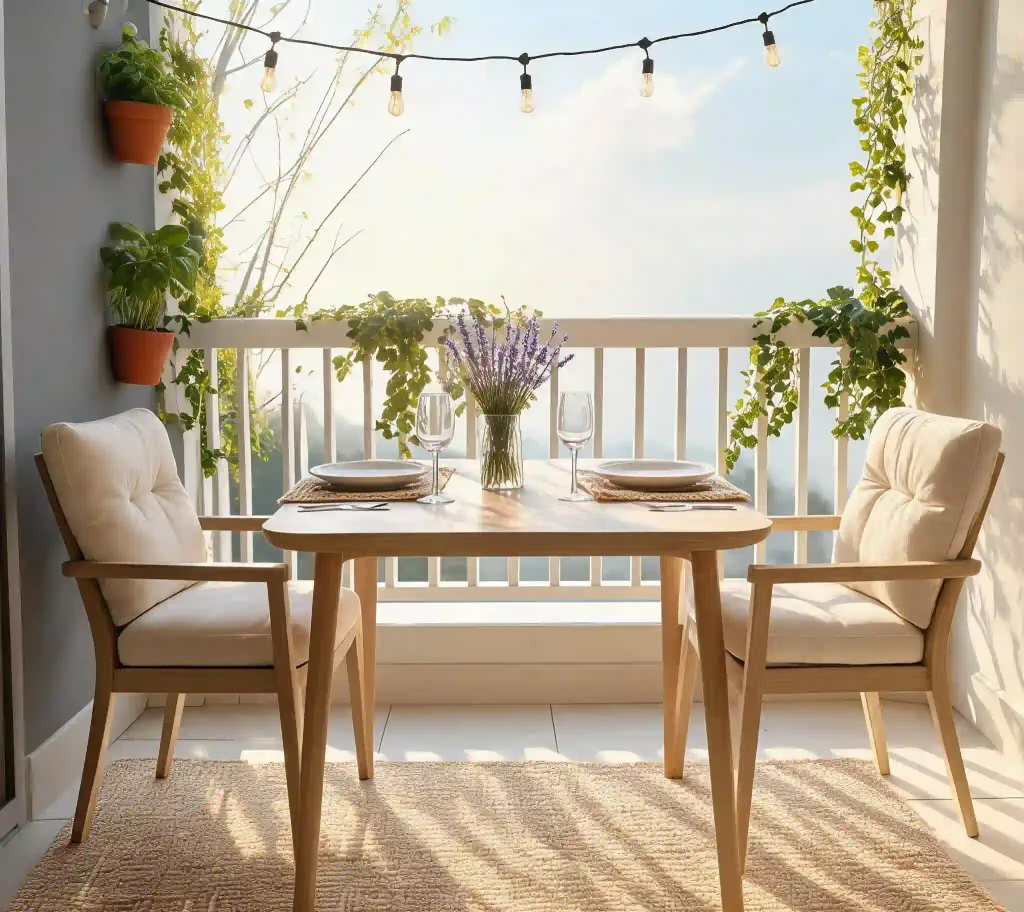
If you regularly eat meals on the balcony, prioritize a suitable table and comfortable dining chairs.
Think about:
- Seating capacity
- Table access
- Comfortable chair positioning
- Space to sit down and stand up
- Where food and drinks will be placed
There is little benefit in choosing a larger dining table if it makes the balcony difficult to move around.
3. For Reading and Relaxing
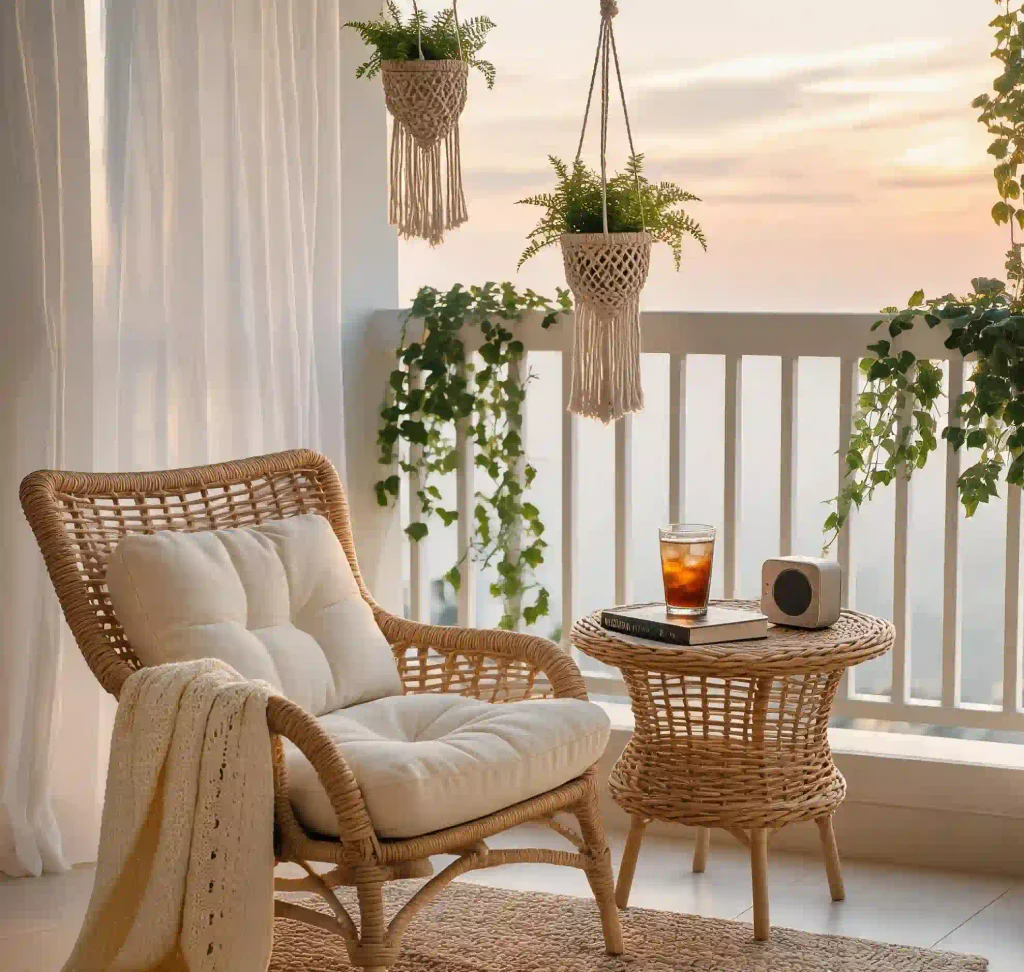
A balcony used primarily for relaxation calls for a different setup.
A lounge chair, cushioned armchair, or compact loveseat may be more appropriate than upright dining seating. If you spend longer periods sitting outside, back support and cushioning become more important.
You may also want a small side table for:
- Books
- Drinks
- Phones
- Snacks
- Small decorative items
4. For Flexible or Occasional Use
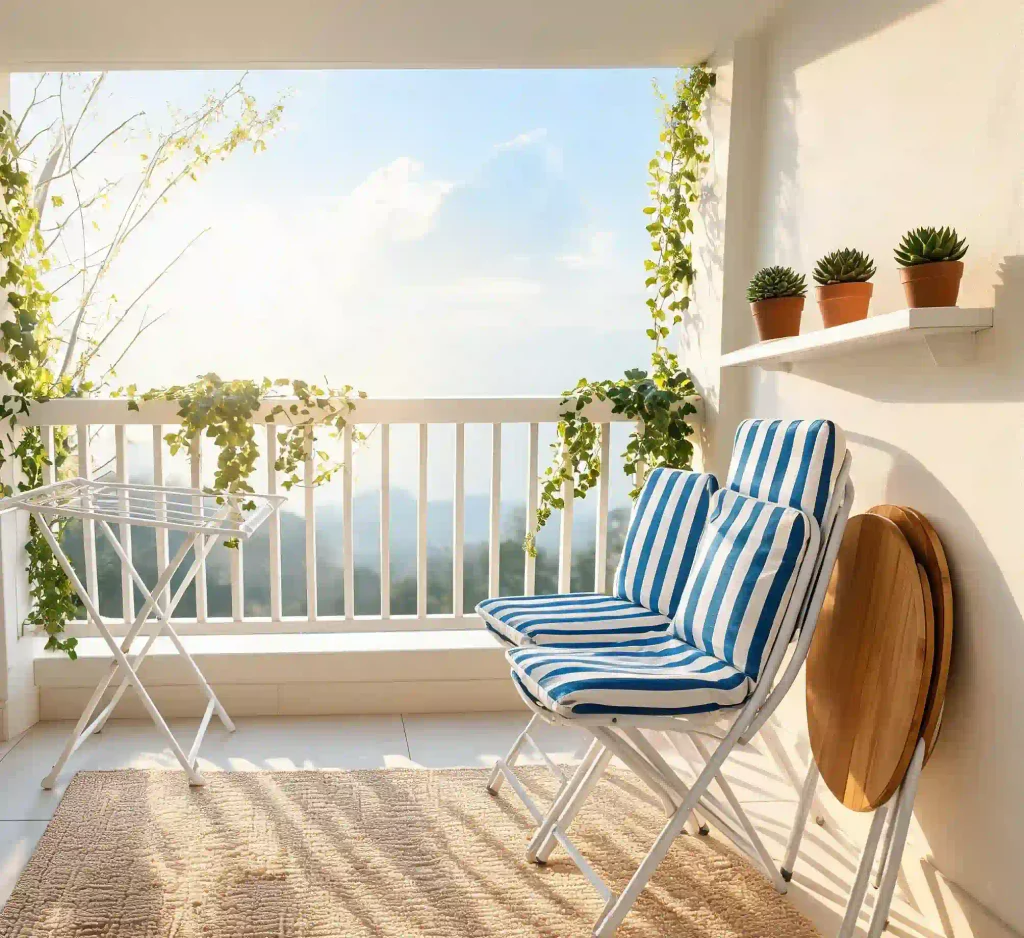
If you only use the balcony occasionally, flexible furniture can be especially useful.
Folding or easily movable chairs can be stored or rearranged when needed. This approach can also make sense for renters who want furniture that can move with them rather than permanently fixed installations.
The best setup is not necessarily the one with the most furniture. It is the one that supports the activity you actually do most often.
Prioritize Comfort Without Overloading the Balcony
Outdoor furniture should not only fit physically—it should also be comfortable enough that you actually want to use it.
This is particularly important when furnishing an apartment balcony because limited space can tempt shoppers to prioritize compact dimensions over comfort.
1. Look Beyond Cushion Thickness
A thick cushion may look comfortable, but cushioning is only one part of the experience.
Consider:
- Seat support
- Backrest shape
- Seat height
- Armrest position
- Cushion firmness
- Overall seating posture
A chair intended for short meals may not be comfortable for an afternoon of reading, even if both chairs have similar cushions.
2. Consider How Long You Sit
For short periods, basic outdoor chairs may be perfectly adequate.
For longer sessions, look for furniture that provides more complete support. A supportive backrest, comfortable seat, and appropriate arm position can matter more than simply adding additional padding.
Cushions also introduce another consideration: storage and maintenance.
If your balcony is exposed to frequent rain, removable cushions may need to be stored or protected during bad weather. Make sure you have somewhere practical to keep them before choosing a heavily cushioned setup.
3. Do Not Sacrifice Comfort for a Smaller Footprint
Choosing the smallest possible furniture is not always the best solution.
If a chair is too narrow, a table is too cramped, or the seating position is uncomfortable, you may end up using the balcony less often.
A better approach is to choose the smallest furniture that still provides the comfort and function you need.
Compare Outdoor Furniture Materials for Balcony Conditions
Material selection becomes especially important when furniture is exposed to the elements.
There is no single material that is best for every apartment balcony. The right choice depends on weather exposure, maintenance preferences, appearance, and how often you plan to move the furniture.
1. Aluminum
Aluminum is a popular choice for outdoor furniture because it is relatively lightweight and easy to move.
It can be particularly useful for apartment residents who need to rearrange their balcony or move furniture when severe weather is expected.
Consider aluminum when you prioritize:
- Easy movement
- A relatively low-maintenance material
- A clean, contemporary appearance
- Resistance to rust compared with ferrous metals
Its lower weight, however, can also be a consideration on very windy balconies.
2. Steel
Steel can provide a more substantial feel and strong structural support.
It can work well when stability is important, but outdoor finishes and protective coatings matter. If the protective surface becomes damaged, exposed steel can be more vulnerable to corrosion.
Steel may therefore suit shoppers who prioritize strength and a substantial furniture feel while remaining willing to maintain the finish appropriately.
3. Synthetic Wicker
Synthetic or resin wicker can give a balcony a relaxed outdoor appearance while generally requiring less maintenance than natural wicker.
It is commonly used for:
- Chairs
- Loveseats
- Lounge furniture
- Compact conversation sets
When comparing wicker furniture, pay attention to whether the product is specifically designed for outdoor use and how the frame and woven material are constructed.
4. Wood
Wood brings a warm, natural appearance to an apartment balcony.
It can work particularly well if you want the balcony to feel more like an extension of your living space. However, outdoor wood may require more care depending on the species, finish, and environmental exposure.
When choosing wood furniture, consider whether you are comfortable with:
- Regular cleaning
- Re-oiling or refinishing where required
- Protecting the furniture from prolonged moisture
- Seasonal care
5. A Simple Material Comparison
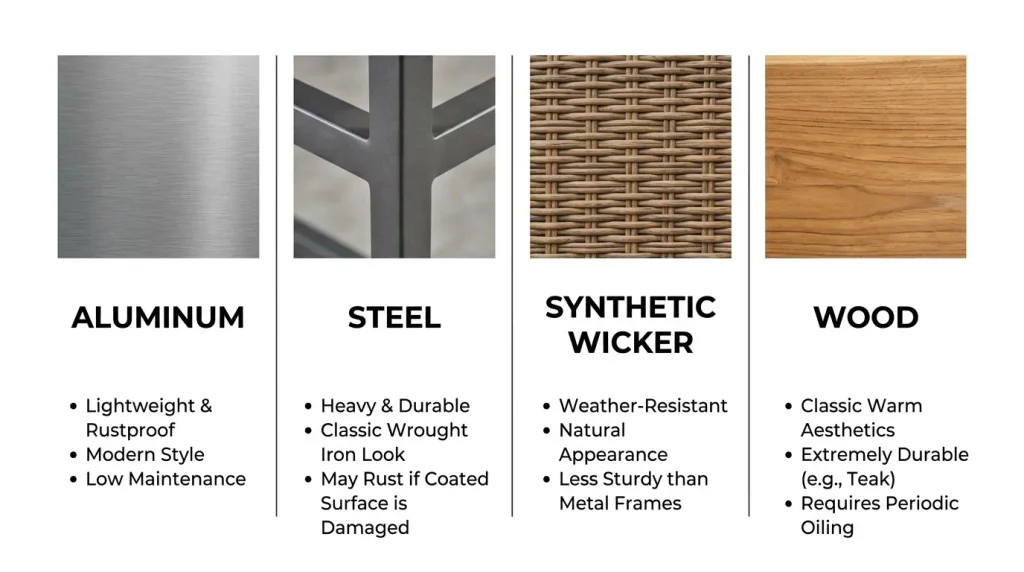
The important point is to match the material to your balcony’s conditions, rather than choosing based on appearance alone.
Think About Privacy, Shade, and Weather Protection
A balcony is different from a private backyard because it is often exposed not only to weather but also to neighboring buildings and surrounding activity.
Furniture can therefore be part of a larger strategy for creating a more comfortable outdoor environment.
1. Add Privacy Where Appropriate
Depending on building rules and the balcony layout, privacy can be improved with:
- Outdoor privacy screens
- Curtains where permitted
- Plants or planters
- Carefully positioned furniture
However, avoid installing anything that could become unstable in strong winds or violate building regulations.
Privacy should improve the experience without creating a new safety concern.
2. Consider Shade
Direct sunlight can make an otherwise comfortable balcony unpleasant during the hottest part of the day.
Depending on your building’s rules and the balcony design, shade may come from:
- A covered balcony
- A suitable outdoor umbrella
- Privacy or shade screens
- Strategic furniture placement
Before purchasing an umbrella or similar accessory, consider both its footprint and wind exposure. An item that works well on a ground-level patio may require additional consideration on an elevated balcony.
3. Protect Furniture During Bad Weather
Outdoor furniture is designed to handle outdoor conditions, but that does not mean it should be exposed to every weather condition without protection.
Simple measures include:
- Storing removable cushions
- Using appropriate furniture covers
- Moving lightweight items during severe weather
- Allowing wet cushions to dry properly
- Following the manufacturer’s care instructions
These steps can help preserve both the appearance and usability of your furniture.
Create a Comfortable Balcony Atmosphere Without Adding Clutter
Once the functional furniture is selected, a few carefully chosen details can make the balcony feel more inviting.
The key is to avoid treating every available surface as a place for decoration.
1. Keep the Color Palette Simple
Two or three complementary colors are usually enough to create a cohesive look.
For example, you could combine:
- Neutral furniture + green plants
- Dark furniture + light cushions
- Natural wood tones + muted textiles
A simple palette can help the balcony feel intentional rather than crowded.
2. Add Greenery
Plants can make an apartment balcony feel more connected to the outdoors.
Consider:
- Floor planters
- Compact pots
- Vertical planting where permitted
- Seasonal plants
Choose plants according to your balcony’s sunlight and weather conditions rather than selecting them solely for appearance.
3. Use Lighting for Evening Comfort
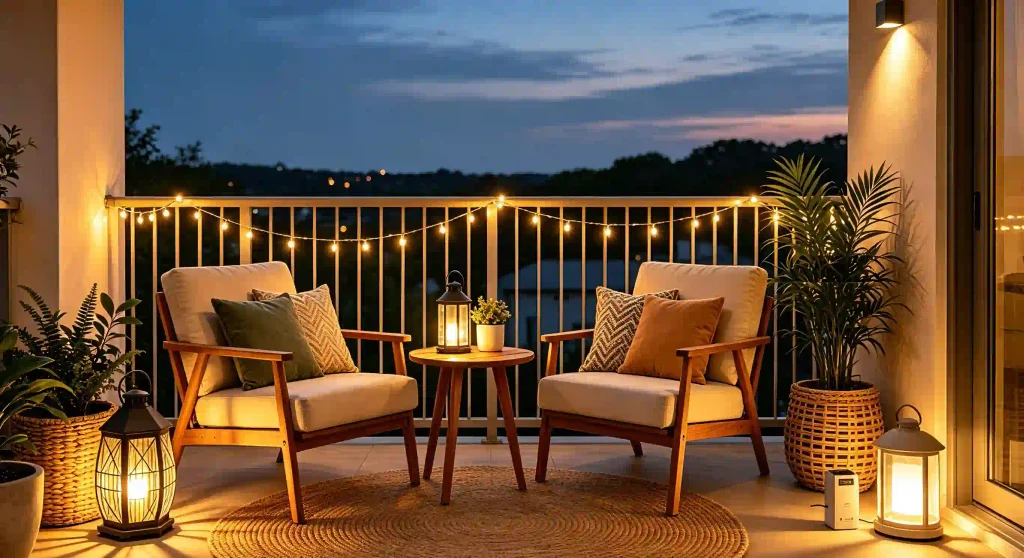
Outdoor-rated lighting can change how the balcony feels after sunset.
Depending on building rules, options may include:
- Lanterns
- Battery-powered lights
- Outdoor-rated string lights
Keep lighting subtle and make sure installations do not interfere with neighbors or violate building requirements.
4. Remember the Main Principle
Furniture provides the function; lighting, greenery, and textiles create the atmosphere.
You do not need a large collection of accessories to make an apartment balcony feel comfortable.
Apartment Balcony Furniture Buying Checklist
Before placing an order, run through the following checklist.
1. Space and Access
- Does the furniture fit the actual balcony?
- Can the balcony door open fully?
- Is there enough room to move around the furniture?
- Can the furniture pass through the apartment door, elevator, or stairway?
2. Intended Use
- Will you mainly dine, relax, read, or entertain?
- Does the furniture support that activity comfortably?
- Are you buying more seating than you realistically need?
3. Outdoor Conditions
- How much direct sun will the furniture receive?
- Is the balcony exposed to rain?
- Is strong wind a regular concern?
- Does the material suit the local climate?
4. Comfort
- Is the seating comfortable for the amount of time you expect to spend outside?
- Does the backrest provide adequate support?
- Will cushions require separate storage?
5. Apartment Restrictions
- Does the furniture comply with building or lease rules?
- Are there weight restrictions?
- Are umbrellas, privacy screens, or railing accessories permitted?
6. Maintenance
- How easy is the furniture to clean?
- Does the material require periodic treatment?
- Can cushions be removed and stored?
7. Practicality
- Is assembly required?
- Can the furniture be moved when necessary?
- Will you still be able to use the balcony for other activities?
Taking a few minutes to answer these questions can prevent many common purchasing mistakes.
Final Thoughts: Choose Furniture for the Balcony You Actually Have
The best apartment balcony furniture is not necessarily the smallest, lightest, or most stylish option. It is the furniture that works with your particular environment and the way you actually use the space.
Before buying, check:
☐ Check your balcony conditions — Sun, rain, humidity, and wind
☐ Define how you will use the space — Dining, relaxing, reading, or entertaining
☐ Consider your maintenance tolerance — Low-maintenance or willing to provide regular care
Once these factors are clear, choosing furniture becomes much easier. Focus on comfort, durability, stability, and practicality first, then use colors, plants, lighting, and accessories to create a balcony that feels like a natural extension of your home.
FAQs
1. What type of furniture is best for an apartment balcony?
The best furniture depends on the balcony’s size, weather exposure, building restrictions, and intended use. For a balcony used mainly for coffee or casual dining, a compact table and two comfortable chairs may be enough. If you want to relax for longer periods, consider a lounge chair, loveseat, or other seating designed for extended use. Material, stability, and maintenance requirements should also match the balcony environment.
2. What is the best material for apartment balcony furniture?
There is no universally best material. Aluminum can be useful when lightweight, movable furniture is important, while steel can provide a more substantial feel. Synthetic wicker offers a relaxed outdoor appearance, and wood provides a natural aesthetic but may require more maintenance. Consider your balcony’s sun, rain, humidity, and wind exposure before making a decision.
3. How do I keep balcony furniture from blowing away?
Start by considering the weight and stability of the furniture in relation to your balcony’s wind exposure. Lightweight items may need to be moved or stored when strong winds are expected. Avoid leaving loose cushions, umbrellas, or decorative items unsecured during severe weather. Most importantly, follow your building’s rules and the manufacturer’s safety guidance rather than relying on improvised methods.
4. Can I leave outdoor furniture on an apartment balcony all year?
It depends on the material, local climate, and how exposed the balcony is. Outdoor-rated furniture can generally remain outside, but prolonged exposure to rain, snow, intense sunlight, or strong winds can increase wear. Removable cushions should often be stored or protected when weather conditions are poor. Furniture covers and regular maintenance can also help, provided they are used according to the manufacturer’s instructions.

Outdoor ideas, buying guidance, and category inspiration for shoppers comparing official Outsunny products on Aosom.