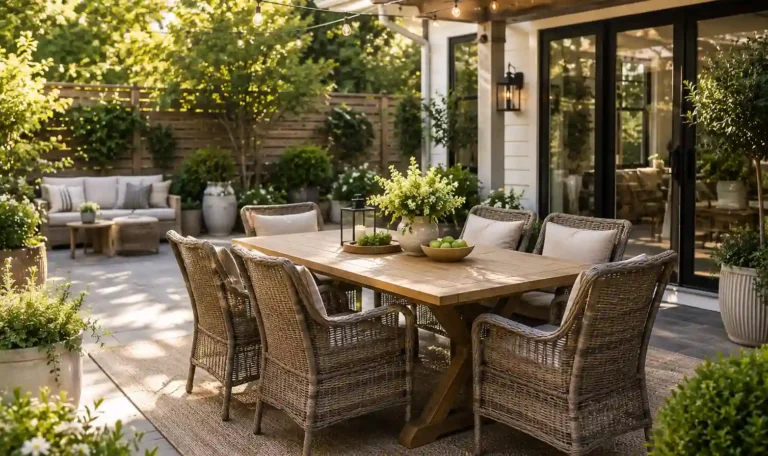
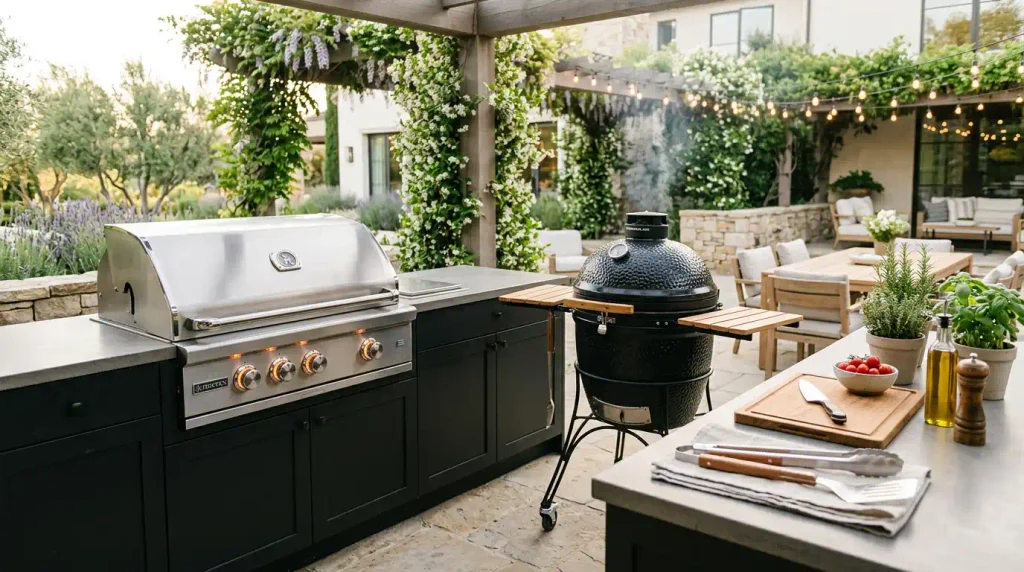
Buying a BBQ grill is about more than choosing the biggest model or the one with the most features. The right grill depends on how you cook, how many people you usually serve, how much space you have, and how much you want to spend.
This BBQ grill buying guide explains the key factors to consider, from fuel type and grill size to cooking features, materials, maintenance, and budget. By comparing these factors, you can find a grill that fits your outdoor space and cooking habits.
Choose the Right Type of BBQ Grill
The first decision is the type of grill you want. Different fuel sources offer different levels of convenience, cooking control, flavor, and versatility.
1. Gas Grills
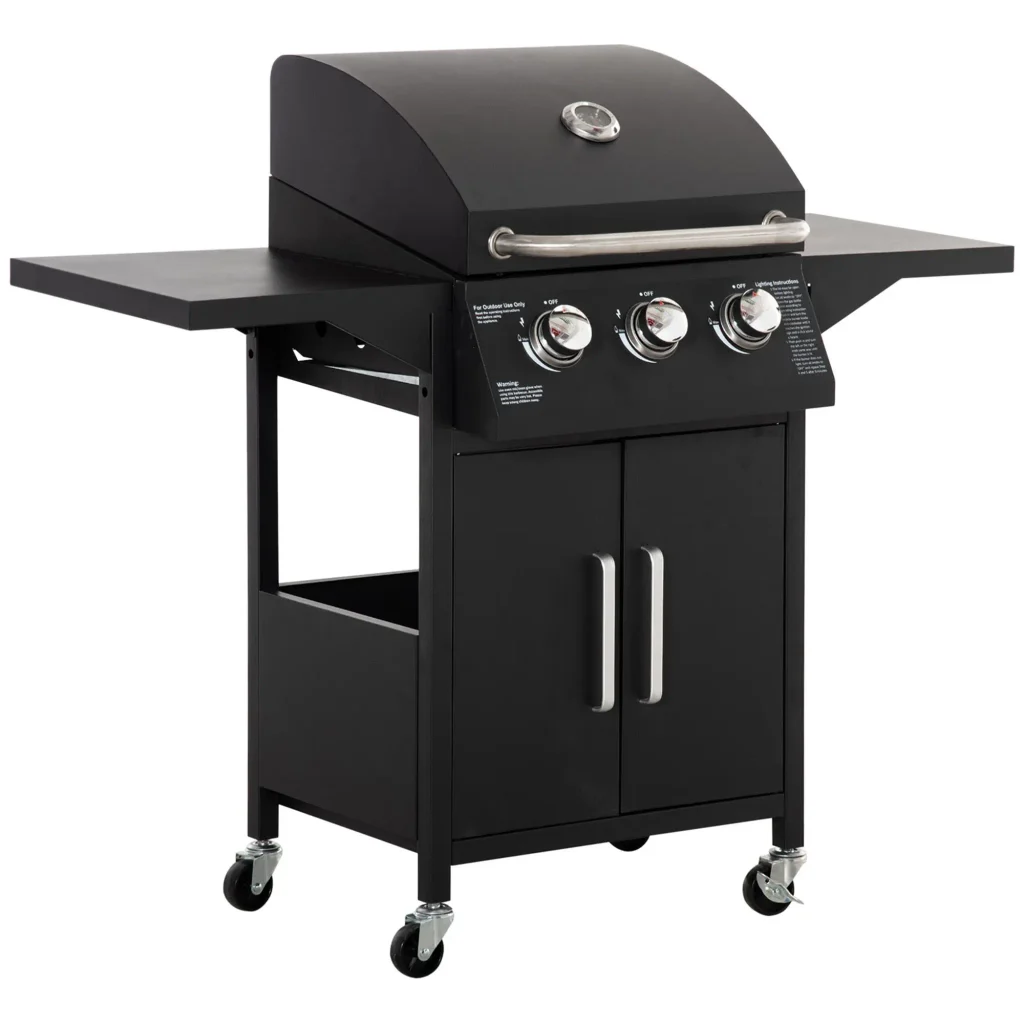
【Outsunny Outdoor 3 Burner Gas Grill】
Gas grills are a practical choice for people who want quick startup and easy temperature control. They typically heat up faster than charcoal grills and allow you to adjust different burners while cooking.
They can be a good option for families that grill regularly or want a straightforward setup for everyday meals such as burgers, vegetables, chicken, and steaks.
Best for: Convenient cooking, frequent grilling, and easy temperature control.
2. Charcoal Grills
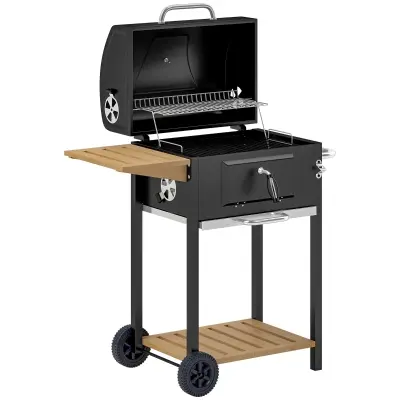
Charcoal grills are popular with people who enjoy traditional BBQ cooking and smoky flavor. They can reach high temperatures for searing, but they generally take longer to light and require more attention during cooking.
Charcoal grills are worth considering if flavor and the traditional grilling experience are more important to you than convenience.
Best for: Smoky flavor, high-heat cooking, and traditional BBQ enthusiasts.
3. Pellet Grills
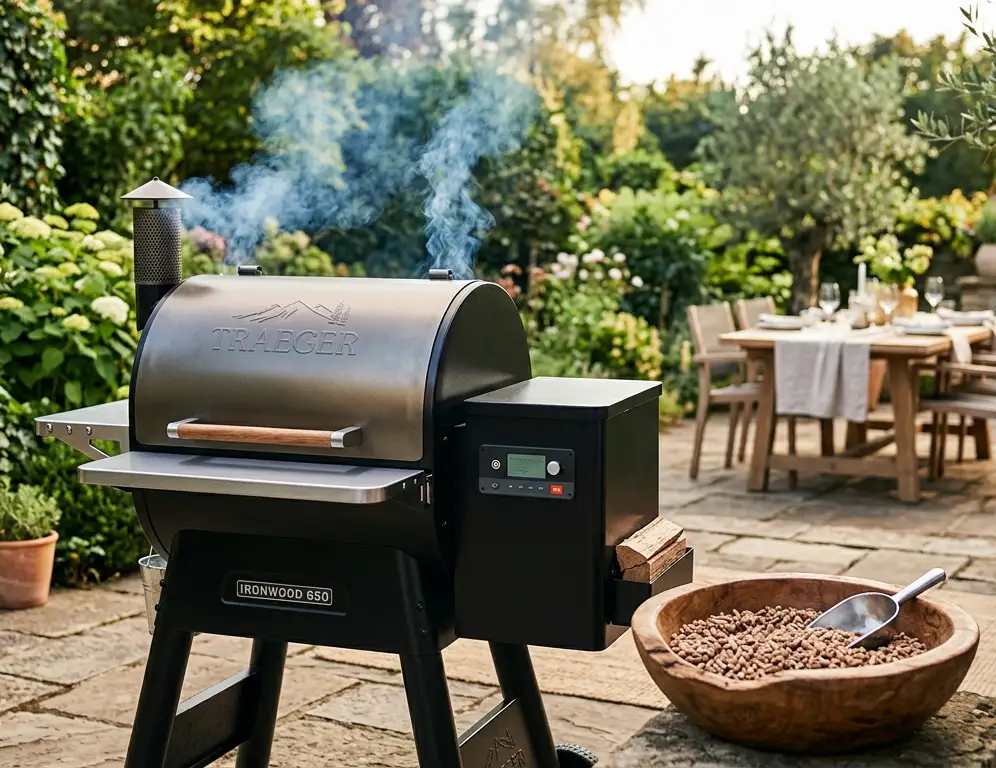
Pellet grills use wood pellets as fuel and are designed to combine wood-fired flavor with more controlled cooking. Many models are particularly suited to smoking and low-and-slow cooking.
They can be useful for cooks who want to prepare a wider range of foods and experiment with smoking as well as conventional grilling.
Best for: Smoking, slow cooking, and wood-fired flavor.
4. Electric Grills
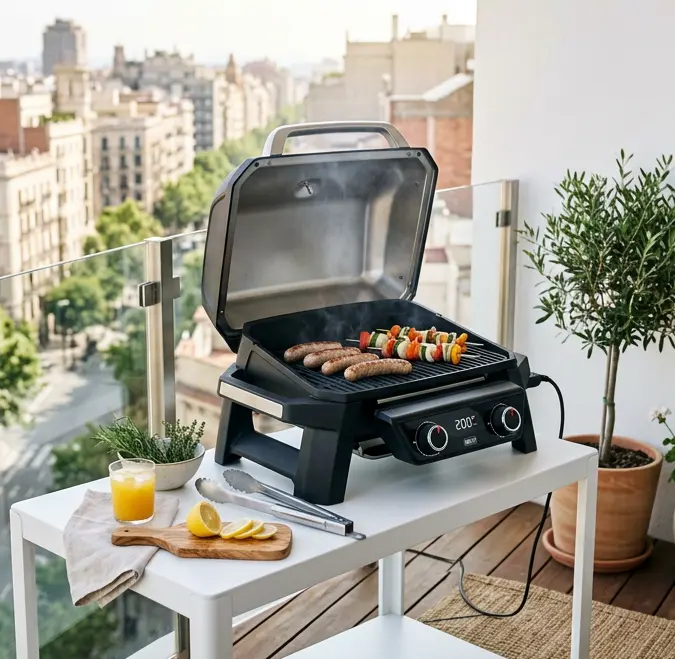
Electric grills can be useful where traditional fuel sources are less practical. They do not require charcoal or propane and can be convenient for certain compact outdoor cooking spaces.
Before choosing one, check local rules and the manufacturer’s instructions regarding outdoor or balcony use.
Best for: Compact spaces and situations where electric cooking is more practical.
5. Other Specialty Grills
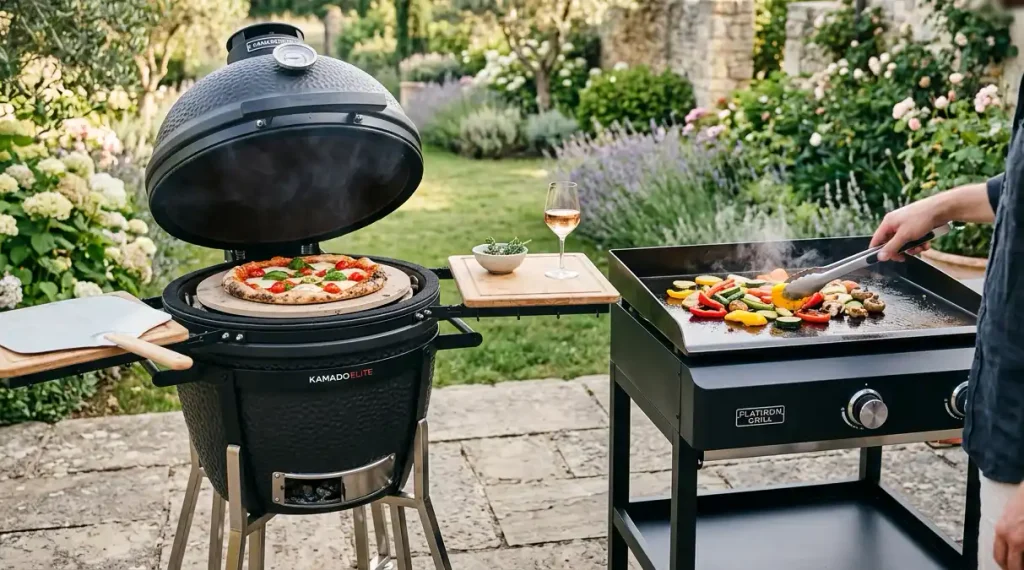
Flat-top griddles and other specialty designs can also be useful if you frequently cook foods that benefit from a solid cooking surface.
The best choice depends on the type of food you actually prepare rather than the number of cooking functions offered.
Choose the Right Grill Size and Cooking Area
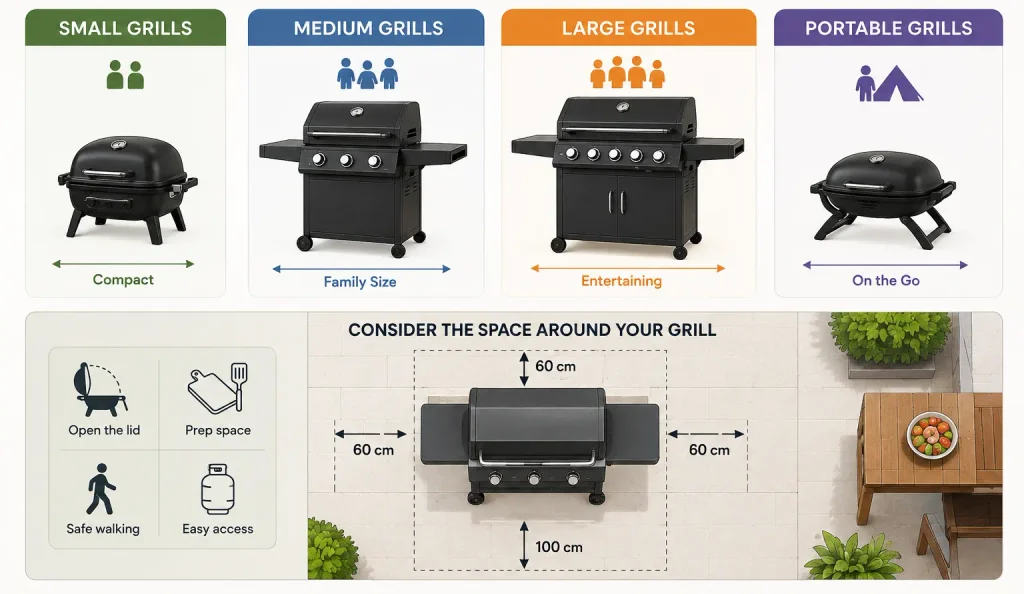
After choosing a fuel type, consider how much cooking space you actually need.
A grill’s advertised number of people does not always tell you how comfortable it will be to cook for your household. Look at the primary cooking area, overall footprint, and available preparation space.
As a general guide:
- Small grills: Suitable for couples, small households, or limited outdoor spaces.
- Medium grills: A practical choice for families and regular everyday grilling.
- Large grills: Better suited to larger households or people who frequently entertain.
- Portable grills: Useful for camping, tailgating, balconies, or other situations where mobility matters.
Remember to consider the space around the grill as well as the cooking surface. You need enough room to open the lid, prepare food, move safely, and access fuel or storage areas.
For most households, choosing a grill based on normal cooking needs rather than occasional large gatherings provides better everyday value.
Look at Burners, Heat Control, and Cooking Features
If you are buying a gas grill, burner configuration is an important consideration. More burners do not automatically mean a better grill. Instead, multiple burners can provide more independent heat zones.
For example, separate burners can allow you to use direct heat on one side while keeping another area at a lower temperature. This can be useful when cooking different foods at the same time.
Also consider features that make everyday grilling easier:
- Electronic ignition for easier startup.
- Side burners for sauces, vegetables, or other side dishes.
- Warming racks for keeping cooked food warm.
- Built-in thermometers for monitoring the general cooking temperature.
- Grease management systems for easier cleanup.
- Side shelves for food preparation and serving.
- Wheels or casters when you need to move the grill.
- Storage cabinets or shelves for keeping tools and accessories organized.
Do not choose a grill simply because it has more features. Prioritize the functions that match how you actually cook.
Check the Grates and Overall Build Quality
Materials affect a grill’s durability, heat retention, appearance, and maintenance requirements.
Common cooking grate materials include:
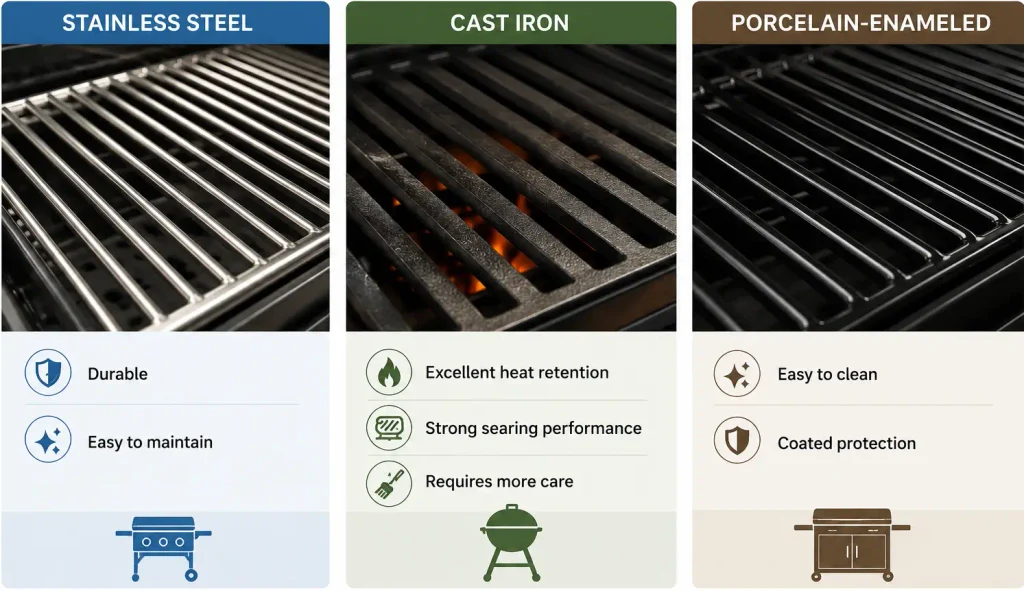
For the rest of the grill, look at the construction of the cooking chamber, lid, burners, frame, shelves, and other frequently used components.
When comparing products, check the manufacturer’s specifications for:
- Cooking grate material
- Main body and frame materials
- Weight capacity
- Burner material and configuration
- Overall dimensions
- Warranty information
A higher price does not automatically guarantee better construction, so compare the actual materials and specifications rather than relying only on appearance.
Consider Your Budget and Long-Term Value
BBQ grills are available at a wide range of prices. Instead of choosing the cheapest model or spending as much as possible, consider which features and construction quality provide value for your cooking habits.
A basic grill may be sufficient if you only grill occasionally. If you cook several times a week, spend more time entertaining, or want additional cooking flexibility, investing in a larger or better-equipped model may make more sense.
When comparing prices, consider:
- Cooking area
- Fuel type
- Materials
- Burner configuration
- Storage and preparation space
- Additional cooking features
- Warranty and expected durability
Promotions can also affect the final price, so compare the current product price and specifications before purchasing.
The goal is not to buy the most expensive grill. It is to choose a model that provides the cooking capacity and features you will actually use.
Think About Maintenance, Storage, and Safety
A grill needs regular maintenance regardless of the fuel type.
Clean the cooking grates regularly and remove grease buildup according to the manufacturer’s instructions. Gas grills may require grease-tray cleaning, while charcoal grills need ash removal after the grill has completely cooled.
A grill cover can also help protect outdoor equipment from weather when it is not being used.
Safety is equally important. Place the grill on a stable, suitable surface and maintain the clearance recommended by the manufacturer and local safety guidance. Keep combustible materials away from the grill, never leave an operating grill unattended, and follow the instructions for your specific fuel type.
Before buying, also consider where the grill will be stored. A large grill may offer more cooking capacity but can make a small patio or balcony feel crowded.
Which BBQ Grill Is Right for You?
There is no single best BBQ grill for everyone. A useful way to narrow your options is to match the grill to your normal cooking habits:
- Want convenience and easy temperature control? Consider a gas grill.
- Prioritize traditional smoky flavor? A charcoal grill may be a better fit.
- Enjoy smoking and slow cooking? Look at pellet grills.
- Have limited space or specific restrictions on fuel? An electric or compact grill may be worth considering.
- Want one grill for grilling, smoking, roasting, and baking? Consider a versatile specialty grill such as a kamado.
Then consider the size, cooking area, materials, features, and budget before making your final decision.
Final BBQ Grill Buying Tips
Before buying a BBQ grill, ask yourself five questions:
- What type of food do I usually cook?
- How many people do I normally cook for?
- How much outdoor space do I have?
- Which features will I actually use?
- What budget makes sense for my cooking frequency?
The best BBQ grill is not necessarily the largest or most expensive model. It is the one that provides enough cooking space, suits your preferred cooking method, fits your outdoor area, and offers the features you will use regularly.
Compare the available BBQ grills to find a model that fits your cooking needs and outdoor space.
FAQs
1. What type of BBQ grill is best for beginners?
Gas grills are often a convenient starting point because they offer relatively quick startup and straightforward temperature control. However, charcoal grills can be a better choice if traditional BBQ flavor and the hands-on cooking experience are your priorities.
2. How do I choose the right grill size?
Start with the number of people you normally cook for and the amount of food you typically prepare at one time. Then check the grill’s primary cooking area and overall dimensions to make sure it fits both your cooking needs and available outdoor space.
3. Is a gas or charcoal grill better?
Neither is universally better. Gas grills prioritize convenience and temperature control, while charcoal grills offer traditional cooking and smoky flavor. Choose based on which experience and cooking style matter most to you.
4. What features should I look for in a BBQ grill?
Useful features can include multiple burners, electronic ignition, side shelves, warming racks, grease management, storage space, and wheels. Prioritize features that solve your actual cooking or space requirements rather than simply choosing the grill with the longest feature list.
5. How do I maintain a BBQ grill?
Clean the cooking grates regularly, remove grease and food residue, empty charcoal ash after the grill has cooled, and follow the manufacturer’s maintenance instructions. Using a suitable grill cover can also help protect the grill when it is stored outdoors.

Outdoor ideas, buying guidance, and category inspiration for shoppers comparing official Outsunny products on Aosom.