Choosing the right patio dining set is not simply a matter of counting how many chairs you need. A set that seats your whole family can still feel too large if it leaves little room to move, while a compact set may become frustrating when you regularly have guests.
The right choice depends on how many people normally use the set, how you use your outdoor space, the size and shape of your patio, and how much room people need to sit and move comfortably.
This guide explains how to choose the right size patio dining set for your family, from seating capacity and table dimensions to chair clearance, patio layout, and common sizing mistakes.
Start With Your Family Size and Seating Needs
The first question to ask is simple: How many people do you actually need to seat?
A patio dining set should comfortably accommodate the people who use it most often rather than being selected solely for occasional gatherings.
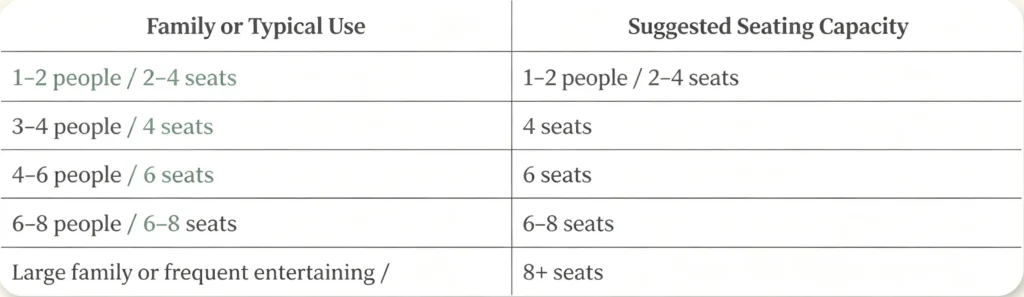
These are general starting points rather than strict rules. The best size also depends on the furniture’s dimensions, the size of your patio, and how much personal space each person needs.
1. Consider Your Everyday Use
Think about your normal routine:
- Do you usually eat outdoors as a couple?
- Does your family regularly dine together?
- Do children use the set?
- Do you frequently invite friends or relatives over?
- Do you need seating for everyone at the same time?
For example, a family of four that occasionally hosts two guests may find a six-person patio dining set more practical than a four-person set. On the other hand, if additional guests are rare, buying a much larger set may unnecessarily consume valuable patio space.
2. Family Size vs. Guest Capacity
It can help to separate everyday seating from occasional seating.
Your regular household should determine the basic size of the set. If you frequently entertain, look for ways to add flexibility rather than automatically choosing the largest possible table.
An extendable table or a few additional occasional chairs can sometimes provide more flexibility than using a large dining set every day.
Match the Patio Dinig Set to Your Available Space
Once you know how many people you need to seat, check whether your patio can accommodate that size comfortably.
1. Measure the Usable Patio Area
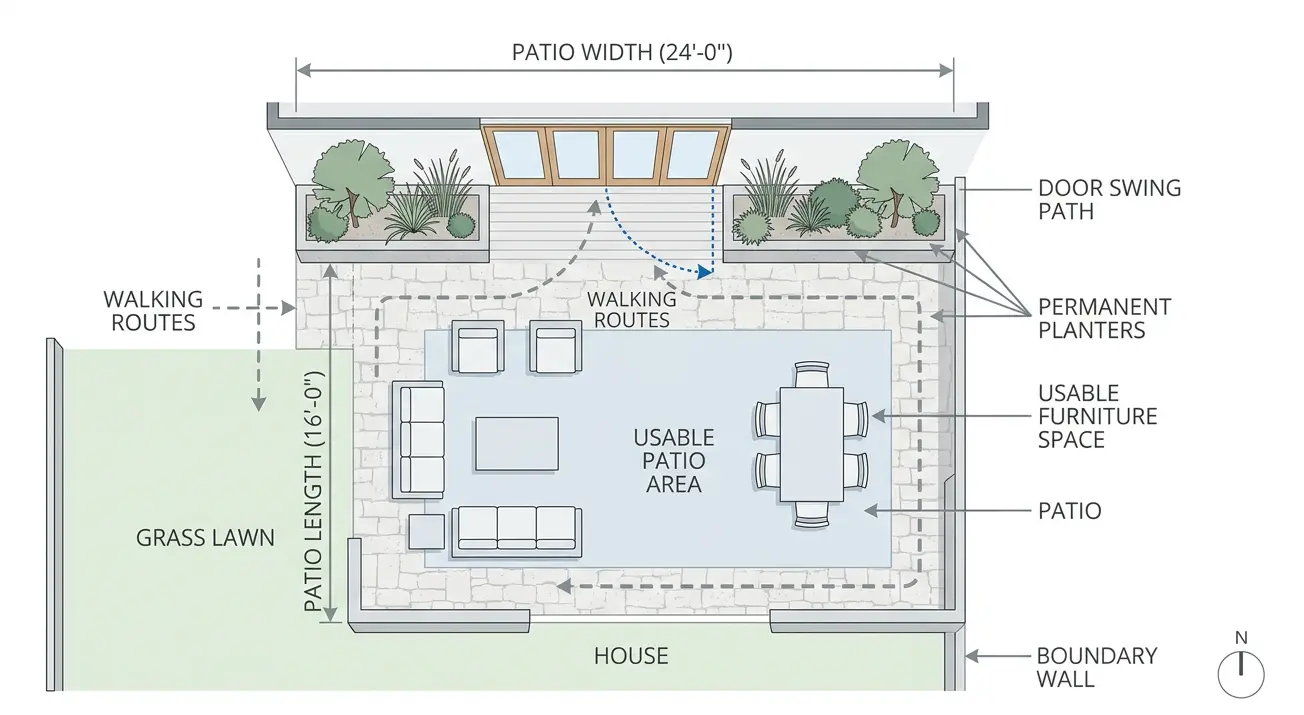
Before shopping, measure the area where the set will actually go. Pay attention to:
- Patio width and length
- Doorways and door swing
- Steps
- Railings
- Columns or posts
- Permanent planters
- Existing furniture
- Main walking routes
The important word here is usable. The total patio area may be larger than the portion that can realistically accommodate a dining set.
2. Don’t Measure Only the Table
One of the most common sizing mistakes is comparing the table dimensions directly with the patio dimensions.
A patio dining set takes up more space than the table itself because people need room to pull chairs away from the table, sit down, stand up, and walk around it.
Think of the complete footprint as:
Table footprint + chair space + walking clearance = usable patio set footprint
This gives you a much more realistic idea of whether a set will work.
3. Test the Footprint Before Buying
If you are unsure whether a particular size will work, mark the approximate dimensions on your patio using painter’s tape or chalk.
Then check:
- Can every chair be pulled out?
- Can someone walk behind the chairs?
- Can you open the patio door normally?
- Is there still a comfortable path through the space?
- Does the set leave room for other activities?
This simple test can prevent you from choosing a set that technically fits but makes the patio difficult to use.
Choose the Right Table Size for Your Seating Capacity
The number of seats gives you a starting point, but table dimensions determine how comfortably those people can use the set.
A four-person table, for example, can have a very different footprint depending on whether it is round, square, or rectangular.
1. General Patio Table Size Guide
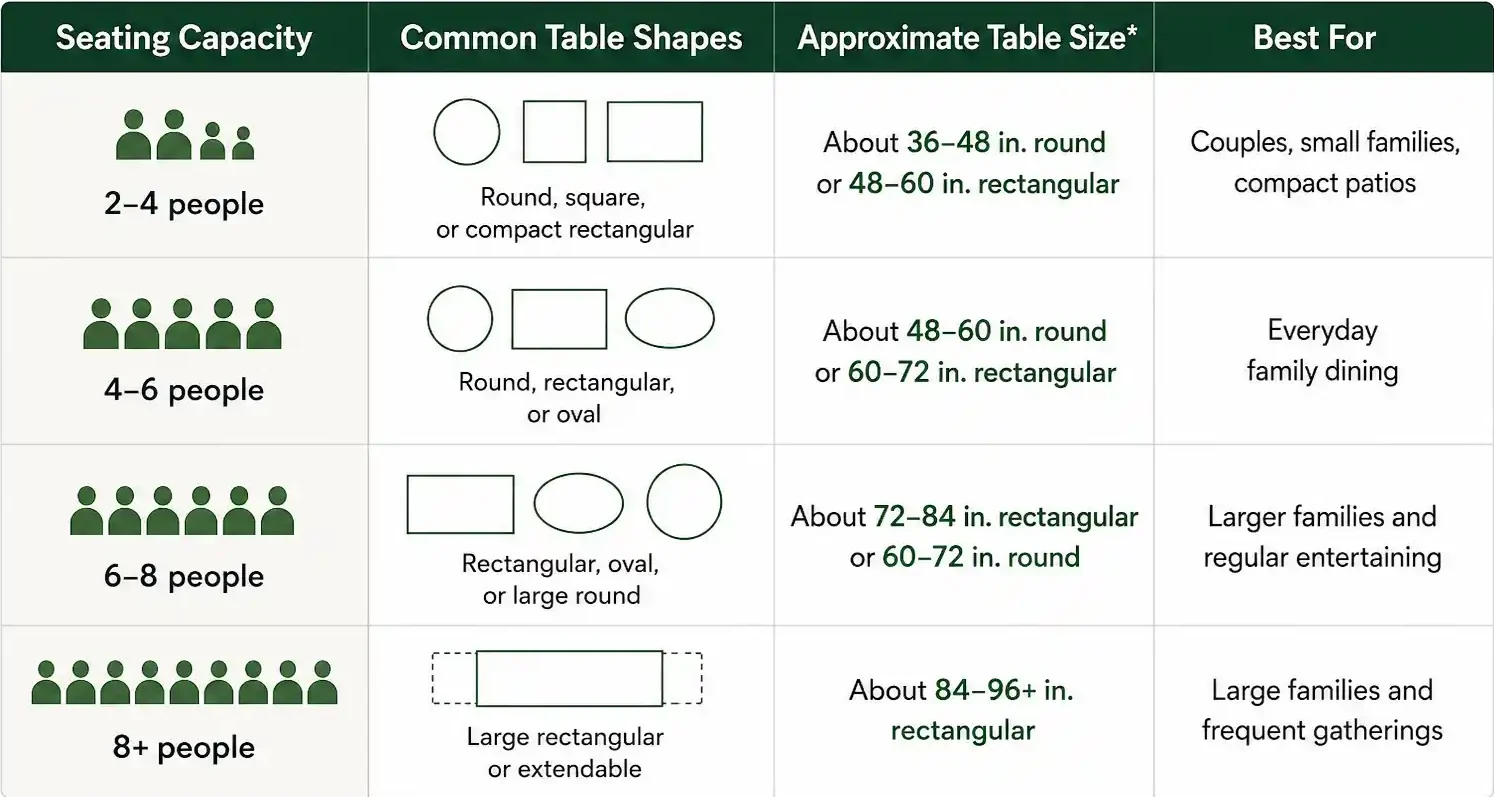
These should be treated as general guidelines rather than universal standards. Always check the actual dimensions of the product before purchasing.
2. Why Table Shape Matters
Round tables can be useful when you want a social arrangement without corners. Their shape can also make it easier to move around the table in certain layouts.
Square tables offer a balanced footprint and can work well for smaller groups, particularly where the patio itself has a relatively square layout.
Rectangular tables generally make sense when you need more seating or have a longer outdoor area. Their linear shape can work particularly well on long patios or decks.
Extendable tables can be useful for households whose seating needs change. A smaller configuration can serve everyday meals, while the table can expand when additional guests arrive.
The goal is not to find the “best” shape universally, but to find the shape that uses your available space efficiently while providing the seating you need.
Don’t Confuse Seating Capacity With Comfortable Seating
A patio dining set may be advertised as a four-, six-, or eight-person set, but maximum seating capacity is not necessarily the same as comfortable seating capacity.
Two sets with the same number of chairs can feel very different because of their table proportions and chair arrangement.
Consider:
- Space between diners
- Chair width
- Legroom
- Table overhang
- Distance between chair backs
- Room required to pull chairs away from the table
The goal is to make sure people can sit naturally without constantly bumping elbows or feeling squeezed together.
1. Maximum Capacity vs. Everyday Comfort
If you regularly have six people eating together, choosing a table that technically seats six but provides very little personal space may not be the best solution.
Likewise, squeezing extra chairs around a four-person table can make the set difficult to use.
When comparing products, don’t ask only:
“How many people can this set seat?”
Also ask:
“How comfortably can those people use it at the same time?”
This distinction is particularly important for families who regularly eat outdoors.
Consider Your Patio Size and Shape
The same patio dining set can work beautifully in one outdoor space and feel oversized in another. Patio geometry matters almost as much as total area.
1. Small Patio + 2–4 People
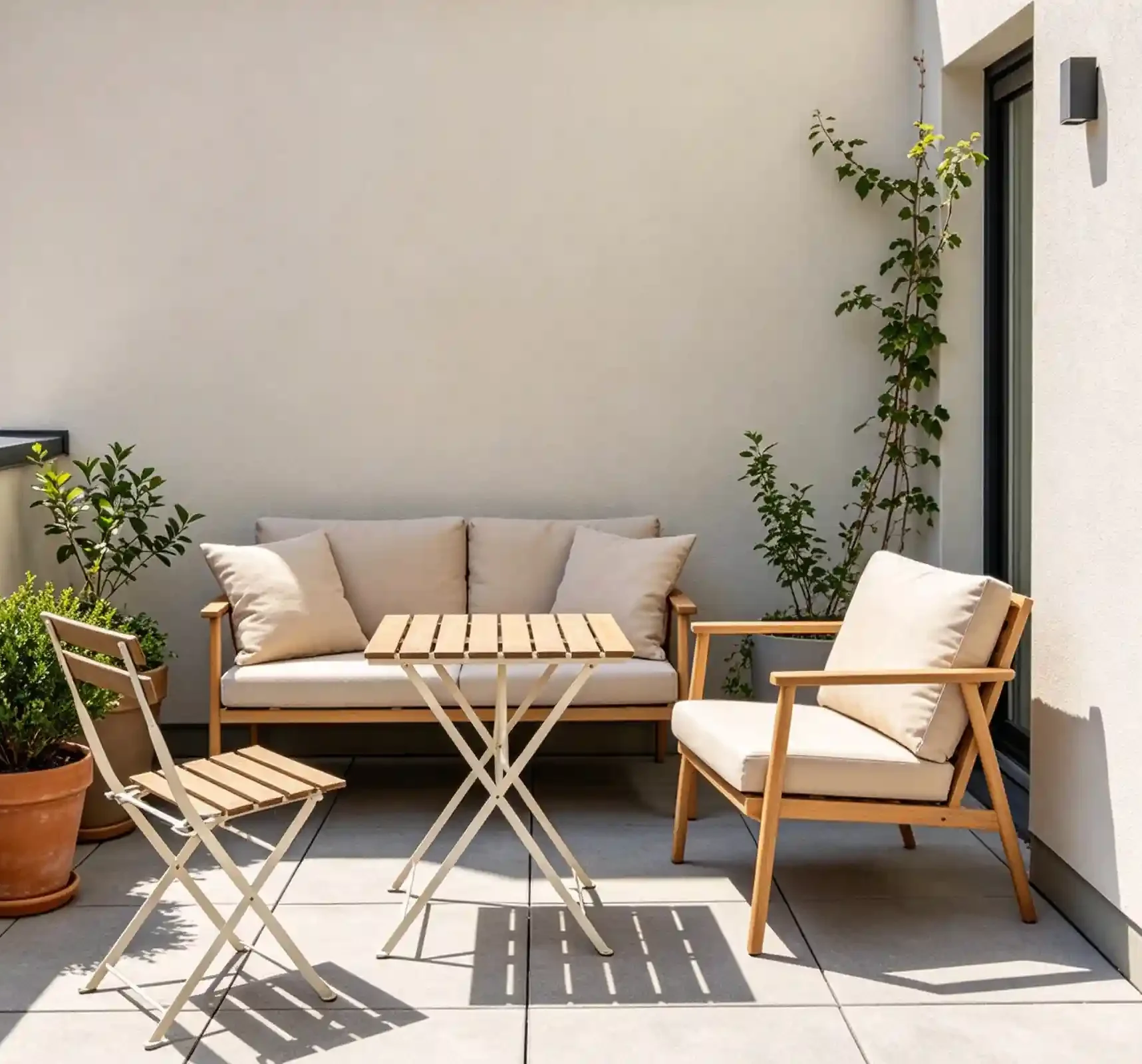
For a smaller outdoor area, prioritize the seating capacity you actually need.
A compact four-person set may be more practical than a larger six-person configuration if the extra seats are rarely used.
Round or square tables can sometimes make it easier to create a compact arrangement, while flexible seating can help when the space serves multiple purposes.
The priority is to maintain usable circulation rather than filling every available section of the patio.
2. Medium Patio + 4–6 People
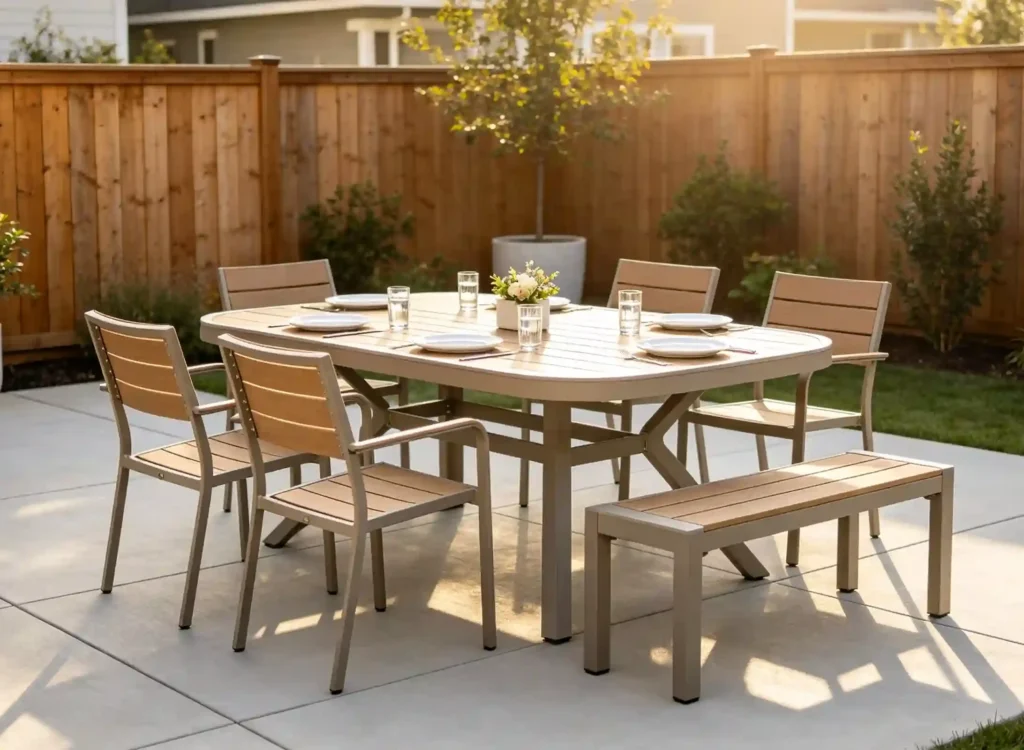
A medium-sized patio provides more flexibility.
A four- to six-person set can become the main outdoor dining area while still leaving space for other activities. However, check the complete footprint rather than assuming that the patio is large enough based on the table dimensions alone.
3. Large Patio + 6–8+ People
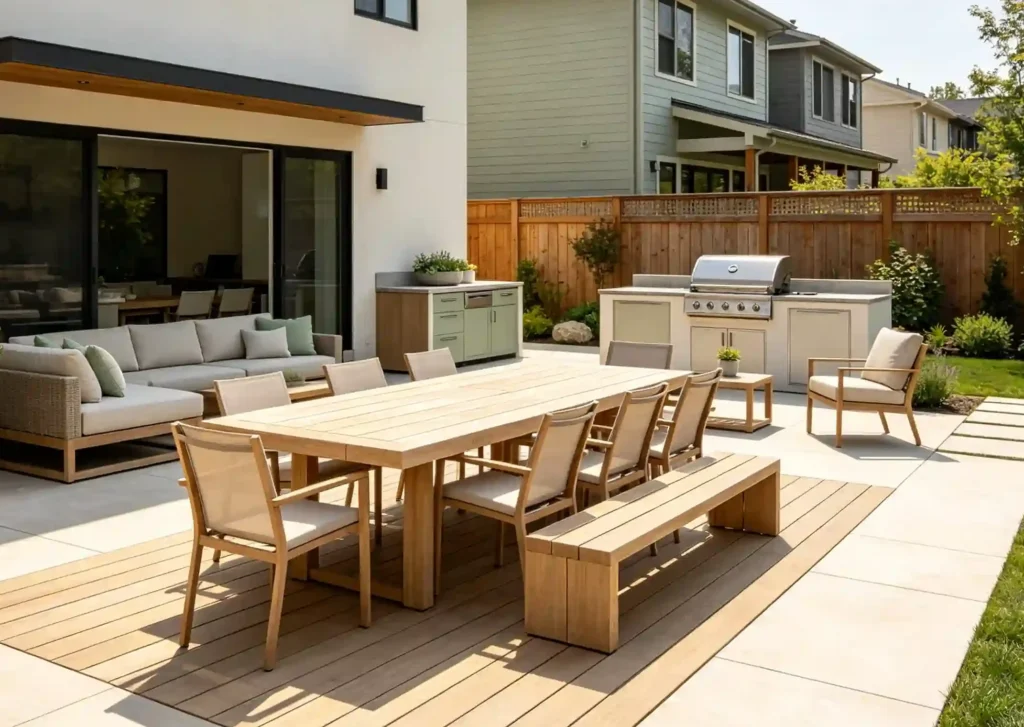
Larger patios can accommodate bigger dining sets, but bigger is not automatically better.
Consider how much space you want to reserve for:
- Additional lounge seating
- A grill
- Outdoor storage
- Plants
- Walking areas
- Other outdoor activities
If dining is only one part of the patio, don’t let the dining set consume the entire space.
Choose Seating Capacity for Everyday Use
Select a set based primarily on how your household normally uses the patio, while allowing some flexibility for occasional guests.
- Growing families: Consider whether your seating needs may change, but avoid buying significantly more furniture than you currently need.
- Frequent entertaining: Flexible options such as benches, additional chairs, or extendable tables can provide extra capacity when needed.
- Occasional guests: A smaller everyday setup may be more practical than a permanently oversized dining set.
Don’t choose a set simply because it has a higher seat count. A larger table is only useful if the patio can accommodate its full footprint comfortably.
Choose for your everyday lifestyle, then add flexibility for occasional needs.
The right patio dining set is neither the largest nor the smallest option—it is the one that provides enough seating and table space while leaving the rest of the patio usable.
Patio Set Size Checklist Before You Buy
Before placing your order, work through this checklist:
- How many people normally use the set?
- How many guests do I regularly host?
- What is the actual usable area of my patio?
- Where are the doors, steps, railings, and other obstacles?
- Does the complete furniture footprint fit?
- Can chairs be pulled out comfortably?
- Will I still have room for other outdoor activities?
- Have I checked the actual product dimensions?
If you can answer these questions confidently, you’re much less likely to choose a set that is either too large or too small.
Conclusion
Choosing the right size patio dining set starts with your family, but it doesn’t end with the number of chairs.
Think about how many people normally use the set, how often you entertain, how large the table needs to be, how much room chairs require, and whether the complete setup works with your patio’s shape and circulation paths.
For smaller households, a compact set can preserve valuable outdoor space. Larger families may need more seating, but the set should still leave enough room to move comfortably. If your needs change frequently, flexible seating or an extendable table can help you accommodate guests without permanently sacrificing patio space.
Ultimately, the best patio dining set is not the largest one your patio can hold—it is the one that provides enough comfortable seating for your family while leaving enough room to enjoy the rest of your outdoor space.
FAQs
1. What Size Patio Do I Need for a 6-Person Patio Dining Set?
There is no single patio size that works for every six-person set because table and chair dimensions vary. Instead, measure the complete furniture footprint, including the table, chairs, chair pull-out space, and walking clearance.
A six-person set may work comfortably in one patio but feel crowded in another with the same total floor area.
2. How Much Space Should I Leave Around a Patio Dining Table?
Leave enough room for people to pull chairs away from the table, sit down and stand up, and move around the dining area. If the space behind the chairs is also a main walkway, additional clearance may be necessary.
3. Is a Round or Rectangular Patio Table Better for a Small Space?
Neither shape is universally better. A round table can make movement around the table easier in some layouts because it has no corners, while a rectangular table can make better use of a long, narrow patio.
Choose based on both seating requirements and patio geometry.
4. Should I Choose a Larger Patio Dining Set for Guests or a Smaller One for Everyday Use?
For most households, prioritize comfortable everyday use. If you regularly entertain, consider a flexible solution such as an extendable table or additional occasional seating rather than choosing a permanently oversized set.

Outdoor ideas, buying guidance, and category inspiration for shoppers comparing official Outsunny products on Aosom.