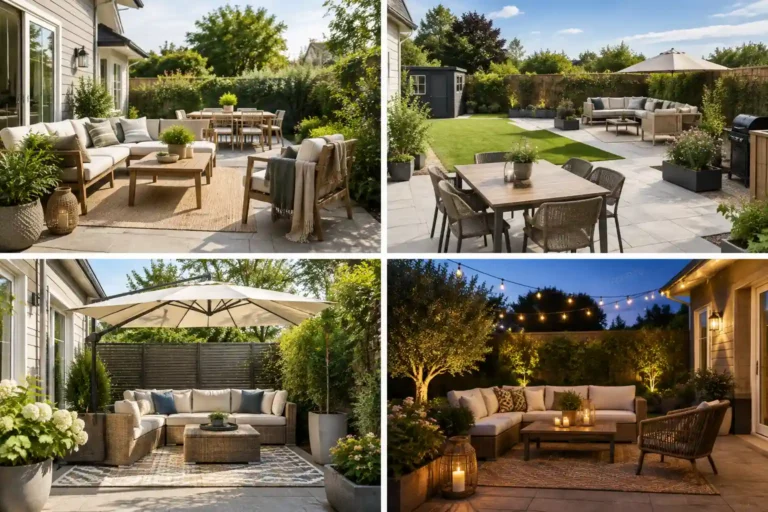
Creating a cozy outdoor lounge area is less about filling a patio with furniture and more about making the space feel comfortable, usable, and connected to the way you actually spend time outdoors. A large backyard can feel empty without the right layout, while a smaller patio can feel crowded if every available space is filled.
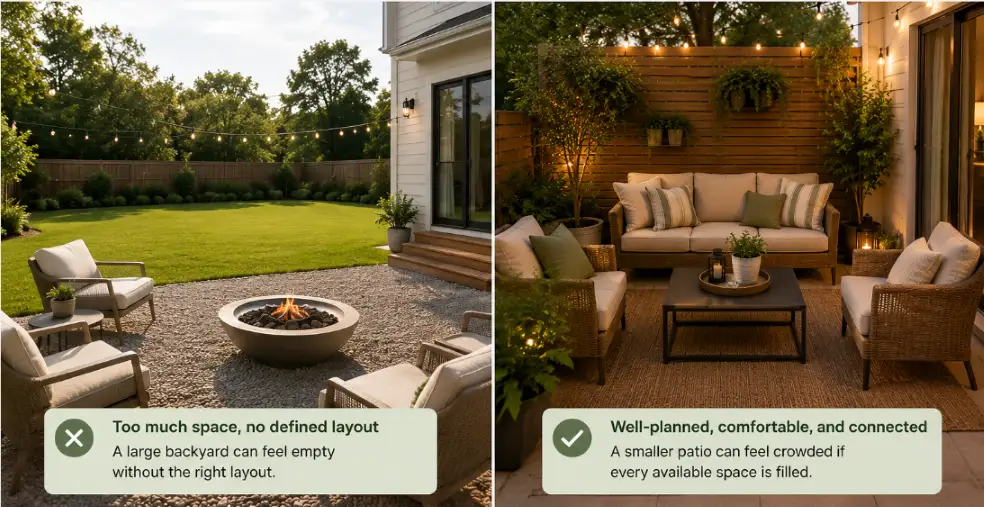
The best approach is to build the area in layers: first decide how you want to use it, then create a practical seating arrangement, add comfort, and finally introduce shade, lighting, greenery, and personal details. This also makes it easier to decide what you actually need to buy instead of accumulating furniture and accessories that rarely get used.
Whether you are working with a patio, deck, balcony, or backyard, these steps can help you turn an ordinary outdoor space into a more inviting place to relax, read, have a drink, or spend time with friends and family.
Decide How You Want to Use the Space
Before choosing furniture, think about what you want your outdoor lounge area to do.
A space designed mainly for reading and morning coffee does not need the same setup as one intended for family gatherings or entertaining guests. Start with the activities that matter most to you.
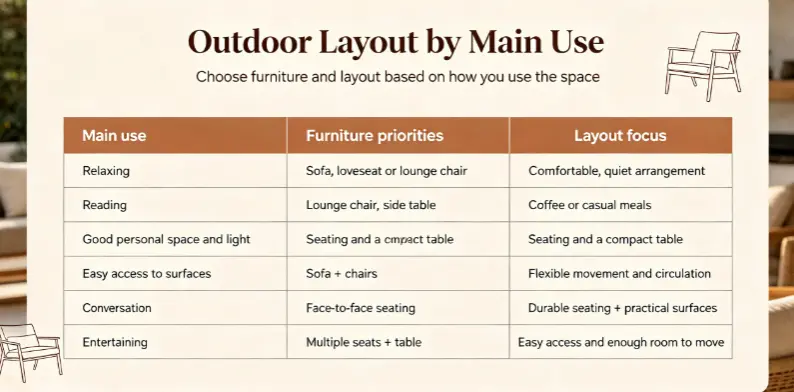
You do not necessarily need separate furniture for every activity. A well-planned lounge area can support several uses with the same core pieces.
The important thing is to let how you use the space determine the furniture, rather than buying furniture first and trying to find a purpose for it afterward.
Plan the Layout Before Adding Furniture
Once you know the purpose, consider how people will move through the space.
A cozy lounge area should feel inviting rather than packed. Arrange seating so people can comfortably talk to each other, while leaving enough room to walk around the furniture and access doors, steps, or other parts of the yard.
For a larger area, you can create a defined outdoor “room” with a sofa, lounge chairs, and a central table. In a more compact space, two chairs and a small side table may create a better lounge area than a large sectional.
Think about these questions before buying:
- Where will people enter and leave the space?
- Which direction should the main seating face?
- Is there enough room to walk around the furniture?
- Can everyone easily reach a table or other surface?
- Will the arrangement still work when people are sitting down?
Give the Lounge Area a Clear Center
A seating arrangement usually feels more intentional when the furniture relates to a central point, such as a coffee table, fire feature, outdoor rug, or view.
Rather than automatically pushing every piece against a wall, try creating a conversation area in the middle of the usable space when the room allows it.
For smaller areas, however, keeping furniture closer to the edges can preserve valuable floor space. The goal is not to follow one layout rule but to create a setup that balances comfort, movement, and available space.
Choose Comfortable Seating First
Seating is the foundation of an outdoor lounge area. If the furniture looks attractive but is uncomfortable, the space is unlikely to become a place where you actually want to spend time.
Consider the type and number of seats you need.
- Outdoor sofa: useful for families or several people relaxing together.
- Loveseat: a practical option for two people when space is more limited.
- Lounge chair: useful for reading, relaxing alone, or adding another seat without committing to a large sofa.
- Sectional: suitable when you have enough space and want flexible group seating.
- Ottoman or footstool: can provide a place to put your feet or offer an additional seat when needed.
Comfort also depends on the construction of the furniture. Look at the seat depth, back support, cushioning, armrests, and overall proportions rather than judging a piece only by its appearance.
For a lounge area that will be used frequently, it is usually better to choose fewer comfortable seats than more seats that are difficult to relax in.
Add Soft Layers to Make the Space Feel Cozy
Once the main furniture is in place, soft furnishings can make the area feel less like an outdoor furniture display and more like a place to live.
Use Cushions and Pillows
Outdoor cushions and pillows introduce softness, texture, and color. They can also make different seating pieces feel visually connected.
Instead of covering every surface with accessories, choose a simple palette and repeat a few colors or textures.
For example, neutral furniture can be paired with one or two accent colors through pillows and cushions. This creates visual warmth without making the space feel overly decorated.
Add an Outdoor Rug
An outdoor rug can help define the lounge area, particularly when the furniture sits on a large patio or deck.
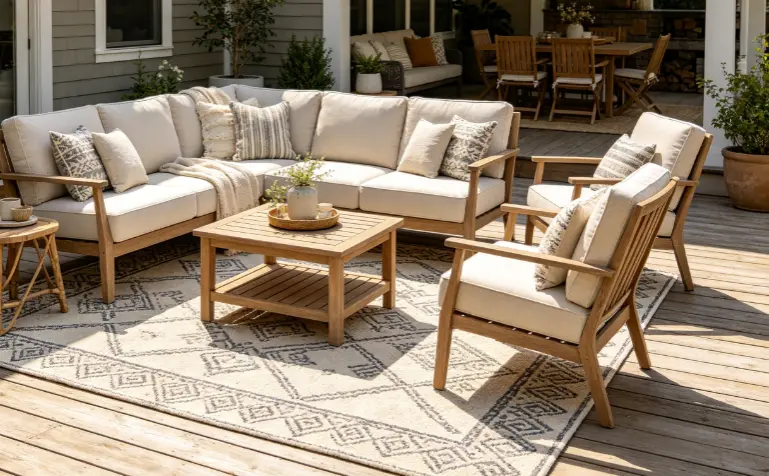
It creates a visual boundary between the lounge area and the surrounding space and can make the arrangement feel more like an outdoor living room.
When choosing a rug, consider:
- Its dimensions relative to the seating arrangement
- Whether chairs can remain comfortably positioned on or around it
- Outdoor suitability
- Ease of cleaning
- How its pattern works with the existing furniture
A rug should support the layout rather than become another visual element competing for attention.
Keep Blankets Practical
A lightweight outdoor throw can make the space more comfortable on cooler evenings. If you regularly use the lounge after sunset, keeping one or two blankets nearby can be more useful than adding additional decorative pieces.
Add Shade and Privacy Where You Need Them
Comfort is affected by more than seating.
An outdoor lounge area may look perfect in the morning but become uncomfortable when direct sunlight hits the seating. Likewise, an exposed patio may not feel particularly relaxing if it is directly visible from neighboring properties.
Provide Shade
Depending on the space, shade can come from:
- A patio umbrella
- A gazebo or canopy
- A pergola
- Existing trees
- Shade sails
Think about the position of the sun at the times when you are most likely to use the space. A shade solution that looks good but does not cover the seating when you need it will have limited practical value.
Create a Sense of Privacy
Privacy does not necessarily require a permanent wall.
Tall planters, greenery, outdoor curtains, screens, or a strategically positioned gazebo can create a greater sense of separation.
This is particularly useful when you want the lounge area to feel like a distinct outdoor room rather than simply another part of the yard.
Use Lighting to Extend the Lounge Into the Evening
Lighting can completely change the atmosphere of an outdoor lounge area after sunset.
Instead of relying on one strong light source, consider combining different types of lighting.
Ambient lighting provides general illumination, while accent lighting can highlight plants or architectural features. Smaller lanterns or table lights can provide a warmer glow around seating.
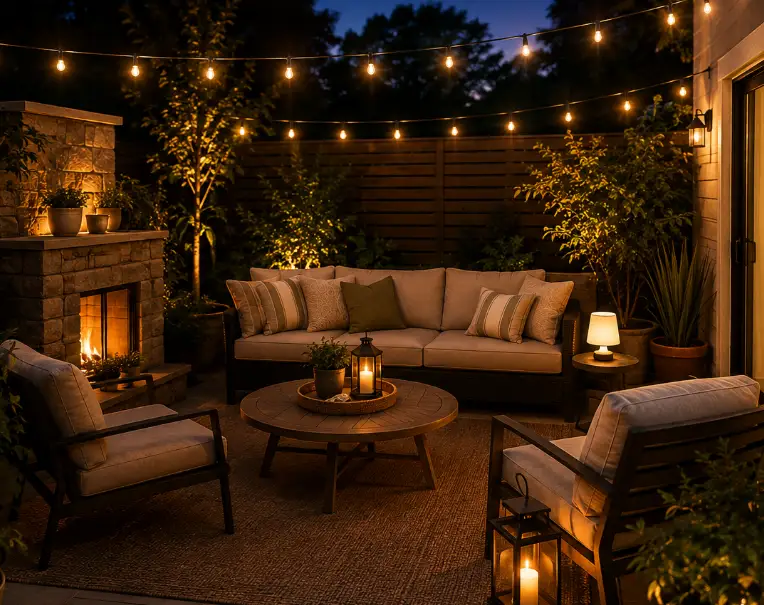
String lights are another popular option because they can define the boundaries of the lounge area while creating a softer atmosphere.
The goal is to provide enough light to move around safely without making the space feel as brightly lit as an indoor room.
Bring in Greenery and Personal Details
Plants can soften hard patio surfaces and make an outdoor lounge feel more connected to its surroundings.
You can use planters around the edge of the seating area, place a larger plant in an empty corner, or use taller greenery to create additional privacy.
A few larger plants can often have more visual impact than many small pots scattered around the space.
Then add a small number of personal details that reflect how you use the area. These might include:
- Decorative objects
- A favorite outdoor accessory
- A small water feature
- Fragrant plants
- A tray for drinks
- Items collected from travels or other meaningful places
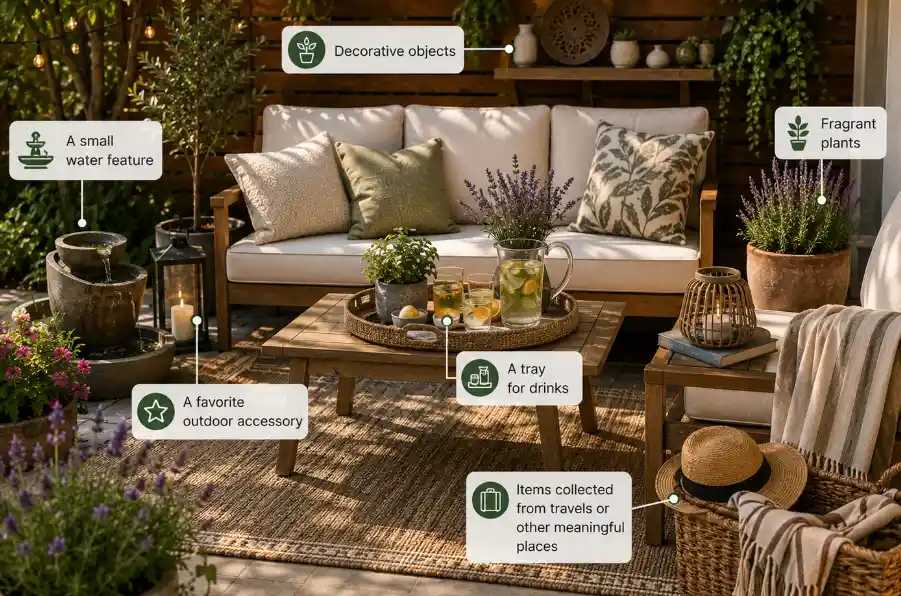
The purpose is not to make the space look perfectly styled. A few personal elements can make it feel more natural and lived-in.
Choose Outdoor Furniture That Suits the Environment
Outdoor furniture has to deal with conditions that indoor furniture does not.
Before buying, consider the amount of sunlight, rain, humidity, wind, and temperature variation the furniture will experience.
Common outdoor furniture materials include:
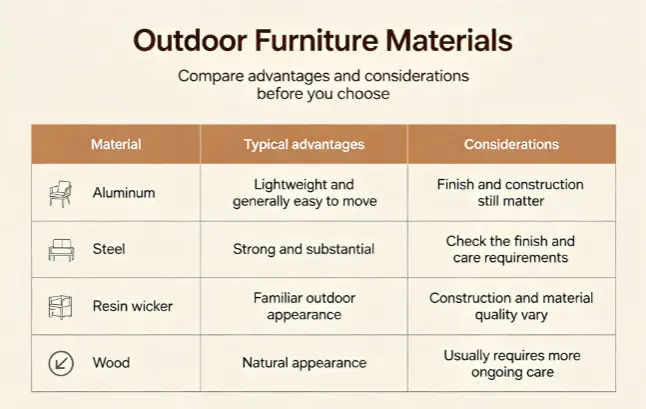
The same principle applies to cushions and textiles. Look for products specifically designed for outdoor use rather than assuming an indoor fabric will perform adequately outside.
You should also consider how the furniture will be maintained. A piece that suits your climate but requires more upkeep than you are willing to provide may not be the right choice for your lifestyle.
Make the Furniture Work With the Space You Have
Before purchasing a large piece of outdoor furniture, measure the area.
Record:
- Available width
- Available depth
- Available height where relevant
- Door and gate access
- Walking routes
- Space between seating and tables
- Clearance around other structures
Do not measure only the area where the furniture will sit. Think about how the furniture will arrive and whether it can actually be moved through the entrance.
Consider the Furniture Configuration
Dimensions alone do not tell you whether a piece will work.
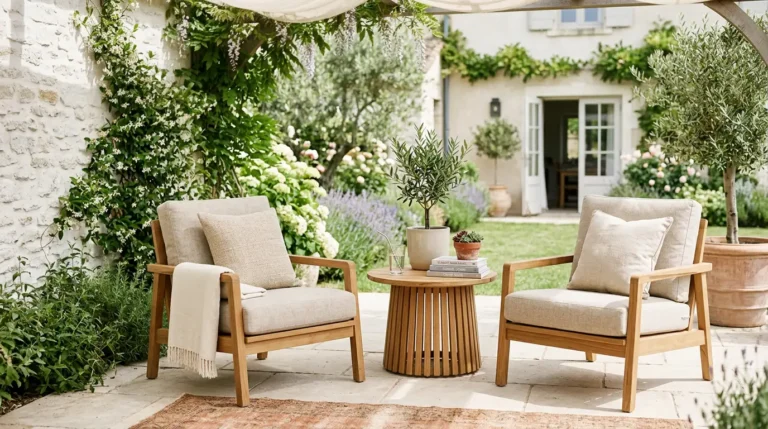
- Color: Mixed Gray, Gray
- Materials: PE Rattan, Acacia Wood, Polyester
- Chair Dimension: 26″W x 27.6″D x 31.1″H
- Table Dimension: 19.7″ Dia. x 18.9″H
- Seat Size: 22.4″W x 22.4″D
- Seat Height: 13″
- Backrest Size: 23.6″L x 22.4″W x 17.7″H
- Back Cushion Size: 22.4″W x 19.7″D x 7.9″H
- Seat Cushion Size: 22.4″W x 22.4″D x 3.1″H
- Weight Capacity: 352 lbs. (Chair), 88 lbs. (Table)
Also check:
- Number of seats
- Table dimensions
- Cushion thickness
- Whether pieces can be rearranged
- Whether the furniture can be moved when necessary
- Storage requirements during bad weather or the off-season
Keep the Lounge Area Simple Enough to Maintain
A cozy outdoor space should be somewhere you want to use—not another household project that requires constant attention.
Before buying additional furniture or accessories, consider how often you will realistically maintain them.
For example:
- Use outdoor-suitable textiles where possible.
- Keep frequently used accessories easy to store.
- Avoid overcrowding the seating area with decorative items.
- Choose furniture that can be cleaned without excessive effort.
- Protect or store cushions when appropriate.
- Leave enough space to clean around and underneath furniture.
A simpler arrangement can actually feel more comfortable because there is less visual and physical clutter.
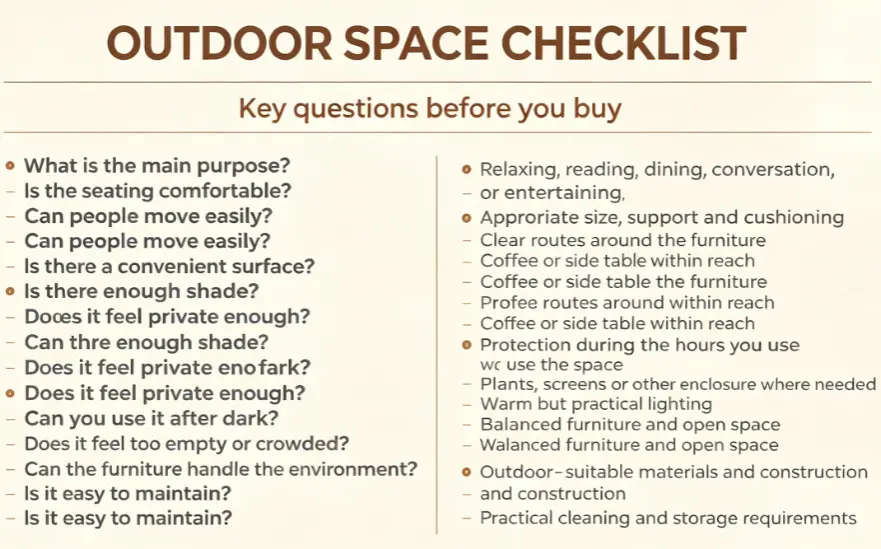
A Simple Outdoor Lounge Checklist
Before you consider the space finished, run through this checklist:
Final Thoughts
Creating a cozy outdoor lounge area does not require filling every corner with furniture or buying a complete new outdoor set. The better approach is to build the space around the way you actually use it.
Start with the purpose and layout. Choose comfortable seating that fits the available area, then add soft layers, shade, privacy, lighting, and greenery where they genuinely improve the experience. Finally, make sure the furniture suits your outdoor environment and is practical to maintain.
The result should feel comfortable without being crowded, personal without being over-decorated, and functional enough that you naturally want to spend more time there.
The best outdoor lounge is not the one with the most furniture—it is the one that makes staying outside feel easy.
FAQs
1. How to make a nice outdoor space on a budget?
Focus on multi‑purpose foldable furniture, affordable planters and string lights. Shop space‑saving pieces, use plants for decoration, and layer inexpensive outdoor rugs and cushions to refresh your patio without high costs.
2. How to style an outdoor living area?
Start with core seating furniture, add soft elements like cushions and outdoor rugs. Mix potted greenery for warmth, define different activity zones, and complete the look with lighting to create a cozy, functional outdoor living space.
3. What are the latest outdoor design trends?
Compact space‑saving furniture, multi‑functional patio sets, natural woven textures, green plant‑heavy layouts, warm ambient lighting, and neutral earth‑tone palettes remain popular for balconies and backyards.
4. What is the 3‑5‑7 rule of decorating?
The 3‑5‑7 decorating rule refers to using decor groupings in odd‑number sets of 3, 5 or 7 items. Odd‑number arrangements feel more natural and visually appealing for arranging cushions, plants and decorative accessories both indoors and outdoors.
5. What are some creative ways to decorate my patio area?
Use wall‑mount plant shelves, foldable wall‑hung furniture, layered greenery, string fairy lights, mix different size planters, add soft outdoor textiles, and choose compact bistro sets to maximize small patio or balcony space.

Outdoor ideas, buying guidance, and category inspiration for shoppers comparing official Outsunny products on Aosom.