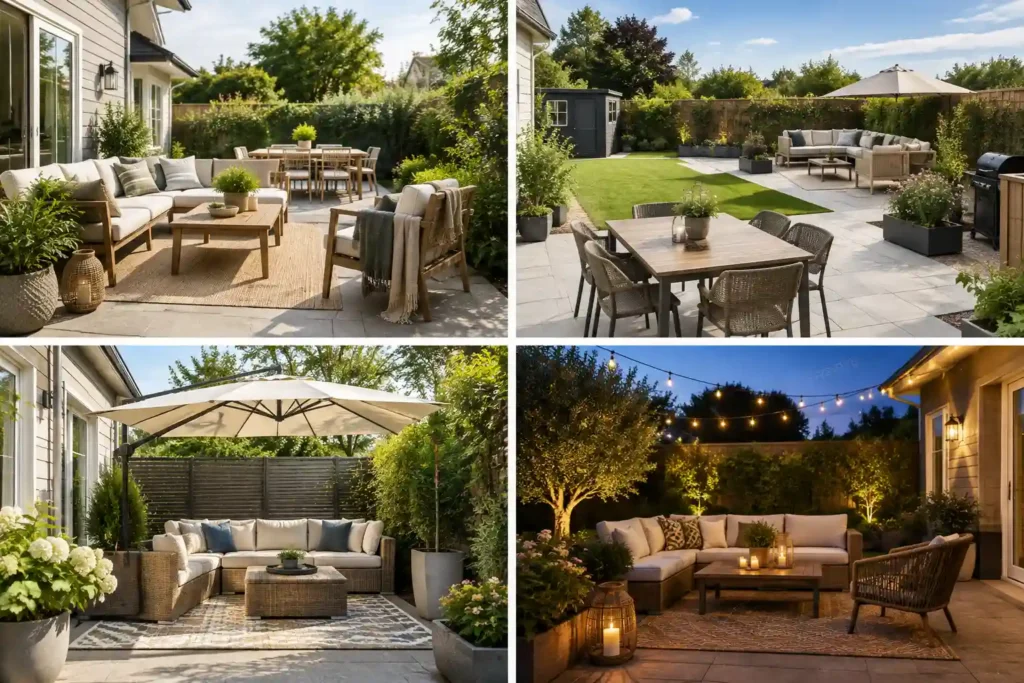
Quick answer: To create a stylish and comfortable outdoor space, start by deciding how you want to use it. Then arrange the space around those activities and choose furniture that provides the right balance of comfort and function. Add shade, weather protection and privacy where needed, and use lighting, greenery and soft furnishings to create a more inviting atmosphere. Finally, bring everything together with a consistent colour palette and a few personal details, and maintain the space according to the care requirements of your furniture and accessories.
The key is to design for how you actually live, rather than simply filling the space with furniture and decoration.
Start by Defining How You Want to Use Your Outdoor Space
Before choosing furniture, think about what you actually want to do outdoors.
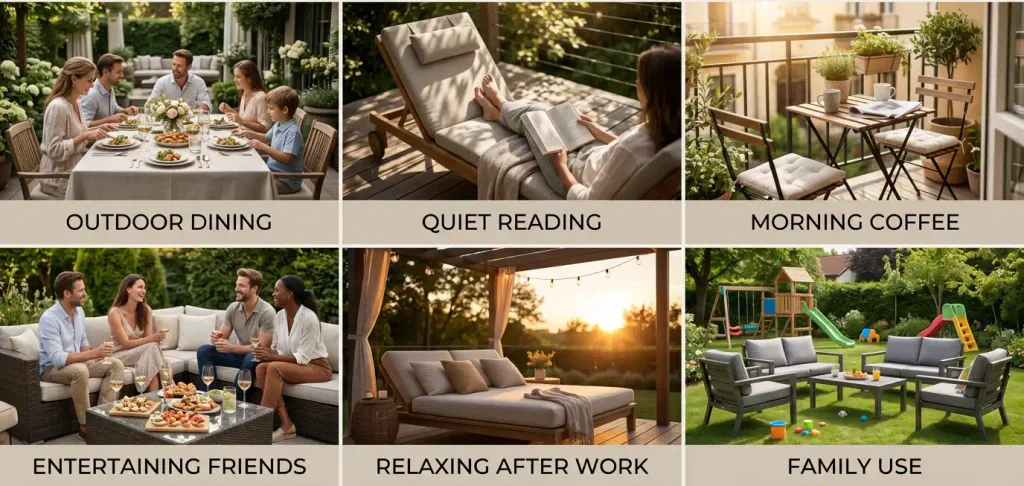
An outdoor space might be used for eating with family, reading quietly, drinking coffee, entertaining friends, relaxing after work, or spending time with children. These activities can require different types of seating, tables, shade, privacy and flexibility.
For example:
- Outdoor dining may require a suitable dining table and comfortable seating.
- Relaxing or reading may benefit from lounge seating or a comfortable chair.
- Entertaining may require flexible seating and convenient surfaces for drinks and food.
- Family use may require furniture that is practical and easy to maintain.
The important point is to let function determine the setup.
Choosing furniture first and deciding how to use the space afterwards can leave you with pieces that look attractive but do not work well together.
It is also useful to consider who will use the space. A household with children or pets may have different practical priorities from someone who mainly uses an outdoor area for quiet meals or relaxation.
If you know the main activity → choose the furniture and features that directly support that activity.
This gives the rest of the design a clear starting point.
Create a Functional Layout That Makes the Space Easy to Use
Once you know how you want to use the area, organise the space around those activities.
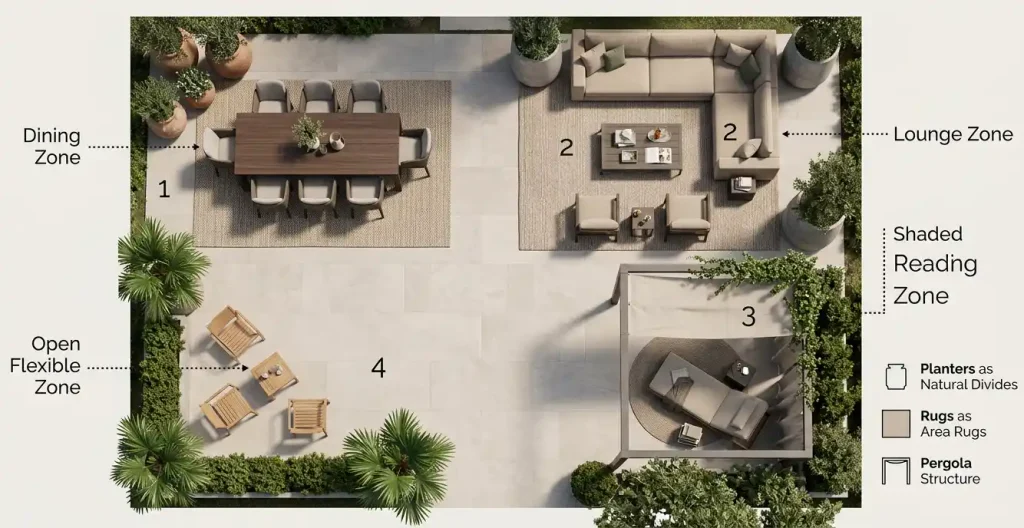
Larger outdoor areas can be divided into several functional zones, such as:
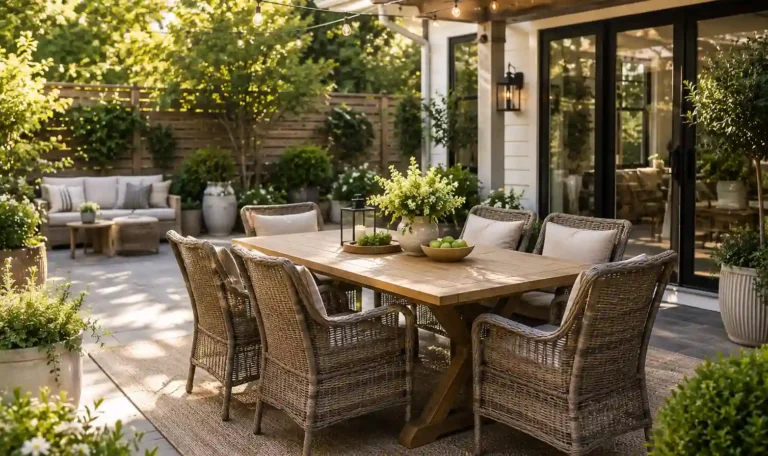
- a dining area for meals;
- a lounge area for conversation and relaxation;
- a shaded area for reading or resting;
- an open area for children or flexible activities.
These zones do not necessarily need physical walls or screens. Furniture positioning, changes in orientation, rugs, planters, lighting or differences in function can help visually separate one area from another.
1. Keep movement in mind
A good outdoor layout should allow people to move naturally between the house, seating, dining areas, garden and other frequently used parts of the space.
Avoid positioning furniture where it blocks frequently used routes or makes people repeatedly walk around tables and chairs.
The principle is simple: the furniture should support movement rather than force movement around the furniture.
This is particularly important around doors, steps and entrances. When planning the layout, consider how people enter and leave the space, where doors open, and which routes are likely to be used most often.
For larger spaces, avoid spreading furniture evenly across the entire area simply because there is room. Grouping furniture around specific activities can make the space feel more intentional and easier to use.
Choose Outdoor Furniture That Supports Comfort and Everyday Use
A dining area may need a table and chairs, while a relaxation area may work better with sofas, loveseats, lounge chairs or other seating designed for conversation and longer periods of use. When comparing these options, consider not only comfort and appearance but also dimensions, stability, construction and suitability for the intended users.
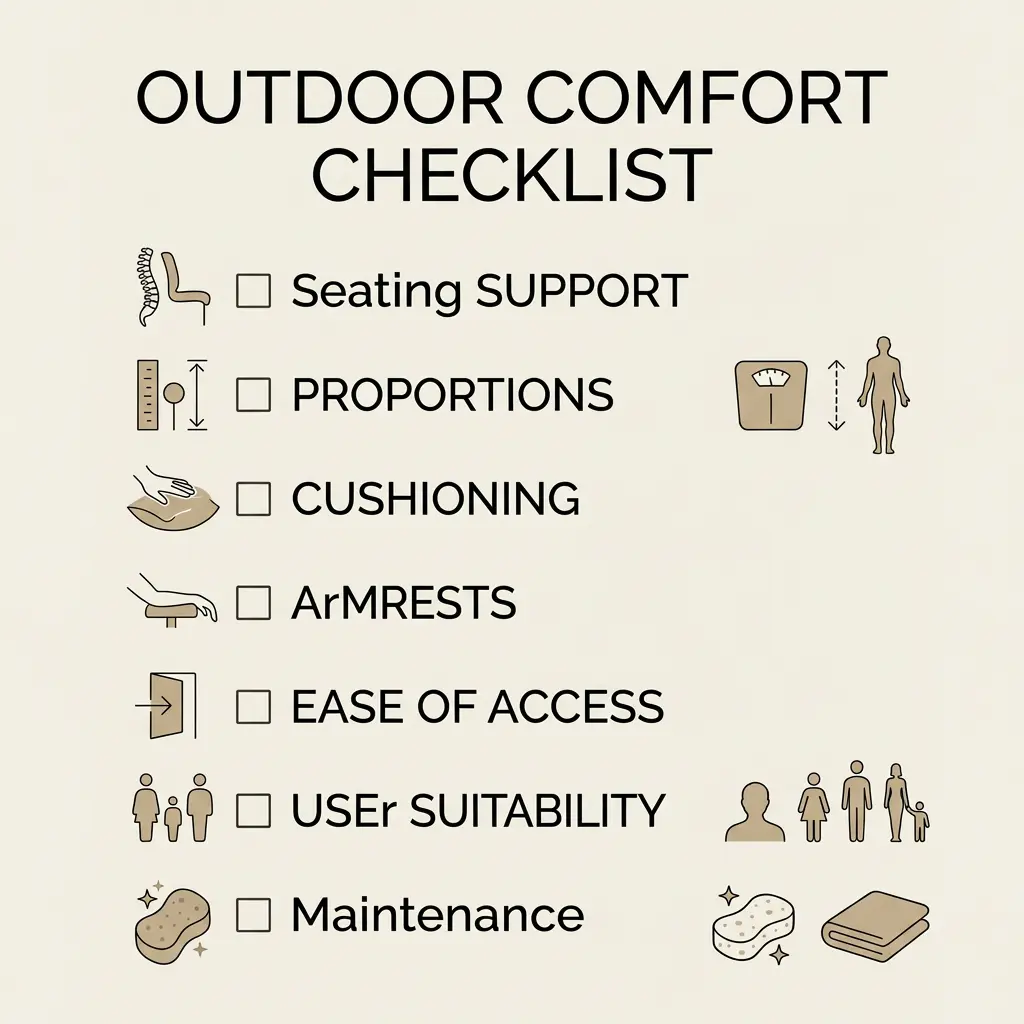
Recognised standards such as BS EN 581-2:2026 for outdoor seating and BS EN 581-3:2026 for outdoor tables provide a useful reference because structural safety cannot be judged from appearance alone. BS EN 581-2:2026 addresses the strength, reliability and stability of outdoor seating, with its test requirements based on use by adults weighing up to 110 kg. Additional mechanical safety assessments may apply to certain products, including folding loungers and deckchairs.[1]
For outdoor tables, BS EN 581-3:2026 includes mechanical tests for vertical static loads, horizontal durability and stability. The standard also covers tables with glass components and tables designed to support a parasol.[2] The exact test conditions depend on the table type and intended use.
1. Use multifunctional furniture where it genuinely helps
Some outdoor furniture can perform more than one role. For example, a piece may provide seating while also offering a surface or storage function.
The goal is not to maximise the number of functions. It is to choose functions that are genuinely useful for your lifestyle.
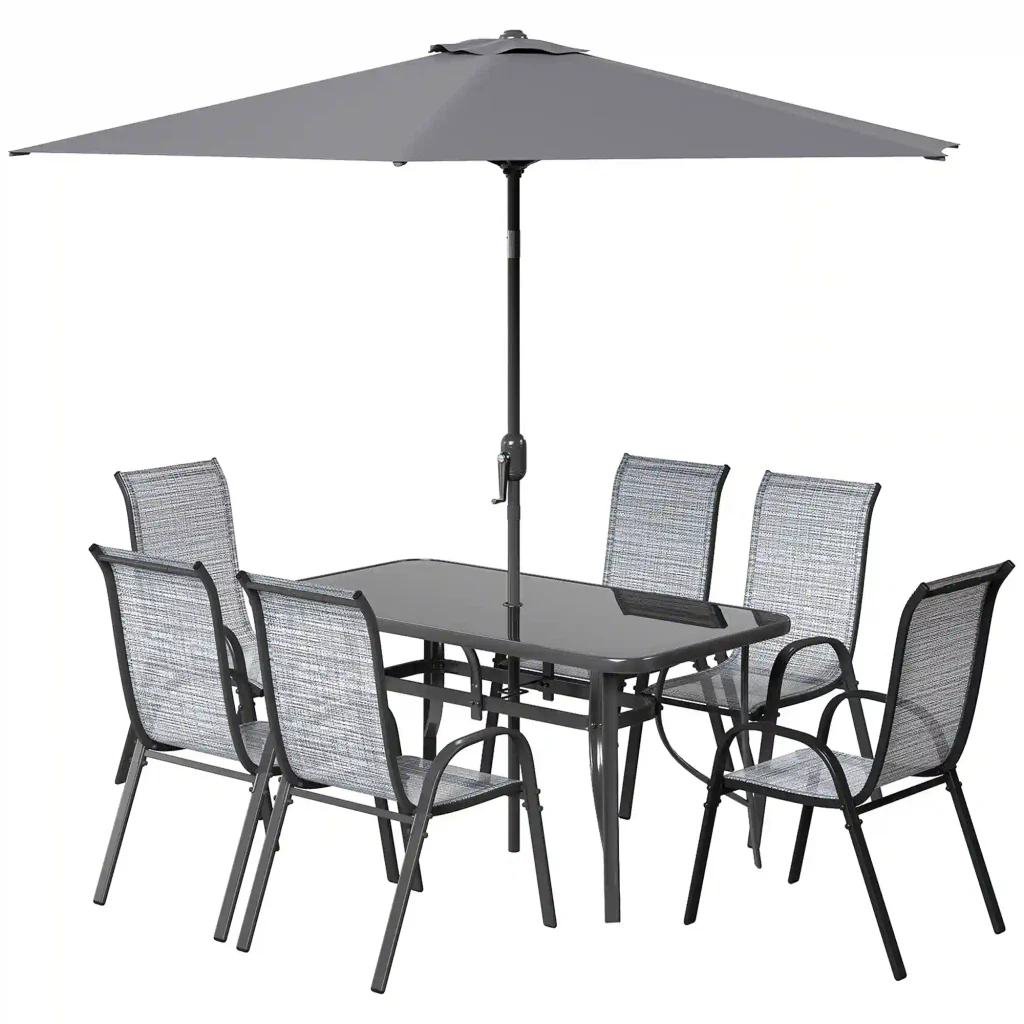
For example, an Outsunny 6 Seater Garden Dining Set with Stackable Chairs illustrates how a coordinated dining set can support everyday outdoor meals and social gatherings.[3] The product listing describes a table with six stackable chairs, an aluminium frame and a rectangular tabletop. The chairs can be stacked or stored beneath the table when not in use, which can help make the dining area more flexible.
The listing specifies an aluminium-framed table measuring 160 × 85 × 75 cm, six stackable chairs, a 120 kg capacity per chair and a 50 kg table capacity.[3] These figures describe this particular product and should not be treated as the minimum requirements of the BS EN standards.
Balance Space, Lifestyle, and Budget When Furnishing
A stylish outdoor space does not need to contain as much furniture as possible.
Instead, prioritise the pieces that support the activities you use most frequently.
If outdoor dining is the main purpose, it may make more sense to prioritise a suitable dining setup before adding decorative furniture. If relaxation is the priority, comfortable seating may matter more than having a large dining table.
Budget should be considered in the same way.
Rather than trying to complete the entire space at once, you can start with the essentials and add smaller elements over time.
For example:
Limited budget → prioritise essential furniture → improve comfort → add atmosphere and decorative details later.
This approach can also make the design more cohesive because you can see how the main furniture works before adding additional colours, textures or accessories.
The same principle applies to larger outdoor areas. More space does not automatically mean more furniture is needed. Leaving some areas open can make the overall environment feel more balanced and provide flexibility for future use.
Build Comfort with Shade, Weather Protection, and Soft Furnishings
Comfort outdoors is strongly influenced by weather conditions.
Sun, wind, rain and temperature can all affect how long people want to stay outside. For that reason, consider weather protection as part of the overall design rather than treating it as an optional finishing touch.
Depending on the space, possible solutions include:
- parasols;
- pergolas;
- awnings;
- shade sails;
- weather-resistant covers;
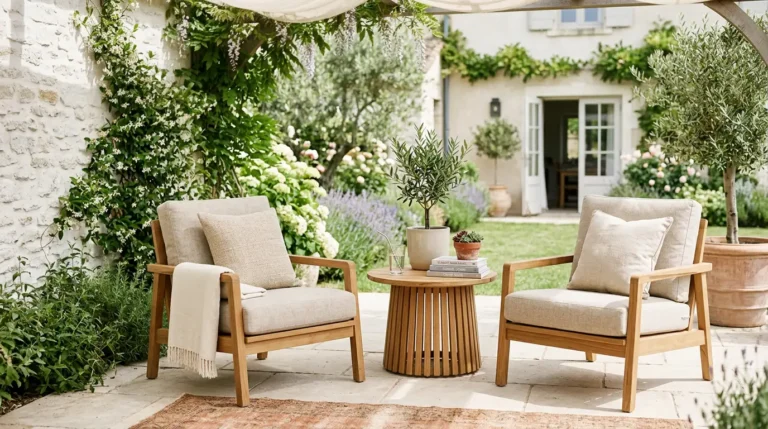
- outdoor cushions and pillows;
- outdoor rugs;
- suitable seasonal heating or other comfort features.
The right solution depends on the location and how the space is used.
A sunny dining area may benefit from shade during meals, while a lounge area may need both shade and protection from wind.
Soft furnishings can also make outdoor seating feel more comfortable and visually connected to the rest of the home. However, outdoor textiles should be selected and cared for according to the manufacturer’s instructions.
1. Protect Soft Furnishings When They Are Not in Use
Cushions, pillows and rugs can be exposed to moisture, dirt and changing weather conditions. Where practical, store or protect them when they are not being used, particularly during periods of poor weather.
This is a simple way to help maintain a comfortable outdoor environment without continually replacing soft accessories.
Add Privacy to Make the Space Feel More Relaxing
An outdoor space can be physically comfortable but still feel exposed.
If the area faces neighbouring gardens, nearby buildings, roads or other frequently used spaces, consider whether additional privacy would make it more enjoyable.
Possible approaches include:
- privacy screens;
- outdoor curtains;
- trellises;
- tall planters;
- hedges;
- climbing plants;
- strategically positioned furniture.
Privacy does not always require a completely enclosed barrier.
Sometimes a partial visual screen is enough to make a seating area feel more separated from its surroundings while keeping the outdoor space open.
The best approach depends on the level of privacy needed, the available space and any restrictions that apply to the property.
If the problem is visual exposure → consider partial screening before completely enclosing the space.
This can preserve a sense of openness while creating greater visual separation.
Use Lighting and Greenery to Create an Inviting Atmosphere
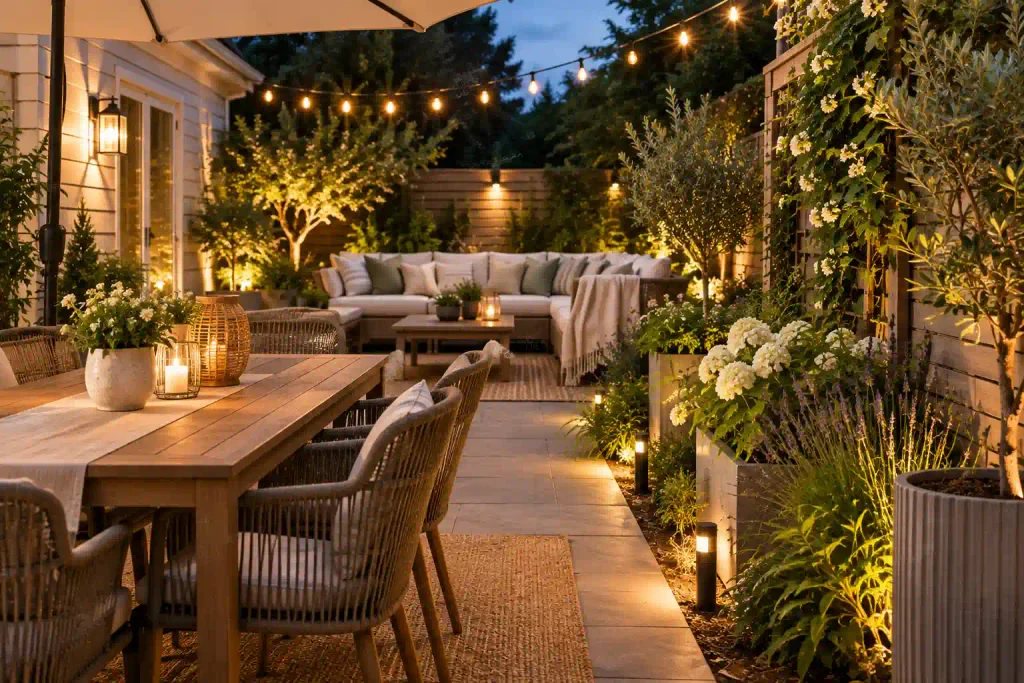
Lighting can change how an outdoor space feels once daylight fades.
Instead of relying on a single strong light source, consider combining functional lighting with ambient lighting.
Functional lighting can help illuminate areas such as:
- entrances;
- steps;
- pathways;
- dining areas;
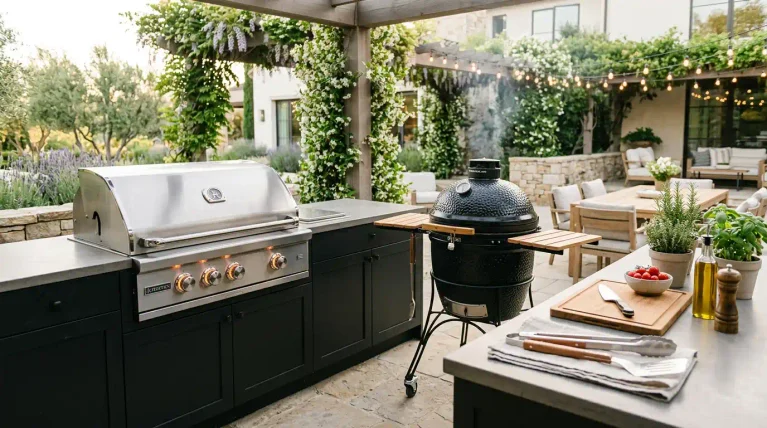
- outdoor cooking or preparation areas.
Ambient lighting can create a softer atmosphere through options such as:
- string lights;
- lanterns;
- LED candles;
- decorative outdoor lights.
The goal is not simply to add more light. It is to provide enough visibility for practical activities and movement while creating a comfortable atmosphere.
Greenery can work in a similar way.
Planters, larger plants, vertical planting and climbing plants can introduce colour and texture while helping connect the outdoor space with the surrounding garden.
When selecting plants, consider the conditions of the location, including available sunlight and the amount of maintenance you are realistically prepared to provide.
Practical rule: choose plants that suit the environment and your maintenance habits rather than choosing purely for appearance.
Create a Cohesive Style with Colour, Texture, and Personal Details
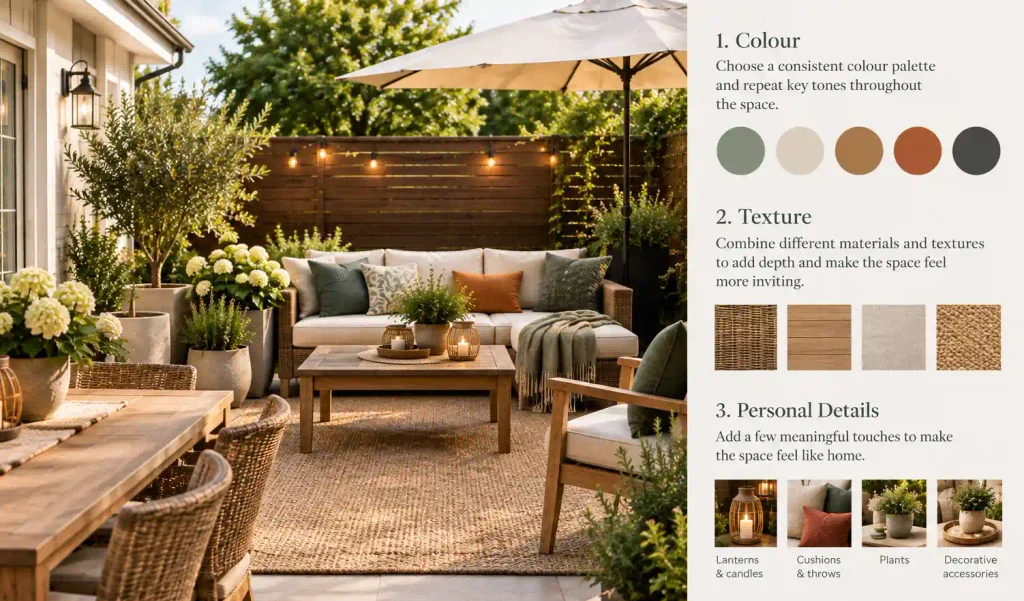
Once the practical elements are in place, use colour and texture to make the space feel visually connected.
You do not need to match every item exactly. Instead, choose a simple base palette and repeat a few complementary colours or materials throughout the space.
For example, a neutral furniture base can be combined with colour through:
- cushions;
- outdoor rugs;
- planters;
- throws;
- decorative accessories.
Texture can also prevent an outdoor space from feeling visually flat. Combining hard furniture surfaces with softer textiles and natural greenery can create more visual depth.
Personal details are useful too, but restraint matters. Too many unrelated colours, patterns or decorative objects can make an outdoor area feel cluttered.
A useful approach is:
Base → texture → accent colour → personal detail.
This allows the outdoor area to feel like an extension of the home without requiring every piece to come from the same collection.
Maintain the Space So It Stays Comfortable and Usable
Good outdoor design does not end when the furniture is installed.
Regular care helps keep the space functional and comfortable over time.
Maintenance requirements depend on the materials and products involved, so always follow the manufacturer’s care instructions rather than assuming every outdoor material should be treated in the same way.
Basic maintenance may include:
- cleaning furniture according to the manufacturer’s instructions;
- checking furniture periodically for visible damage or excessive wear;
- protecting or storing furniture and accessories when appropriate;
- storing soft furnishings during unsuitable weather;
- checking outdoor lighting and other accessories regularly.
HSE guidance on seating recommends keeping seating clean and safe, checking it regularly for signs of damage or excessive wear, and repairing or removing seating that is unsafe.[4] It also warns against misuse, such as standing on a chair, placing excessive pressure on armrests or rocking backwards and forwards. Although HSG57 focuses on workplace seating, these principles are also useful when checking outdoor chairs and loungers.
The practical takeaway is straightforward: look after furniture according to its intended use and manufacturer’s instructions, and address visible damage rather than continuing to use furniture that is no longer suitable.
Key Takeaways
Creating a stylish and comfortable outdoor space is less about buying more furniture or adding more decoration and more about making deliberate decisions.
Start with how you want to use the space, then build the layout around those activities. Choose furniture for comfort and practical use, balance your choices with your available space and budget, and add shade, weather protection and privacy where they improve the experience.
Once the functional foundation is established, lighting, greenery, colour, texture and personal details can make the space feel more welcoming.
Finally, maintain the furniture and accessories so the outdoor area continues to work well over time.
The best outdoor space is not necessarily the one with the most furniture or decoration. It is the one that fits your lifestyle, feels comfortable to use, and works as a natural extension of your home.
FAQs
1. How can I make my outdoor space look nice?
Start with function rather than decoration. Define how you want to use the space, create a practical layout, choose furniture that supports those activities, and then add coordinated colours, textiles, greenery and lighting. Keeping the number of colours and decorative elements controlled can help create a more cohesive appearance.
2. How can I make my outdoor space cozy?
Comfort comes from several elements working together. Comfortable seating, shade, soft furnishings, appropriate lighting, greenery and some privacy can all contribute to a more relaxing atmosphere. Focus first on the features that address the conditions of your particular outdoor space.
3. How can I create a nice outdoor space on a budget?
Prioritise the features you use most. Start with essential furniture and comfort, then add smaller elements such as cushions, lighting, planters or other accessories over time. You do not need to furnish every part of the space immediately.
4. What are some common patio design mistakes to avoid?
Common problems include choosing furniture before deciding how the space will be used, blocking important movement routes, filling every available area with furniture, using too many unrelated decorative elements, and overlooking weather protection or maintenance.
5. What design changes can make a patio look more high-end?
A cohesive colour palette, comfortable furniture, layered lighting, greenery, coordinated textiles and carefully selected personal details can make an outdoor space feel more considered. The goal is usually consistency and balance rather than simply adding expensive-looking accessories.
References
[1] BS EN 581-2:2026 — Outdoor Furniture: Seating
[2] BS EN 581-3:2026 — Outdoor Furniture: Tables
[3] Outsunny 6 Seater Garden Dining Set — Aosom UK
[4] HSE — Seating at Work

Outdoor ideas, buying guidance, and category inspiration for shoppers comparing official Outsunny products on Aosom.