Choosing outdoor chair cushions is about more than finding a color you like or picking the thickest option available. The right cushion needs to fit your chair properly, provide the level of comfort you need, and stand up to the conditions where it will be used.
Whether you are replacing worn cushions or adding comfort to new outdoor furniture, a few details can make a significant difference. Size, cushion type, filling, fabric, weather exposure, and maintenance requirements should all be considered before you buy.
This guide explains how to select outdoor chair cushions step by step, so you can find an option that fits your furniture and works for your outdoor lifestyle.
Measure Your Outdoor Chair Before Choosing a Cushion
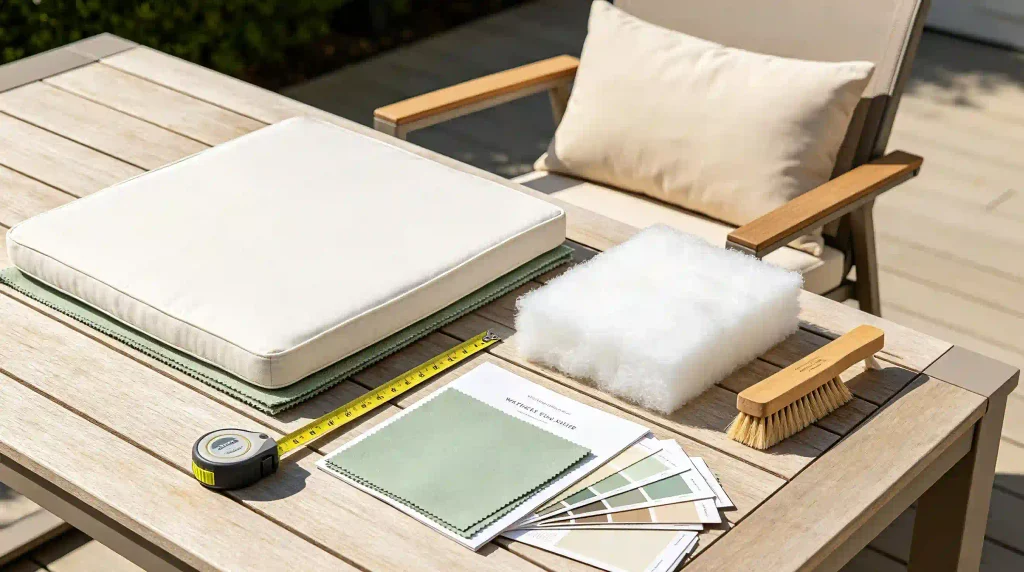
The first step is to measure your chair rather than choosing a cushion based on appearance alone. Even cushions designed for the same type of outdoor chair can have different dimensions.
1. Measure the Seat
Start by measuring the actual seating area of your chair.
Measure:
- Seat width: from one side of the seating area to the other.
- Seat depth: from the front edge of the seat to the back.
- Usable seating area: focus on the area the cushion will actually cover rather than the chair’s overall outside dimensions.
If you are replacing an existing cushion, measure the furniture itself as well as the old cushion. Cushions can compress or change shape over time, so relying only on an old cushion’s dimensions may not give you the most accurate result.
2. Measure the Back and Check the Shape
If you are buying a seat-and-back cushion, you will also need to consider the available back area.
Check:
- Back height
- Back width
- Straight or curved edges
- Armrests
- Corners and unusual shapes
- Existing attachment points or ties
The shape of the chair matters just as much as its measurements. A cushion that is the correct width and depth may still not sit properly if the chair has a curved back or another unusual design.
3. Check the Fit Before Buying
The goal is not to find the biggest cushion that can physically fit on the chair. You want a cushion that sits naturally within the seating area without excessive bunching, sliding, or overhanging.
Before purchasing, compare your measurements with the actual product dimensions provided by the manufacturer.
A quick measurement checklist:
- Seat width
- Seat depth
- Back height, if needed
- Cushion shape
- Tie or attachment position
- Product dimensions
Taking a few minutes to measure first can help prevent an otherwise avoidable sizing problem.
Match the Cushion to How You Use the Chair
Once you know what size cushion you need, think about how the chair is normally used. A cushion for an outdoor dining chair may have different priorities from one designed for relaxing.
1. Dining Chairs
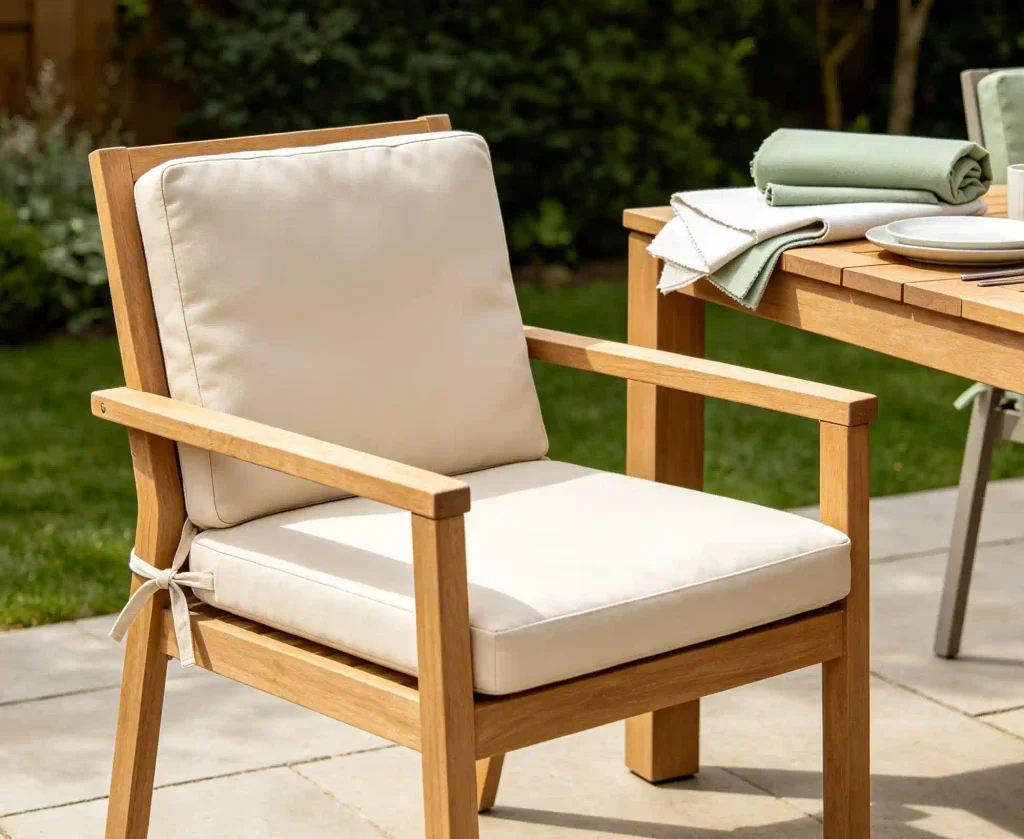
For outdoor dining, support and practicality are usually more important than creating an extremely soft seat.
Consider a cushion that:
- Provides stable support while sitting upright
- Does not interfere with the chair’s normal seat height
- Fits securely on the chair
- Is easy to clean after meals
If the chair is used regularly for outdoor dining, durability and maintenance should also be part of the decision.
2. Lounge and Relaxation Chairs
For lounge chairs and other seating intended for longer periods of relaxation, comfort may become a higher priority.
You may want to pay more attention to:
- Cushion thickness
- Filling and support
- Back cushioning
- Lumbar support
- Overall softness
The ideal balance depends on personal preference and the design of the chair.
3. Everyday Family Use
Outdoor furniture used by the whole family may experience more frequent spills, movement, and general wear.
In this situation, consider not only how comfortable the cushion feels but also how easy it is to maintain.
For example, a cushion with a removable cover may be more convenient for a busy household than one that requires more complicated cleaning.
The key principle is simple: choose a cushion for the way you actually use the chair, rather than choosing based on thickness or appearance alone.
Choose the Right Cushion Type and Construction
Outdoor chair cushions come in different shapes and configurations. Identifying the type you need can narrow your choices before you start comparing fabrics and fillings.
1. Seat, Back, and Seat-and-Back Cushions
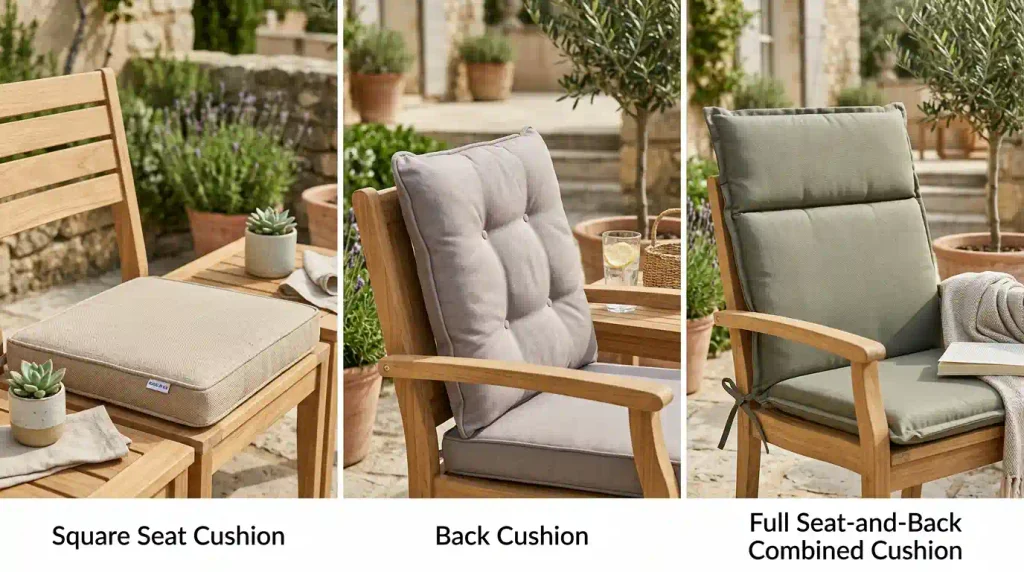
Seat cushions are designed primarily to provide support beneath you. They are often the most important cushion when upgrading the comfort of a dining or patio chair.
Back cushions provide additional support and cushioning behind your back. They can be particularly useful on lounge-style seating.
Seat-and-back cushions combine both functions in one design. They can create a more coordinated appearance while covering both the seat and back of a compatible chair.
The correct choice depends on how your chair is constructed and whether you want to cushion one or both areas.
2. Specialty Cushion Shapes
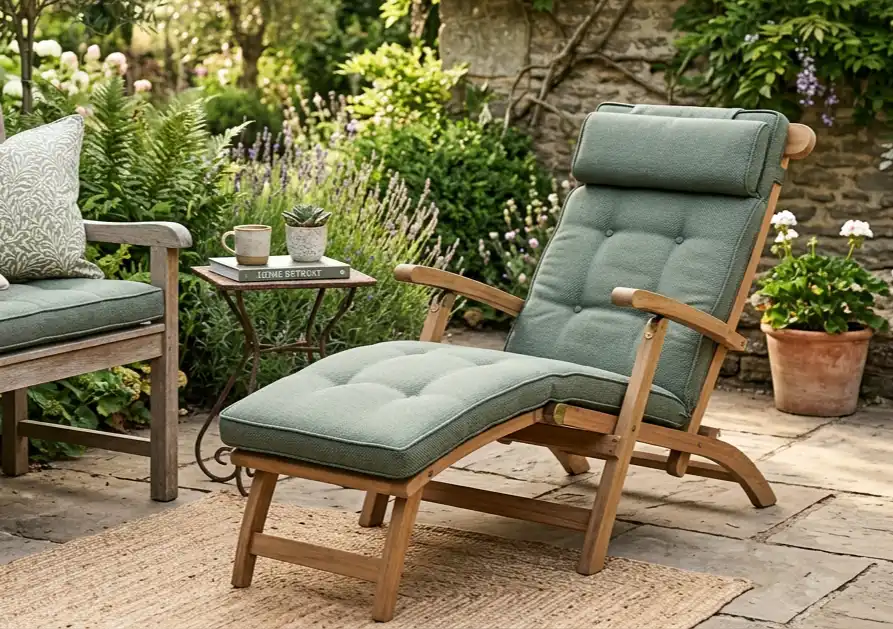
Some outdoor furniture requires a more specialized cushion rather than a simple rectangular seat pad.
Examples include:
- Bench cushions
- Chaise cushions
- Contoured cushions
- Hinged cushions
- Deep-seating cushions
Before buying, check whether the cushion is specifically designed for the type and shape of furniture you have.
A chaise cushion, for example, is not simply a longer version of a standard chair cushion. Its shape and dimensions need to correspond to the furniture it is intended for.
3. Construction Details Worth Checking
Once you have identified the appropriate cushion type, look at the construction details.
Useful features may include:
- Boxed or structured edges for a more defined shape
- Knife-edge construction for a simpler profile
- Ties or attachment points to help keep cushions positioned
- Removable covers for easier maintenance
- Reversible designs, where available
These features should support the way you use the furniture rather than being treated as requirements for every cushion.
Choose the Filling for Comfort and Shape Retention
The filling inside a cushion plays an important role in how it feels and how well it maintains its shape over time.
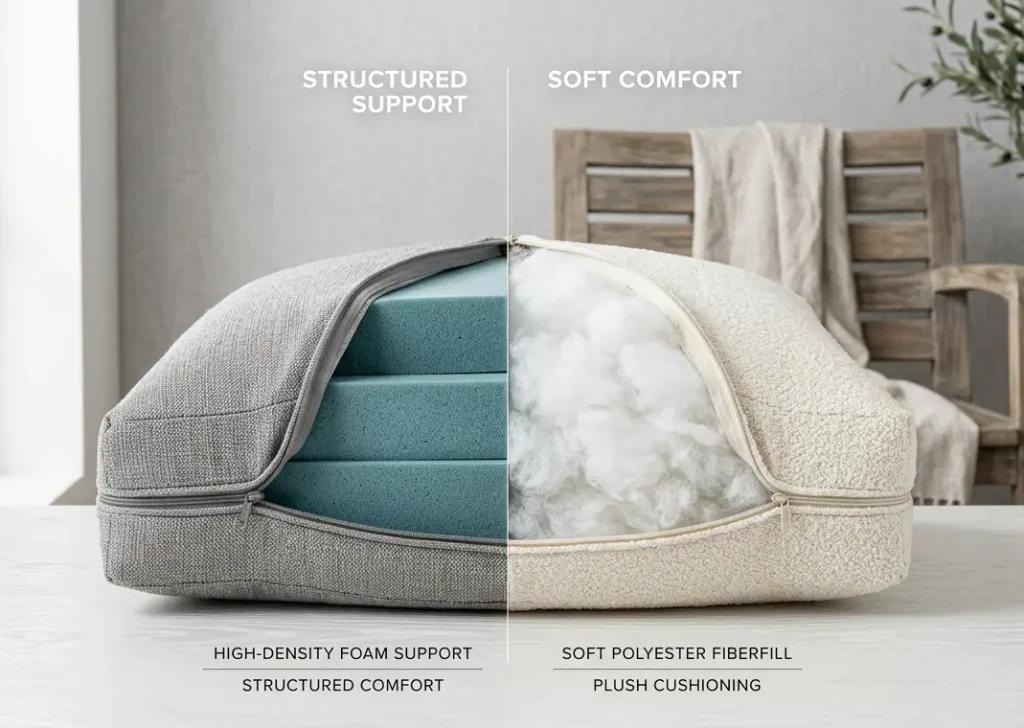
1. Foam-Filled Cushions
Foam can provide a more structured seating experience and is often useful when you want consistent support.
When comparing foam cushions, don’t judge them by softness alone. The construction and foam characteristics can influence how the cushion responds to weight and how well it recovers after repeated use.
For frequently used seating, a supportive cushion that maintains its shape can be more practical than one that feels extremely soft when you first sit down.
2. Quick-Dry or Reticulated Foam
If your furniture is exposed to frequent rain or humid conditions, drainage becomes particularly important.
Quick-dry or reticulated foam is designed to allow water and air to move through the cushion more easily. This can help the cushion dry faster after exposure to moisture.
However, foam is only one part of the equation. The fabric, seams, cushion construction, and overall drainage design also influence drying performance.
3. Polyester Fiberfill and Softer Fill Options
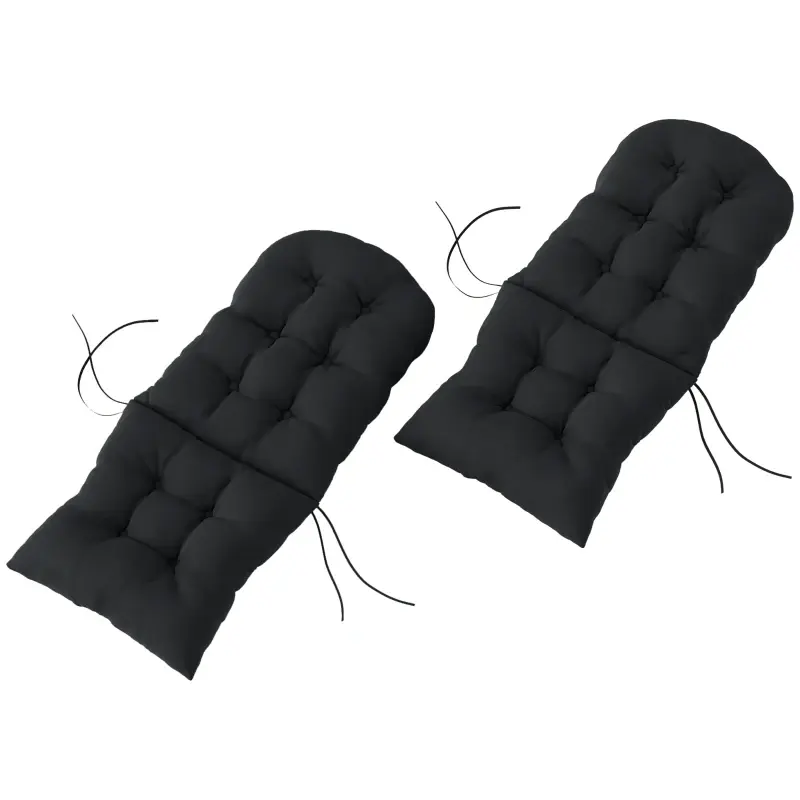
[Outsunny Outdoor Adirondack Chair Cushions Set of 2,Polyester, PP Cotton]
Fiberfill can provide a softer and more relaxed feel. It can be useful for back cushions or situations where plushness is a greater priority than structured support.
Depending on its construction, however, softer fill can compress more readily over time.
When choosing between a structured foam cushion and a softer filling, think about how frequently the cushion will be used and whether you prefer a supportive or relaxed sitting experience.
4. Think About Thickness as Part of Comfort
A thicker cushion is not automatically a more comfortable cushion.
Comfort depends on several factors, including:
- Filling
- Cushion construction
- Chair design
- Seat height
- Intended use
- Personal preference
For example, adding a very thick cushion to a dining chair can change the effective sitting height and alter the way the chair feels at a table.
Instead of asking, “How thick should my cushion be?”, ask whether the cushion’s thickness and construction are appropriate for the furniture and how you plan to use it.
Select Outdoor Cushion Fabric Based on Your Climate
The fabric you choose should reflect where your cushions will be used. A cushion on a covered porch may face very different conditions from one sitting in direct sun and rain.

1. For Sunny or High-UV Locations
If your furniture receives substantial direct sunlight, look for outdoor fabrics with:
- UV resistance
- Fade resistance
- Outdoor-rated construction
Prolonged exposure to sunlight can gradually affect fabric color and material performance. A fabric designed for outdoor use is generally a better choice than an indoor fabric placed outside.
2. For Rainy or Humid Conditions
If your cushions regularly encounter rain or humidity, consider:
- Water-resistant or water-repellent fabric
- Quick-drying construction
- Moisture resistance
- Mold or mildew resistance, where specified
- Good drainage and airflow
Remember that water-resistant does not necessarily mean waterproof. The fabric alone does not determine how well an entire cushion handles rain.
3. For Coastal or Damp Environments
Outdoor furniture in coastal areas may experience moisture as well as salt exposure.
In these conditions, consider the complete outdoor construction rather than focusing on a single fabric characteristic.
Look at the manufacturer’s specifications for outdoor suitability and care requirements, and consider how easily the cushion can be dried and protected when not in use.
Note: Don’t choose fabric by appearance alone. Color and texture are important, but performance should come first.
Choose Color and Style After Function
Once you have confirmed the size, construction, filling, and fabric performance, you can focus on appearance.
1. Coordinate With Your Outdoor Space
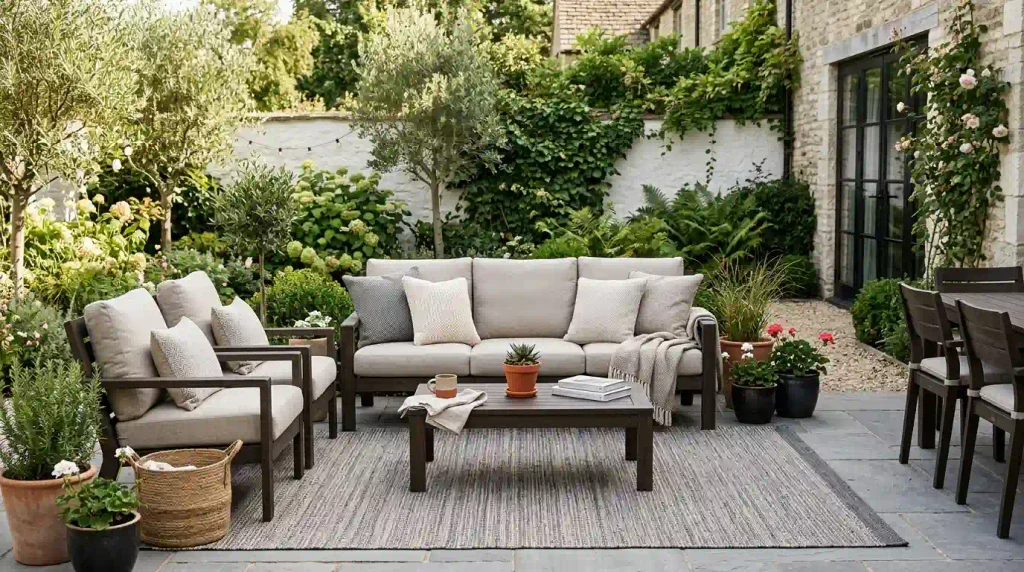
Consider how the cushion color works with:
- Existing patio furniture
- Your home’s exterior
- Decking or flooring
- Outdoor rugs
- Plants and surrounding landscaping
A cushion does not need to match everything exactly. It simply needs to work with the overall outdoor setting.
2. Use Neutrals for Flexibility
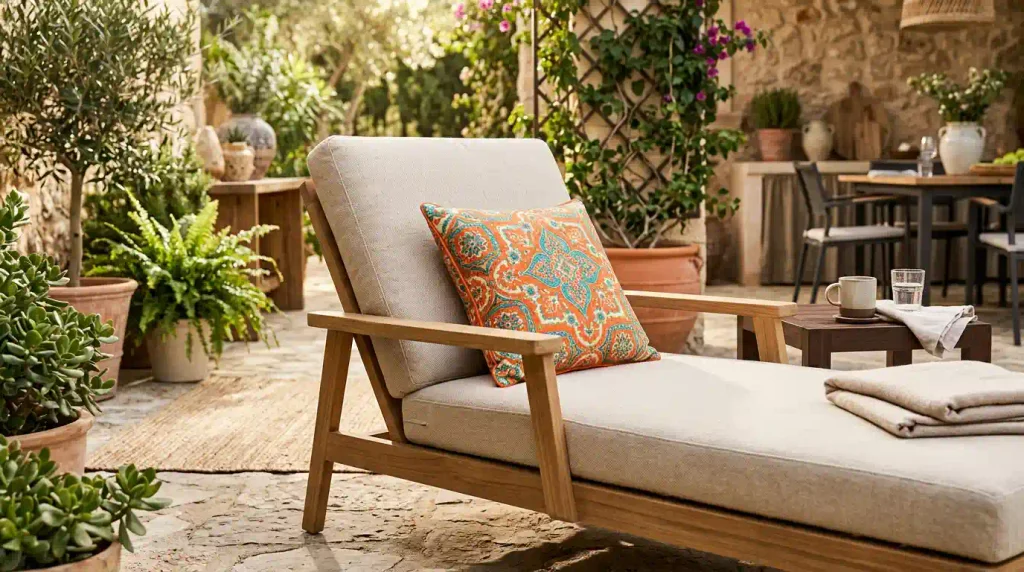
Neutral colors can make it easier to update your outdoor space later.
You can also use accent pillows or smaller decorative accessories to introduce seasonal colors without replacing the main chair cushions.
3. Check the Color in Your Actual Space
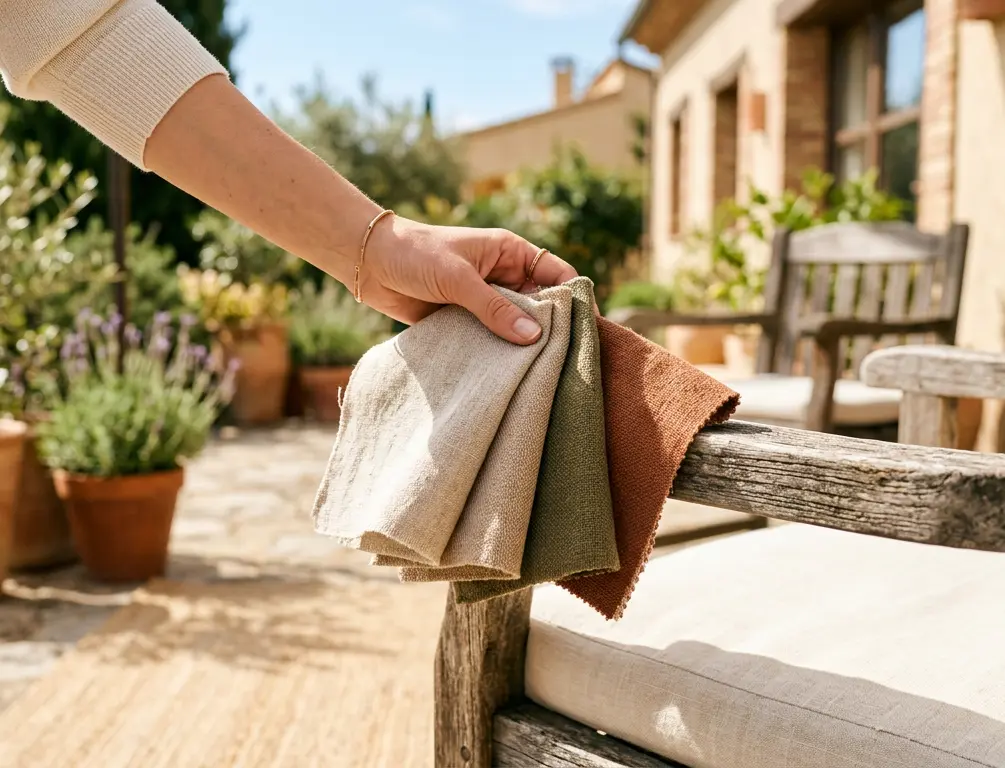
Colors can look different depending on lighting and surroundings.
If fabric swatches are available, viewing them in natural outdoor light can help you make a more accurate decision.
Most importantly, don’t let appearance override fit and performance. A beautiful cushion that does not fit your chair or withstand your outdoor conditions is unlikely to be a good long-term choice.
Outdoor Chair Cushion Buying Checklist
Before purchasing your outdoor chair cushions, run through this quick checklist.
1. Fit
- Have I measured the seat width?
- Have I measured the seat depth?
- Do I need to measure the back height?
- Does the cushion shape match my chair?
- Are the ties or attachment points compatible?
- Have I compared my measurements with the actual product dimensions?
2. Comfort
- Is the cushion designed for dining or lounging?
- Is the filling appropriate for how I use the chair?
- Does the cushion thickness work with the chair’s design?
- Will it provide the level of support I prefer?
3. Outdoor Performance
- Is the fabric designed for outdoor use?
- Is it suitable for my level of sun exposure?
- Is it appropriate for rain or humidity?
- Does the overall construction allow the cushion to dry effectively?
4. Maintenance
- Is the cover removable, if that is important to me?
- Are the cleaning instructions practical?
- Do I have somewhere to store or protect the cushions during harsh weather?
5. Style
- Does the color complement my existing furniture?
- Will the design remain suitable if I update other outdoor décor?
Taking a few minutes to work through this list can help you avoid choosing a cushion based on one attractive feature while overlooking the factors that matter most in everyday use.
Conclusion
Selecting the right outdoor chair cushions starts with fit, but a good choice requires more than matching dimensions.
First, measure your chair carefully. Then consider how you use it, choose the appropriate cushion type and construction, and select a filling that provides the level of support and comfort you want. From there, match the fabric to your climate and think about how much maintenance and protection you are willing to provide.
Finally, choose a color and style that complements your outdoor space.
The right outdoor chair cushion is not necessarily the thickest, softest, or most expensive option. It is the one that fits your furniture properly, suits the way you use the chair, performs well in your outdoor environment, and remains practical to maintain over time.
FAQs
1. How do I know what size outdoor chair cushion I need?
Measure the actual seating area of your chair, including the seat width and depth. If you are buying a seat-and-back cushion, measure the available back area as well. Then compare your measurements with the manufacturer’s listed cushion dimensions.
Don’t rely only on the size of your old cushion, as it may have compressed or changed shape over time.
2. What type of outdoor cushion is best for rainy weather?
Look for a cushion designed for outdoor conditions with features such as water-resistant fabric and quick-drying or well-draining construction. If the cushion is frequently exposed to rain, the ability to dry effectively is especially important.
Remember that the fabric alone does not determine how well a cushion handles moisture. The filling, seams, construction, and overall drainage design also matter.
3. Is thicker outdoor chair cushioning always more comfortable?
No. Cushion thickness is only one factor affecting comfort. The filling, construction, chair design, seat height, and intended use all contribute to how a cushion feels.
For a dining chair, an extremely thick cushion may not necessarily be practical. For a lounge chair, additional cushioning may be more desirable. Choose thickness as part of the overall cushion design rather than treating it as the only measure of comfort.

Outdoor ideas, buying guidance, and category inspiration for shoppers comparing official Outsunny products on Aosom.