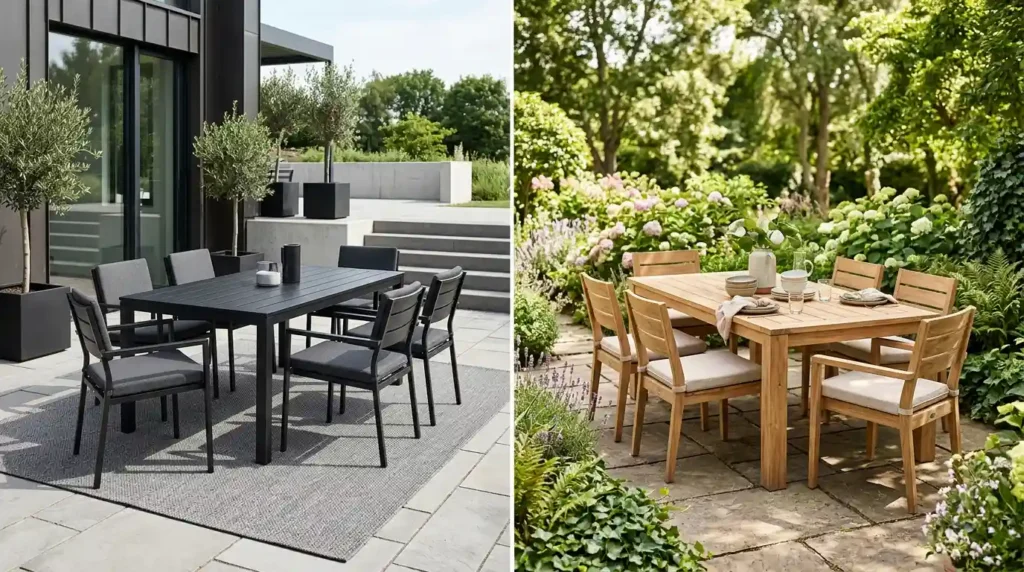
Choosing between metal and wood outdoor dining sets is not simply a matter of deciding which material looks better. Both can work well outdoors, but they offer different advantages when it comes to durability, maintenance, comfort, weather resistance, cost, and style.
Metal is often appealing to shoppers who want relatively low-maintenance furniture that is easy to move, while wood offers a naturally warm appearance and a substantial feel. The better choice depends on where you live, how often you use your dining set, and how much maintenance you are willing to do.
This guide compares the two materials across the factors that matter most when buying an outdoor dining set, so you can choose based on your actual needs rather than appearance alone.
Metal vs. Wood Outdoor Dining Sets at a Glance
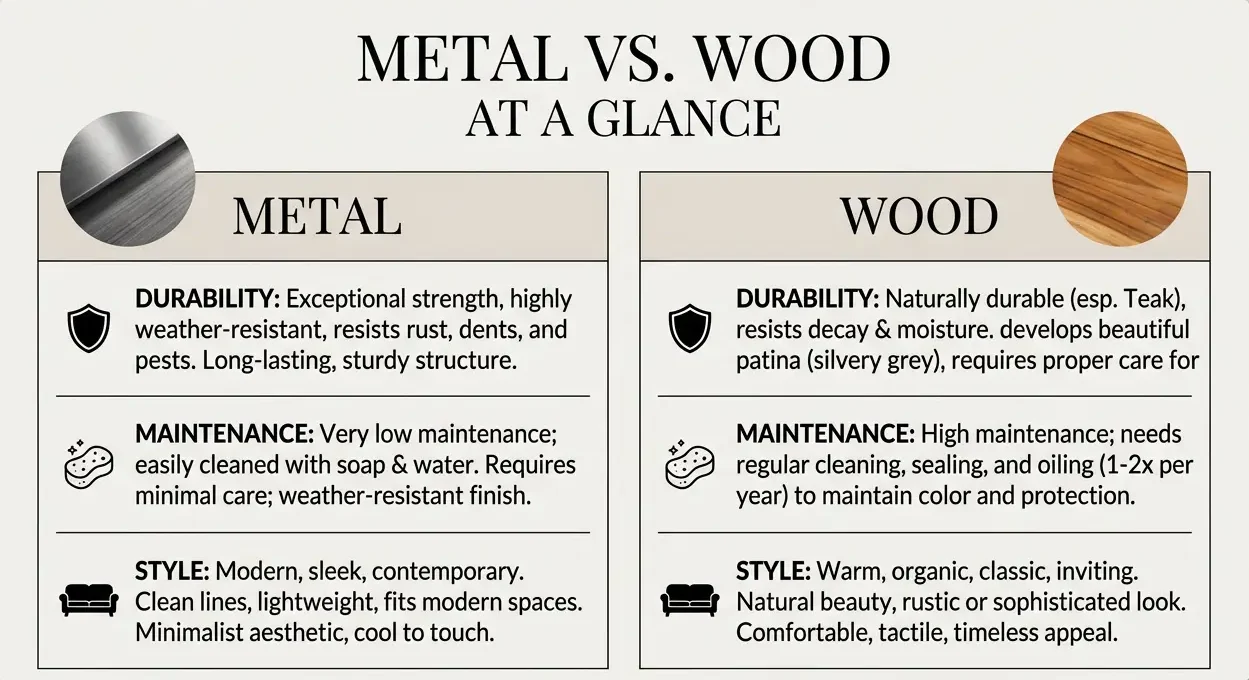
Quick takeaway: If you prioritize easy maintenance and flexibility, metal—particularly aluminum—may be the more practical choice. If you prioritize a natural appearance and warm, substantial feel, wood may be a better fit.
Metal Outdoor Dining Sets: Pros and Cons
Metal is one of the most versatile materials for outdoor dining furniture. However, “metal” covers several different materials, and their performance is not identical.
1. Pros of Metal Outdoor Dining Sets
Low maintenance:
Many metal dining sets require relatively little routine care. Aluminum, in particular, does not rust in the same way iron or ordinary steel does, making it useful for outdoor environments where moisture is common.
Strong and durable:
Steel and wrought iron can provide substantial strength, while aluminum offers a useful balance between durability and lower weight.
Easy to rearrange:
Lightweight aluminum furniture can be moved more easily when you want to change your patio layout, store furniture, or make room for guests.
Wide range of styles:
Metal can work with modern, minimalist, industrial, traditional, and contemporary outdoor designs depending on the shape and finish.
2. Cons of Metal Outdoor Dining Sets
Some metals can rust:
Steel and wrought iron can develop rust if their protective finish becomes damaged and moisture reaches the underlying material. They may therefore require occasional inspection and touch-ups.
Can become hot in direct sunlight:
Metal surfaces can become uncomfortable during hot weather, particularly when exposed to direct sun for extended periods. Cushions, shade, or strategic furniture placement can help.
Some metal furniture can be very heavy:
Wrought iron offers excellent stability in windy conditions but can be difficult to move.
3. What Type of Metal Should You Consider?
- Aluminum: Lightweight, relatively low maintenance, and resistant to rust.
- Steel: Strong and often stable, but protective coatings are important for outdoor use.
- Wrought iron: Heavy and highly stable, but generally requires more attention to rust prevention.
The material alone does not determine performance. The finish, construction, location, and care requirements of the specific product also matter.
Wood Outdoor Dining Sets: Pros and Cons
Wood remains a popular choice for outdoor dining because it brings a natural texture and warmth that is difficult to replicate with metal.
1. Pros of Wood Outdoor Dining Sets
Natural appearance:
Wood works particularly well with gardens, patios, and other spaces where you want furniture to blend naturally with plants and outdoor surroundings.
Comfortable feel:
Wood generally does not become as intensely hot or cold to the touch as exposed metal, making it pleasant for outdoor dining.
Strong and stable:
Many hardwoods are substantial and provide a stable dining experience. Quality outdoor woods can also perform well in changing weather when properly maintained.
Ages naturally:
Some woods can develop an attractive weathered appearance over time. For example, teak can gradually develop a silver-gray patina if left untreated.
Cons of Wood Outdoor Dining Sets
Higher maintenance requirements:
Depending on the type of wood and finish, outdoor furniture may need regular cleaning, oiling, sealing, staining, or other treatment.
Can be affected by moisture:
Wood that is not properly maintained can absorb moisture, potentially leading to cracking, warping, rot, or other deterioration.
Generally heavier than lightweight aluminum:
Wood furniture can be stable but less convenient to move frequently.
Appearance changes over time:
Some shoppers appreciate natural aging, while others prefer to preserve the original color and appearance. Your preference will determine how much maintenance you need to perform.
2. Common Outdoor Wood Types
Outdoor dining furniture can use several types of wood, including:
- Teak
- Acacia
- Eucalyptus
- Cedar
- Other hardwoods and treated softwoods
The outdoor performance of wood depends heavily on the species, treatment, construction, and maintenance instructions. Therefore, do not assume that every wood dining set has the same weather resistance.
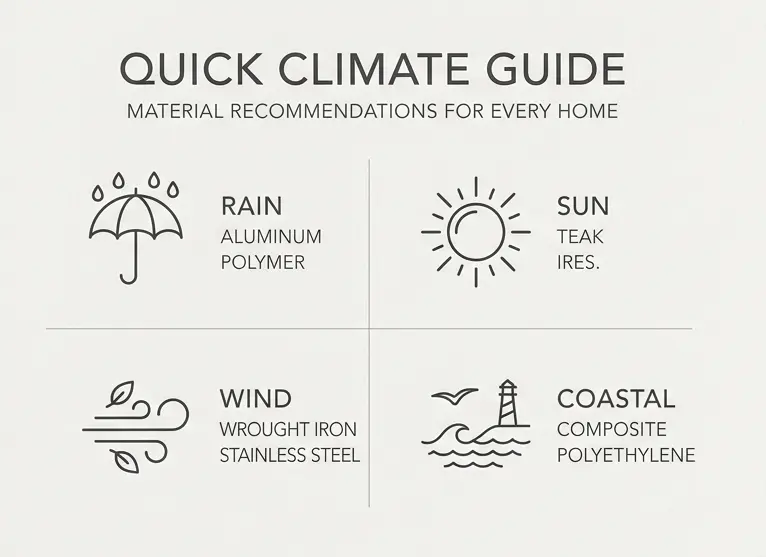
Climate and Weather: Which Material Works Better Outdoors?
Your local environment can be just as important as the material itself.
1. Rain and Humidity
For wet environments, consider how well the furniture handles prolonged moisture.
Metal: Aluminum is generally a practical option because it does not rust like iron or ordinary steel. Steel and wrought iron need their protective finishes maintained.
Wood: Suitable outdoor hardwoods can perform well in humid conditions, but regular care may be necessary to prevent moisture-related deterioration.
2. Strong Sun
Both materials can work in sunny environments, but they behave differently.
Metal can become hot when exposed to direct sunlight. Wood generally has a less heat-conductive surface, although dark finishes can still become warm.
For either material, placing the dining set under suitable shade can make outdoor meals more comfortable.
3. Windy Areas
Weight becomes an advantage when strong winds are common.
Heavy wrought iron and substantial wood furniture can provide greater stability. Lightweight aluminum is easier to move but may require more consideration in exposed locations.
4. Coastal or Salt-Air Environments
Salt air can accelerate corrosion on susceptible metals, particularly when protective coatings are damaged.
For coastal locations, corrosion-resistant options such as aluminum can be worth considering. If choosing steel or iron, pay close attention to the product’s protective finish and maintenance requirements.
For wood, choose a species and finish appropriate for outdoor exposure and follow the manufacturer’s care recommendations.
Maintenance, Comfort, and Long-Term Value
These three factors often determine whether a dining set remains enjoyable after the initial purchase.
1. Maintenance
Metal generally has the advantage when minimizing maintenance is a priority.
Aluminum can often be cleaned with relatively simple routine care, while steel and wrought iron may require attention to damaged finishes and rust.
Wood typically demands more involvement. Depending on the species and finish, you may need to clean, sand, oil, stain, or seal it periodically.
If you enjoy maintaining outdoor furniture and appreciate the natural aging process, wood may not feel like a disadvantage. If you want to spend as little time as possible on upkeep, metal may be more convenient.
2. Comfort
Neither material automatically produces a more comfortable dining set.
Metal can become hot in direct sunlight, but cushions can significantly improve the seating experience. Wood generally has a warmer tactile feel and can be comfortable even without thick cushions.
For dining furniture, also consider:
- Seat height
- Seat depth
- Back support
- Armrest position
- Table height
- Available legroom
The shape and ergonomics of the furniture matter at least as much as the material.
3. Cost and Long-Term Value
The cheapest option upfront is not necessarily the best value over several years.
Wood prices vary considerably depending on the species. Premium hardwoods can cost more than entry-level woods. Metal pricing also varies significantly between lightweight aluminum, steel, and heavier decorative iron.
When comparing prices, consider:
- Initial purchase price
- Expected maintenance
- Replacement or repair needs
- How frequently you will use the furniture
- How long you expect to keep it
A lower-maintenance set may offer better value for a buyer who does not want regular upkeep, while a well-maintained wood set may be worthwhile for someone who values its appearance and longevity.
Style: Metal vs. Wood and the Option to Mix Materials
Material also has a major effect on the overall appearance of your outdoor dining area.
1. Choose Wood for a Natural, Warm Look
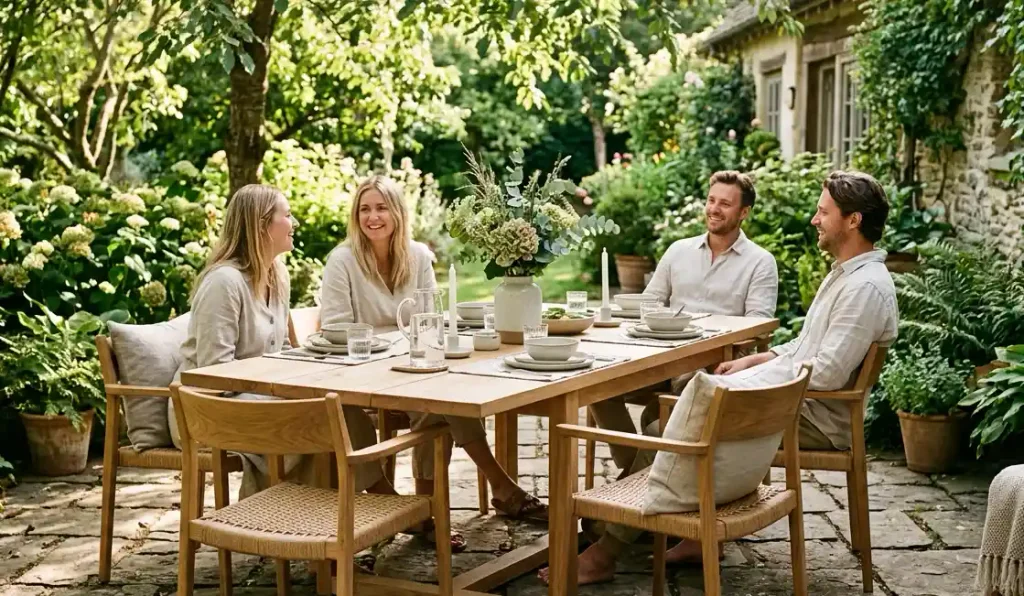
Wood works particularly well with:
- Garden-style patios
- Rustic spaces
- Farmhouse designs
- Traditional outdoor areas
- Scandinavian-inspired spaces
Its natural grain and warm tones can make an outdoor dining area feel more connected to the surrounding landscape.
2. Choose Metal for a Modern or Flexible Look
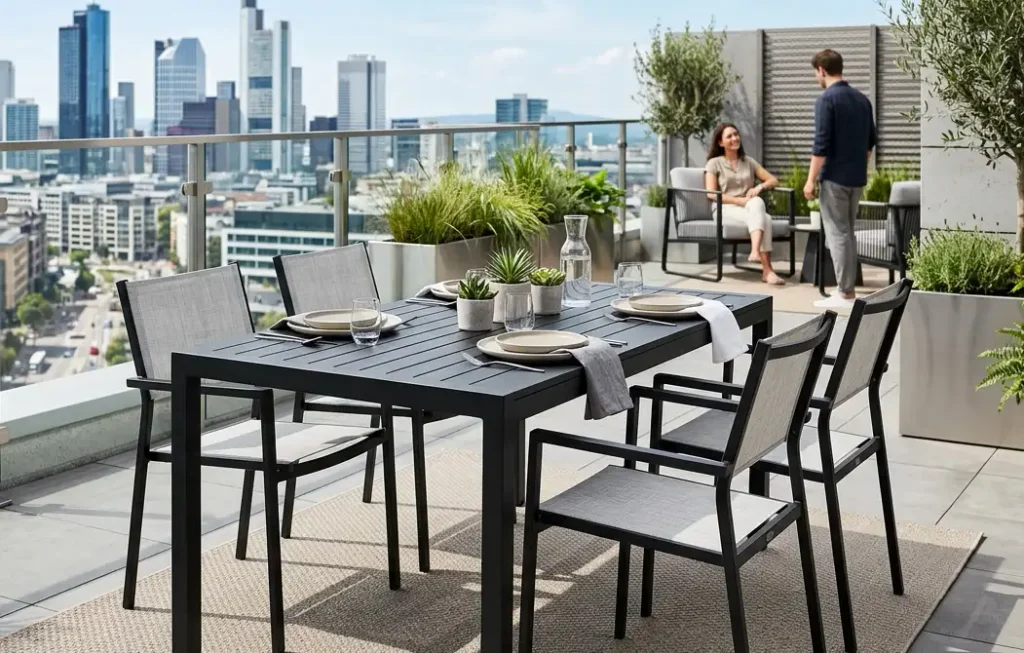
Metal can suit:
- Modern patios
- Minimalist spaces
- Industrial designs
- Contemporary gardens
- Small urban outdoor areas
Different finishes and frame designs allow metal furniture to range from simple and understated to decorative and traditional.
3. You Do Not Have to Choose One Material
Mixing materials can create a more balanced outdoor space.
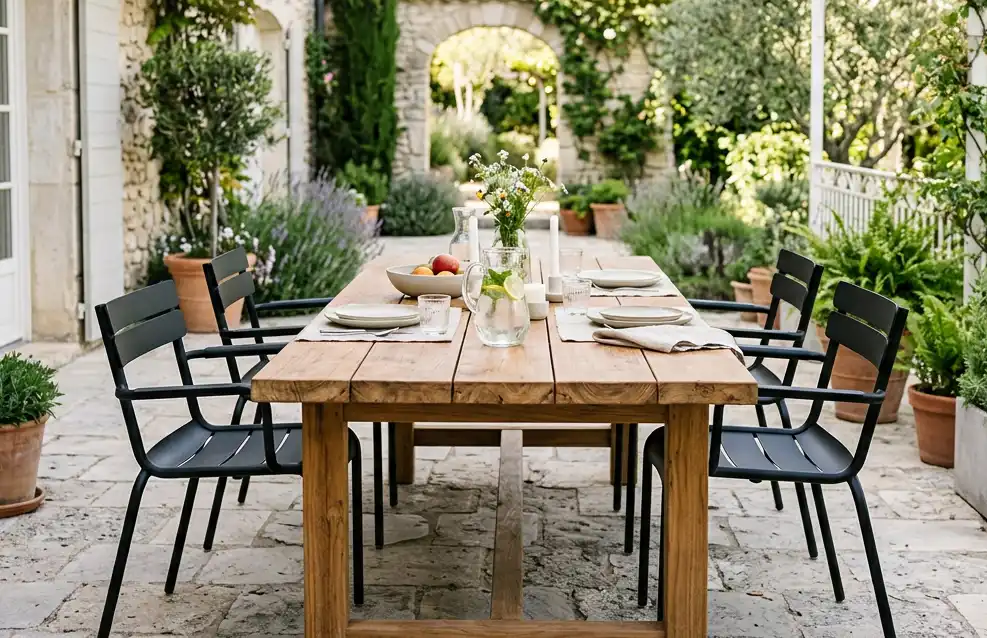
For example, a wood dining table with metal chairs can combine the warmth of wood with the lighter visual appearance and potentially easier maintenance of metal.
This approach can also give you more flexibility when replacing individual pieces instead of buying a completely matching set.
Metal vs. Wood: Which Outdoor Dining Set Is Right for You?
Instead of asking which material is universally better, start with your priorities.
1. Metal May Be Better If You:
- Want relatively low-maintenance furniture
- Prefer a modern or minimalist appearance
- Need furniture that is easy to rearrange
- Live in an environment where rust resistance is important
- Prefer a wide range of frame styles and finishes
2. Wood May Be Better If You:
- Prefer a natural outdoor aesthetic
- Like the warmth and texture of real wood
- Do not mind regular maintenance
- Want substantial, stable furniture
- Prefer furniture that can develop a natural aged appearance
3. Consider a Combination If:
- You like the warmth of wood but prefer metal seating
- You want to mix modern and natural elements
- You want greater flexibility when replacing individual pieces
- A completely matching dining set does not suit your space
The right choice ultimately comes down to climate, maintenance, comfort, budget, style, and how you use your outdoor dining area.
Final Thoughts
There is no single winner in the metal vs. wood outdoor dining sets debate.
Metal is often the practical choice for shoppers who value relatively low maintenance, easy movement, and flexible styling. Aluminum can be particularly useful when rust resistance and portability are priorities. Wood is attractive to buyers who want a natural appearance, warm tactile feel, and substantial outdoor furniture and are willing to invest more time in maintenance.
Before buying, consider where the furniture will be used, how exposed it will be to weather, how much maintenance you are willing to perform, and how you want your outdoor dining area to look.
Choose the material that fits your lifestyle—not simply the material that looks best in a product photo.
FAQs
1. Is metal or wood better for outdoor dining furniture?
Neither is universally better. Metal may be preferable for low maintenance and easy movement, while wood can be a better choice for a natural appearance and warm tactile feel. Your climate, maintenance preferences, budget, and intended use should determine the choice.
2. Does metal outdoor furniture get hotter than wood?
Metal can become noticeably hot when exposed to direct sunlight. Wood generally has a less heat-conductive surface, although its color and finish can affect how warm it becomes. Shade and cushions can improve comfort with either material.
3. Which lasts longer, metal or wood outdoor furniture?
Longevity depends on the specific material, construction, finish, climate, and maintenance. Properly maintained outdoor hardwood can be highly durable, while well-protected metal can also provide long-term outdoor performance. Rather than comparing the materials in isolation, check the manufacturer’s specifications and care instructions.
4. Can I mix metal and wood outdoor furniture?
Yes. Combining materials can create visual contrast and allow you to benefit from the characteristics of both. For example, a wood table paired with metal chairs can provide a balance between natural warmth and a more contemporary appearance.

Outdoor ideas, buying guidance, and category inspiration for shoppers comparing official Outsunny products on Aosom.