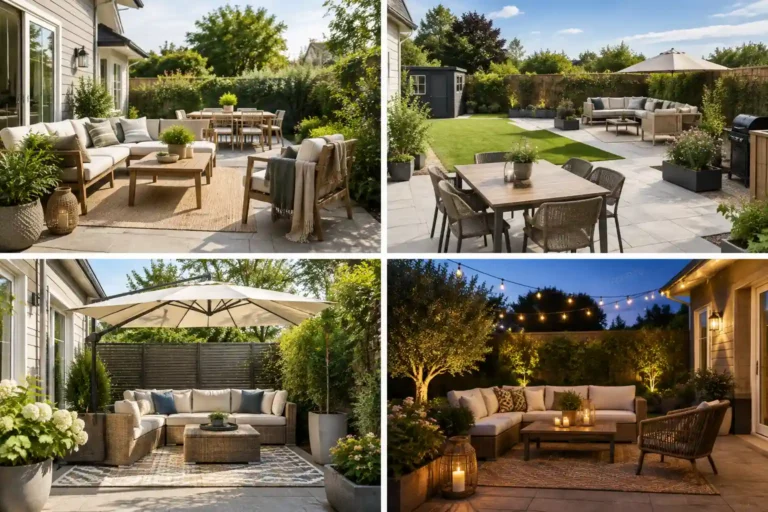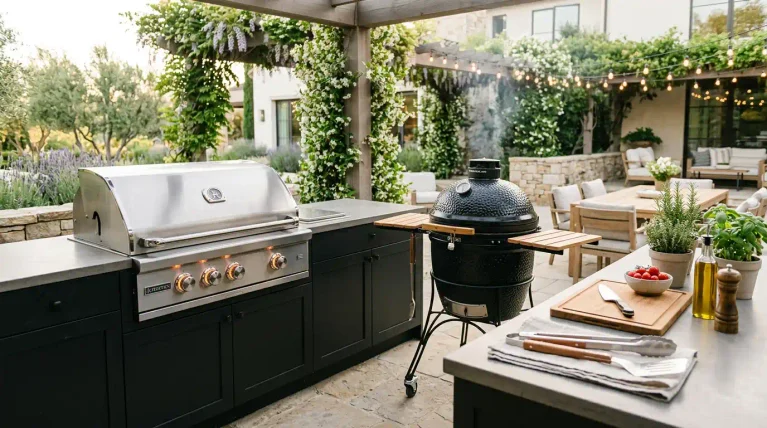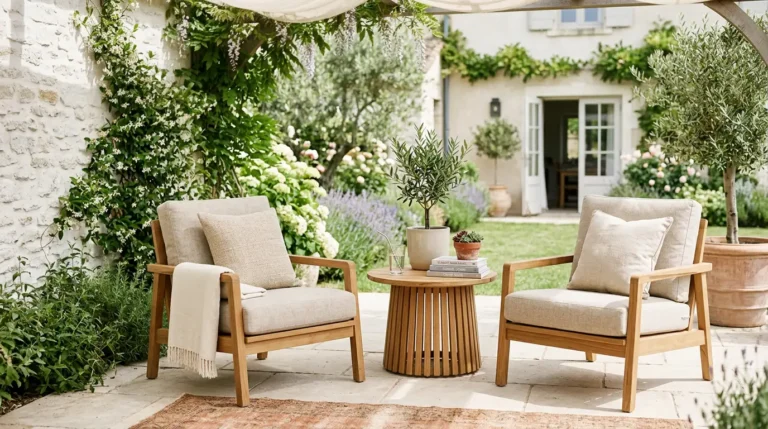
A small patio does not have to mean a cramped patio. The key is not simply choosing the smallest furniture you can find—it is choosing pieces that fit your space, serve a clear purpose, and make every square foot work harder.
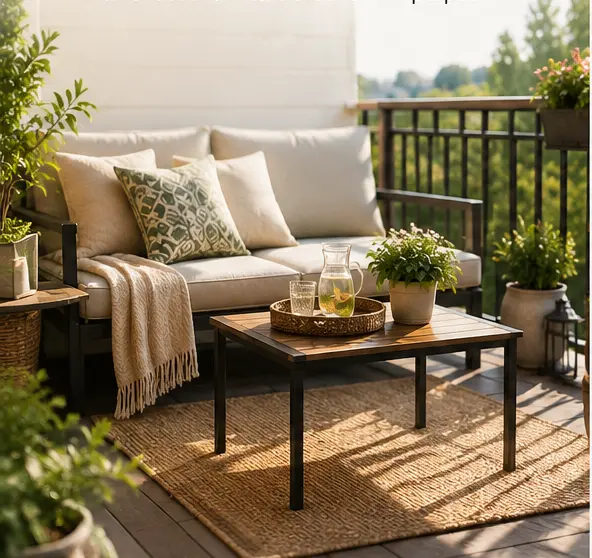
Whether you are furnishing a compact balcony, narrow patio, small porch, or tiny backyard, start with the way you want to use the space. Then choose furniture around that purpose. The most useful small patio setups often combine compact proportions with features such as folding frames, flexible seating, storage, or multiple functions. This approach reflects the main purchasing priorities identified in the source material: fit, space efficiency, comfort, functionality, durability, and value.
Start by Defining How You Want to Use Your Small Patio
Before choosing a patio set, decide what you actually want to do outside.
This matters because a small patio should not be designed around furniture first. A two-person coffee area needs a very different setup from a compact entertaining space. The source material similarly recommends matching the patio’s intended activity with the furniture type rather than simply displaying products.
Tip: Pick one primary purpose and one secondary purpose. For example, your patio could be primarily a morning coffee spot but still accommodate dinner for two.
Measure Your Patio Before Choosing Furniture
The most common small-patio mistake is buying furniture based on appearance rather than its actual footprint.
Measure list:
- Overall patio length and width
- Door openings and swing paths
- Railings, walls and steps
- Existing plants or fixtures
- Furniture width and depth
- Space needed to pull out chairs
- Main walking paths
A simple trick is to use painter’s tape to mark the footprint of a prospective table, loveseat or chair directly on the patio floor. Walk around the taped area and open the doors. If the space already feels difficult to navigate, the furniture will probably feel too large once installed.
As a practical starting point, keep a clear walking route wherever possible and avoid placing furniture directly in front of doors. Remember that the listed furniture dimensions describe the product—not necessarily the amount of space you need to use it comfortably.
Before You Buy: If a folding patio chairs for patio lawn measures ,whose overall dimensions is 23.6″ W x 31.9″ D x 33.9″ H, leave approximately [18–24 inches] of additional space around it for comfortable access and movement.
12 Small Patio Furniture Ideas That Save Space
1. Choose a Compact Bistro Set for Everyday Dining
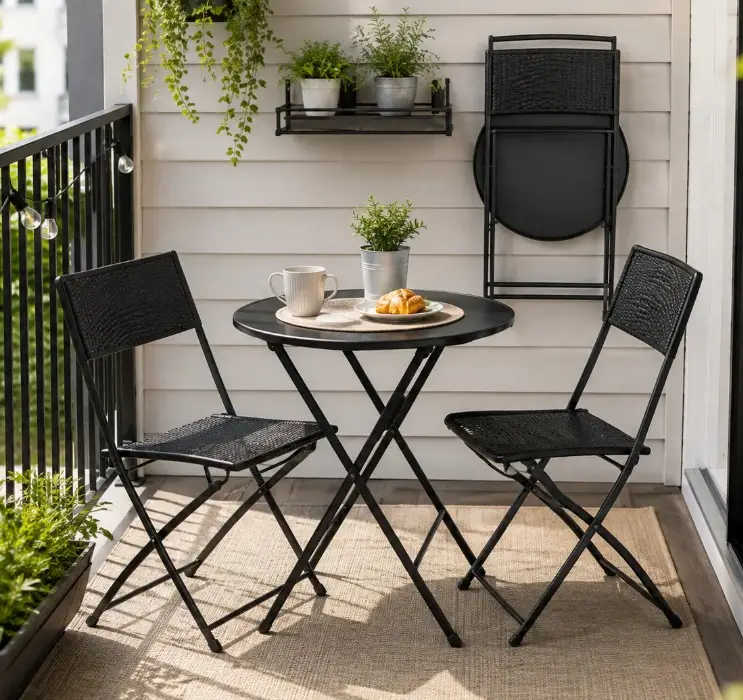
If you want your small patio to function as an outdoor dining area, a compact bistro set is one of the simplest solutions.
A small table with two chairs provides enough space for morning coffee, breakfast or casual meals without taking up the footprint of a full-size dining set. It works especially well on balconies, narrow patios and small porches.
When choosing a bistro set, consider the table shape as well as its dimensions. A round table can make movement around the seating area easier, while a small square or rectangular table may fit more efficiently against a wall.
If you do not use the table every day, consider a folding design that can be stored against the wall when you need more floor space.
2. Use Two Separate Chairs Instead of a Large Sofa
A small patio does not always need a sofa.
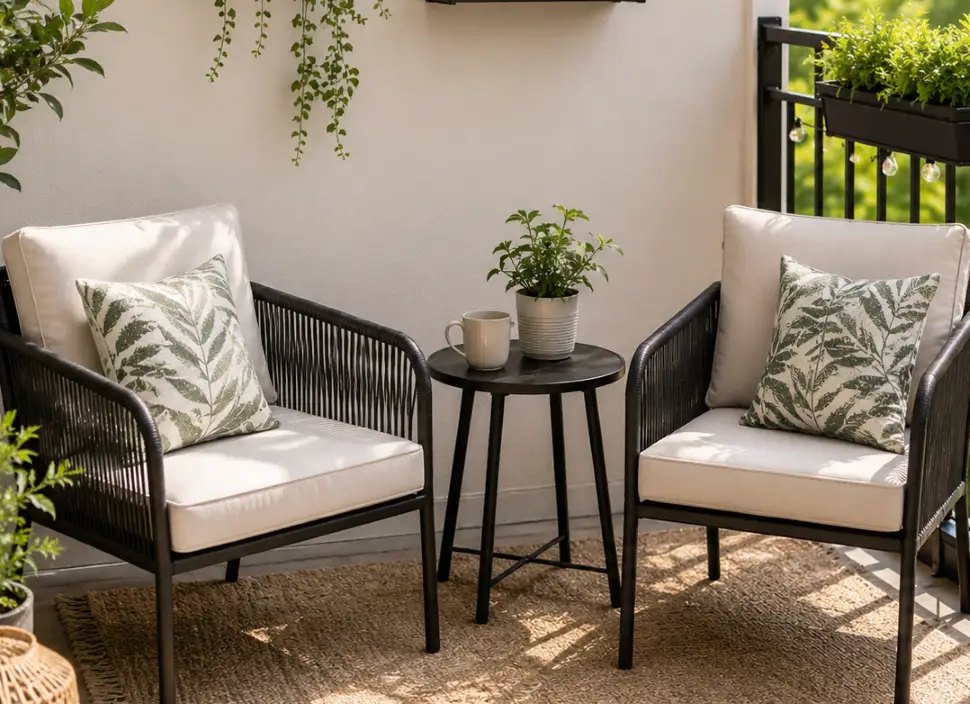
If the space is mainly used for reading, drinking coffee or talking with one other person, two individual chairs can provide enough seating while giving you more control over the layout.
Place a compact side table between the chairs, or move the chairs into a corner when you need additional open space.
This arrangement is particularly useful when the patio has an awkward shape because individual chairs can often fit into spaces where a sofa cannot.
3. Choose a Loveseat When You Want Sofa Comfort Without a Sectional
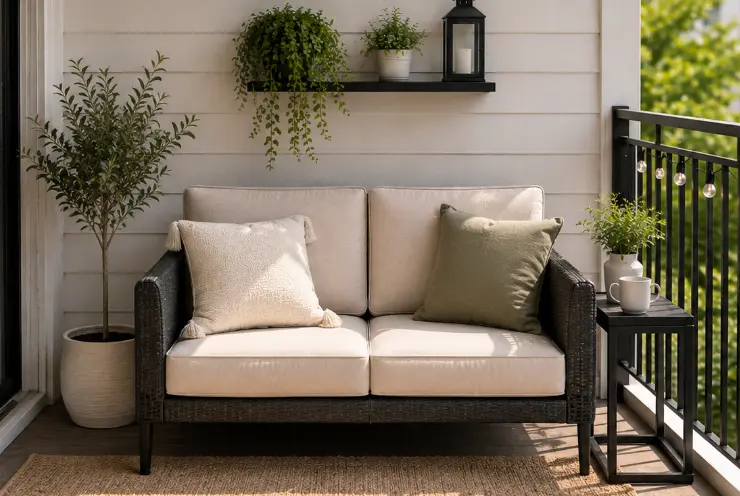
If you want a more relaxed seating area, consider a loveseat instead of a full outdoor sofa or sectional.
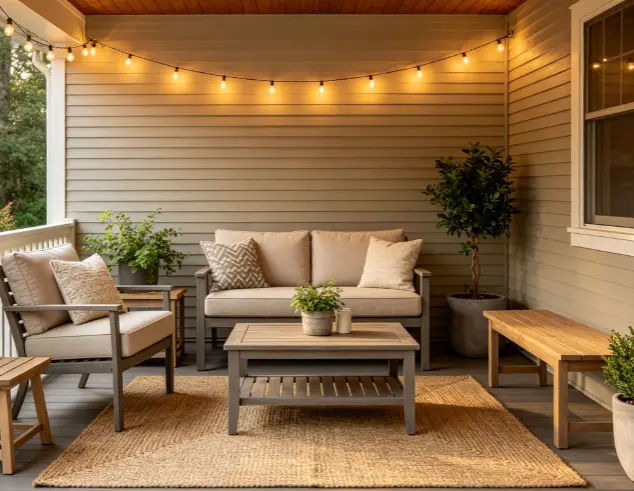
A loveseat gives two people a comfortable place to sit while requiring considerably less floor space than a larger sectional arrangement. Pair it with a narrow side table rather than a large coffee table to keep the center of the patio open.
Before buying, measure the full width, depth and clearance around the loveseat. A piece that technically fits against the wall may still make the patio uncomfortable if there is not enough room to walk around it.
4. Turn an Unused Corner Into a Seating Area
Corners are often some of the most underused areas of a small patio.
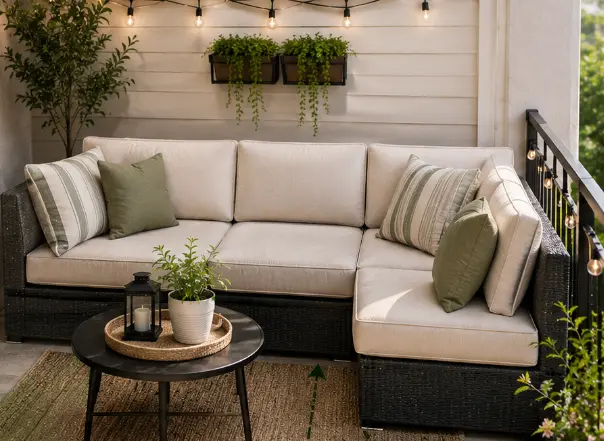
Instead of placing furniture in the middle of the space, use an L-shaped arrangement, compact bench or corner seating to make use of two adjoining walls.
This layout can leave a clearer path through the center of the patio, which is especially important when the patio also connects to a door or another outdoor area.
The key is to think about traffic flow before furniture placement. A small patio can feel much larger when the main walking path remains unobstructed.
5. Use a Single Lounge Chair for a One-Person Retreat
If the patio is primarily your personal outdoor space, you may not need a complete seating set.
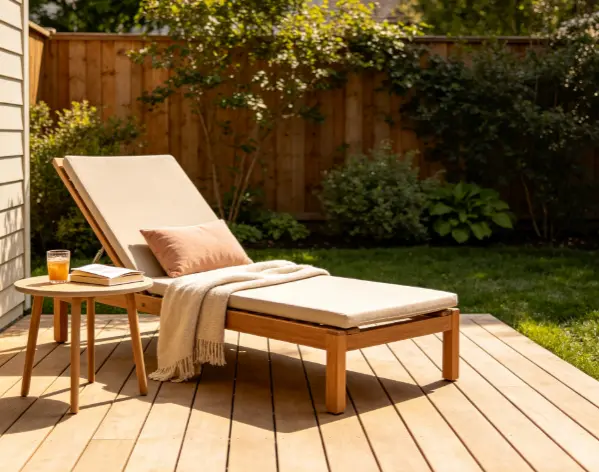
A single lounge or chaise chair paired with a small side table can create a comfortable place for reading, relaxing or sunbathing while leaving most of the patio available for other activities.
This is a particularly practical solution for narrow balconies or patios where a two- or three-piece seating set would feel crowded.
Look for adjustable or folding lounge chairs if you want to change the position of the chair or store it when it is not needed.
6. Replace a Bulky Coffee Table With a Small Side Table or Garden Stool
A large coffee table can consume valuable central floor space on a small patio.
Instead, use a narrow side table, C-shaped table or compact garden stool beside the seating. Depending on the design, the same piece can hold drinks, support a book, act as a footrest or provide an extra seat when guests arrive.
This approach is useful because you are not simply choosing a smaller table—you are removing a permanent obstacle from the center of the patio.
For particularly narrow spaces, keep the middle open and place small surfaces next to the seating instead.
7. Choose Folding Furniture When the Patio Has Multiple Uses
Some small patios need to function as more than a sitting area.
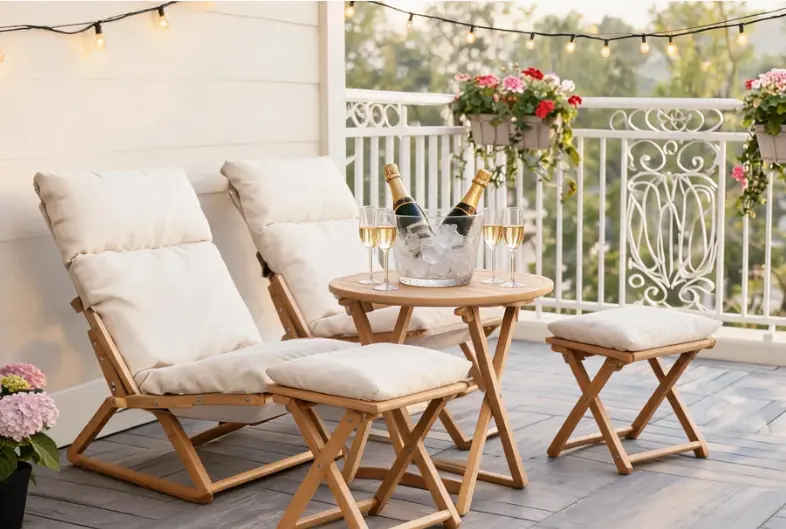
You may want space for gardening, exercising, drying clothes, cleaning or entertaining guests at different times. In these situations, folding furniture can be more useful than furniture that stays in place permanently.
For example, two folding chairs can be opened for everyday use and stored against a wall when you need additional floor space.
The important thing is to consider where the furniture will go when folded. A folding chair only saves space if you actually have a convenient place to store it.
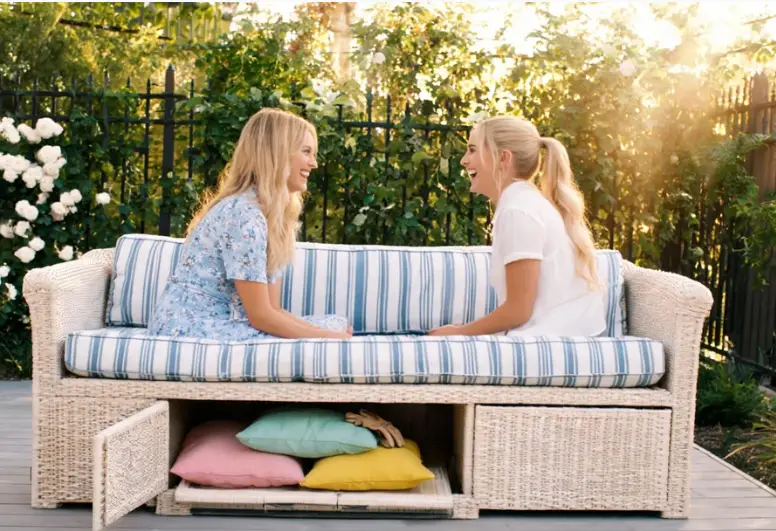
8. Use a Storage Bench to Combine Seating and Storage
A storage bench can solve one of the biggest problems in a small outdoor space: the lack of storage.
Instead of having a separate bench and storage box, one piece can provide seating while holding cushions, gardening supplies or other outdoor accessories underneath.
This is particularly useful for patios where there is no garage, shed or dedicated outdoor storage area.
Before choosing one, check whether the storage compartment is large enough for the items you actually need to store. Also consider whether the lid can be opened fully without hitting a wall, railing or other furniture.
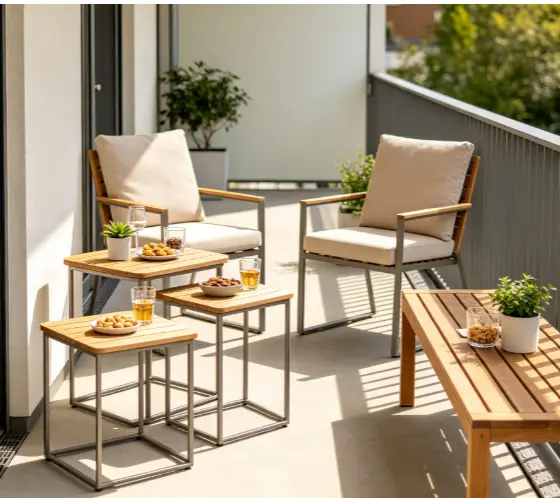
9. Try Nesting Tables for Occasional Guests
If you occasionally entertain but do not want several tables taking up space every day, nesting tables are a practical option.
The tables can remain stacked together when you are alone and be separated when guests need additional surfaces.
This makes more sense for a small patio than buying several permanent side tables that are only used occasionally.
Think of the same principle when choosing seating: design the patio for everyday use first, then add flexibility for occasional guests.
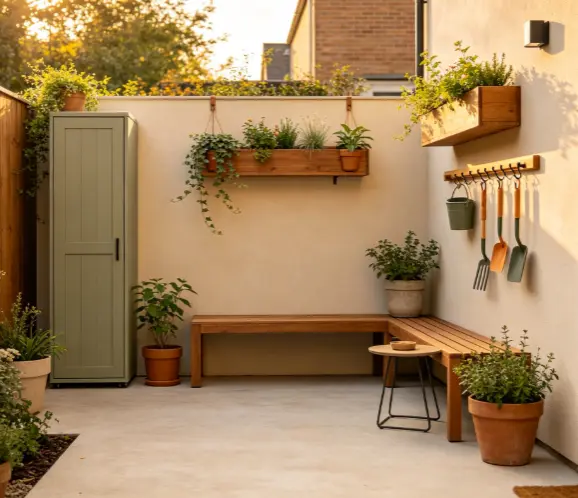
10. Use Vertical Space Instead of Adding More Floor Furniture
When floor space is limited, look upward.
A narrow vertical shelving unit, wall-mounted shelf or compact outdoor storage solution can provide space for plants, gardening tools, lanterns or other accessories without occupying as much floor area as another cabinet or table.
This is particularly valuable on narrow patios where every additional piece of furniture reduces the usable walking area.
However, keep frequently used items within easy reach and avoid placing shelves where they interfere with doors, windows or the main circulation path.
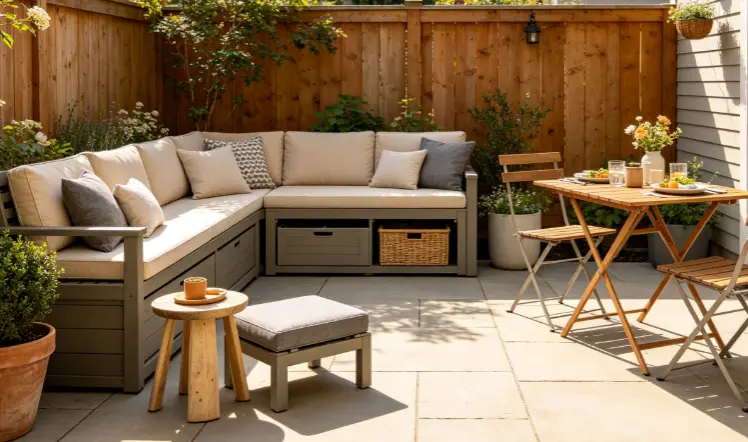
11. Choose Furniture That Can Serve More Than One Purpose
Small patios benefit from furniture that earns its floor space.
A storage bench can provide seating and storage. A garden stool can function as a side table, footrest or occasional seat. A folding dining table can provide a place to eat and then be folded away when the patio is needed for another activity.
Before adding another piece of furniture, ask:
Can this piece solve two problems instead of one?
If the answer is yes, it is often a better choice for a small patio than buying two separate pieces.
12. Leave a Clear Path Instead of Filling Every Corner
One of the easiest mistakes in a small patio is trying to use every available inch.
More furniture does not necessarily create more usable space. In many cases, leaving a clear path from the door to the seating area will make the patio feel larger and easier to use.
Arrange the largest piece of furniture first, then add smaller pieces around it. If you cannot comfortably open the door, walk through the patio or pull out a chair without moving another piece of furniture, the layout is probably too crowded.
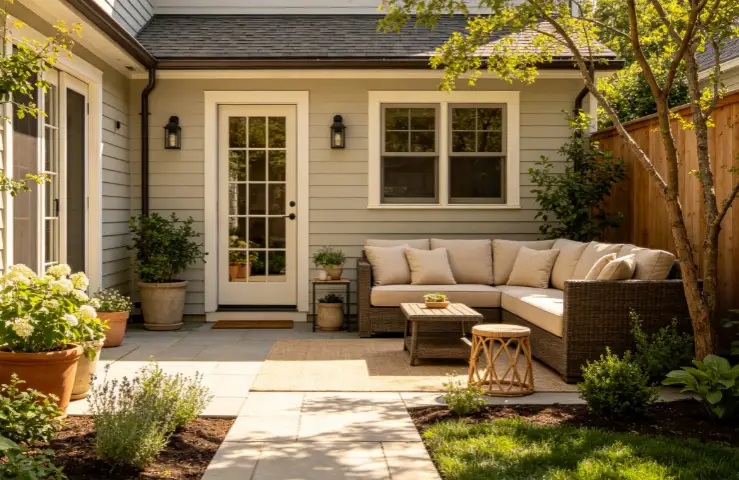
Tips for choosing Bistro Sets, Chairs, Loveseats or Benches:
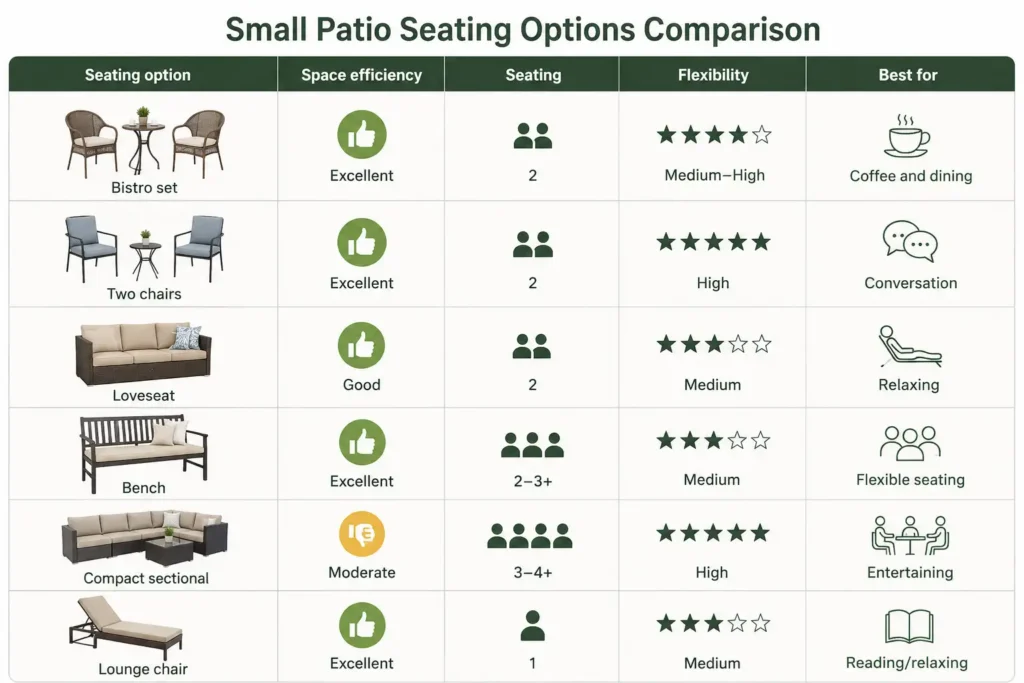
Make Your Small Patio More Comfortable Without Sacrificing Floor Space
Add Shade, Privacy and Storage
A patio umbrella can provide shade without permanently enclosing the patio. Outsunny currently offers a 10-foot cantilever umbrella, while its broader collection includes outdoor shade products for different configurations.
For privacy, consider outdoor curtains or a freestanding screen where appropriate. Storage benches and compact storage solutions can keep cushions and outdoor accessories from accumulating on the floor.
The goal is to add comfort without introducing another obstacle.
Use Vertical Space
When horizontal space is limited, look upward.
Use:
- Hanging planters
- Vertical gardens
- Trellises
- Plant stands
- Wall-mounted shelves
- Fold-down tables
Vertical gardening was a recurring solution in the source material because walls and railings provide usable space without consuming valuable floor area.This also helps create visual height. Instead of filling every corner with pots and furniture, concentrate greenery vertically and keep the floor relatively open.
How to Choose Comfortable, Durable and Easy-Care Outdoor Furniture
Compact furniture should never mean uncomfortable furniture.
Before purchasing, check:
Comfort:
- Seat depth
- Seat height
- Back support
- Cushion thickness
- Armrest position
Durability:
- Weather resistance
- Rust resistance
- UV exposure
- Frame construction
- Cushion/fabric suitability
Maintenance:
- Easy-clean surfaces
- Removable cushions
- Low-maintenance finishes
- Ease of moving or storing the furniture
These are important purchasing considerations because the search journey moves from “What looks good?” to “What will actually work for me?” The supplied research identifies weather resistance, rust resistance, water resistance, UV resistance and easy cleaning as key evaluation factors.
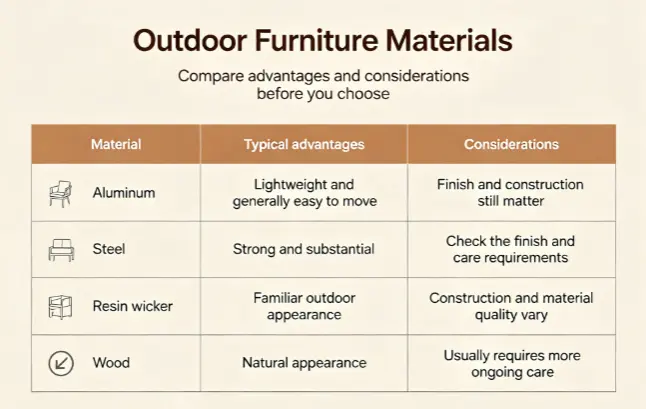
Which Outdoor Furniture Material Is Best for a Small Patio?
Material should be selected according to your priorities rather than appearance alone.
Material Strengths Considerations:
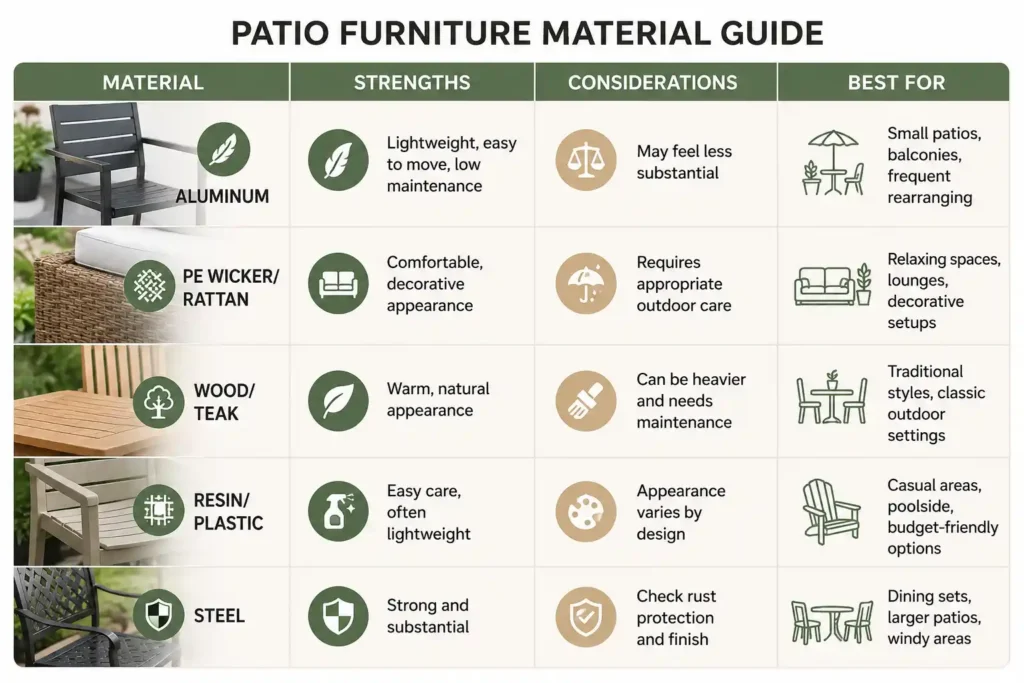
Common Small Patio Furniture Mistakes to Avoid
Avoid these common problems:
1. Buying oversized furniture. A large sectional may look impressive online but can overwhelm a small patio.
2. Ignoring chair clearance. Remember that a dining chair needs space behind it when someone is sitting down.
3. Blocking the door. Your patio should remain easy to enter and exit.
4. Using too many pieces. A well-planned two-chair setup can be more functional than seven mismatched items.
5. Choosing style before size. A beautiful piece is not useful if it makes the patio impossible to navigate.
6. Using furniture with only one purpose. Whenever possible, choose pieces that can serve two functions.
7. Filling every empty corner. Empty floor space is not wasted space—it helps the patio feel open.
Small Patio Furniture Buying Checklist
Before clicking Add to Cart, run through this checklist:
☐ Have I compared the product dimensions with my available space?
☐ Have I compared sets vs. individual pieces?
☐ Does the furniture offer more than one function?
☐ Does the price make sense for how often I will use it?
The best small patio furniture ideas are not about squeezing as much furniture as possible into a limited area. They are about creating the right combination of function, proportion, comfort and flexibility.Start with how you want to use the patio. Measure before shopping. Choose furniture that matches that purpose, then look for space-saving features such as folding, stacking, nesting, modular construction or built-in storage. Finally, add shade, plants, lighting and textiles without sacrificing valuable floor space.
Outsunny’s current collection includes patio chairs, outdoor sofas and sectionals, outdoor rugs and so on, so you can build a small outdoor space around the way you actually live.
Ready to furnish your space? Explore the Outsunny official store and compare furniture by size, function, material and style before choosing the pieces that make every inch of your patio count.
FAQs
1: How to furnish a tiny patio?
A: Focus on space‑saving, multi‑purpose and vertical solutions. Choose compact furniture such as bistro sets instead of bulky full‑size sets. Use storage benches and poufs for both seating and hidden storage. Maximize wall space with hanging planters and wall‑mounted shelves to free up floor area. Add string lights or wall‑mounted lighting for ambiance without taking ground space. An outdoor small rug helps define the lounge zone visually. Stick to neutral light tones to keep the compact area open‑feeling.
2: What is the best patio furniture for a small space?
A: Top picks include lightweight folding aluminum sets, pedestal round bistro tables (60‑70 cm for 2‑person use), compact modular pieces, storage benches and poufs. Wall‑mount drop‑leaf tables work extremely well for extra‑tight patios. Avoid heavy cast‑iron large sets and wide‑leg tables. Weather‑resistant materials like aluminum, PE rattan and teak are recommended, paired with quick‑dry outdoor cushions.
3: What are the trends for patio furniture in 2026?
A: Multi‑functional space‑saving designs remain mainstream, driven by rising demand for small‑footprint outdoor living. Natural earth‑toned palettes, mixed material frames (metal + woven rattan) are popular. Weather‑proof, low‑maintenance furniture continues to dominate buyer preferences. Biophilic design is key: furniture designed to blend with surrounding greenery. Modular lightweight configurations allow flexible rearrangement. Sustainable, recycled materials are gaining wider adoption. Warm ambient integrated outdoor lighting is also a major trend.
4: What is the best outdoor furniture for a small space?
A: Opt for foldable, stackable and multi‑use outdoor units. Compact bistro sets, pouf ottomans, storage benches and wall‑mount folding tables perform best in limited outdoor areas. Select slim‑profile frames and round pedestal tables which allow chairs to tuck underneath. Prioritize rust‑proof, weather‑hardy materials. Skip oversized full outdoor suites that will crowd your area.

Outdoor ideas, buying guidance, and category inspiration for shoppers comparing official Outsunny products on Aosom.